
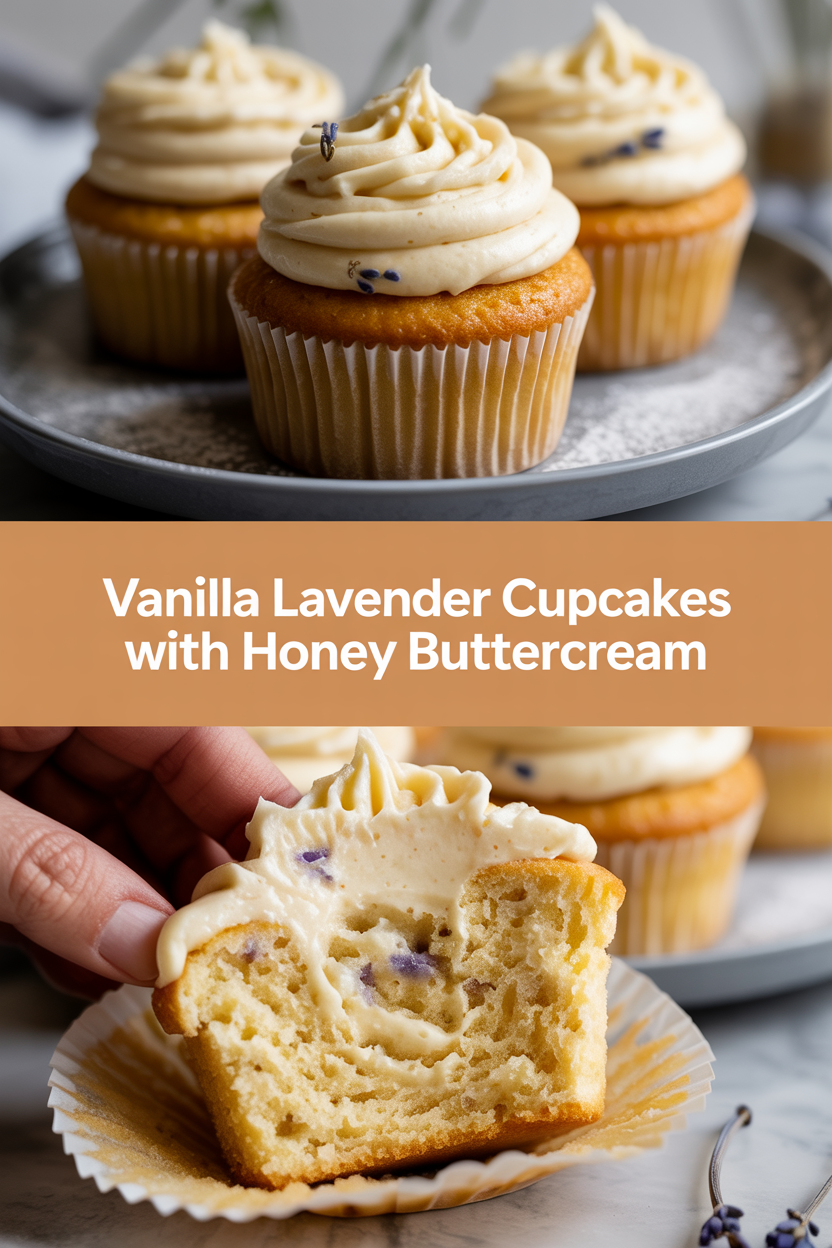
My grandmother kept a tiny tin of dried lavender on her windowsill and sniffing it felt like summer afternoons in slow motion. I remember the sun hitting the counter, her humming, and the little beat of a wooden spoon against a bowl as she measured out vanilla and sugar. These cupcakes taste like that memory—soft, fragrant crumb with a warm note of honey and a floral whisper of lavender. They feel comforting and a little fancy at the same time, the kind of treat I bake when I want the kitchen to smell like a hug. Make a batch and hand one to someone you love—or keep them all. I won’t tell.
Quick Facts
- Yield: Serves 12 cupcakes
- Prep Time: 20 minutes
- Cook Time: 18–22 minutes at 350°F
- Total Time: 45 minutes (including cooling)
Why This Recipe is Awesome
These cupcakes give you a tender, vanilla-forward crumb punctuated by gentle floral notes from the lavender and a warm, sticky sweetness from the honey buttercream. They smell like a bakery and feel like a cozy afternoon. They stay moist, frost beautifully, and look elegant without drama—perfect for tea, baby showers, or just because you want something pretty. Plus, they’re forgiving: tiny mismeasurements won’t ruin the whole batch. Who doesn’t love a cupcake that behaves?
Ingredients
For the Main Dish:
- 1 1/2 cups all-purpose flour
- 1 cup granulated sugar
- 1 1/2 tsp baking powder
- 1/4 tsp salt
- 1/2 cup unsalted butter, softened (1 stick)
- 2 large eggs, room temperature
- 1/2 cup whole milk
- 1/4 cup sour cream or plain Greek yogurt
- 2 tsp pure vanilla extract
- 1 tbsp dried culinary lavender, lightly crushed
For the Honey Buttercream:
- 1/2 cup unsalted butter, softened (1 stick)
- 1/4 cup honey (mild-flavored like clover)
- 2–3 cups powdered sugar, sifted as needed
- 1–2 tbsp whole milk or cream
- Pinch of salt
- Optional: extra dried lavender or a drizzle of honey for garnish
How I Make It
Step 1:
Preheat your oven to 350°F and line a 12-cup muffin tin with papers. I warm the milk gently on the stove, sprinkle in the lavender, and let it steep for about 10 minutes—it smells like a floral latte. Strain the milk into a bowl (press the blossoms to get every last drop) and let it cool slightly. This step infuses the batter so you taste lavender without crunchy bits.
Step 2:
In a bowl, whisk together the flour, baking powder, and salt. In your mixer, cream the butter and sugar until pale and slightly fluffy—about 2–3 minutes. I stop to scrape the bowl and give the mixer a little tap; everything comes together better that way. Add the eggs one at a time, then beat in the vanilla.
Step 3:
Alternate adding the dry ingredients and the lavender-infused milk to the butter mixture, beginning and ending with dry. Mix on low speed until just combined—avoid overmixing or the crumb will tighten. Fold in the sour cream last for extra tender texture. The batter will have a pale, creamy color with a subtle floral smell that makes you want to lick the spoon.
Step 4:
Divide the batter into the prepared cups—about 2 tablespoons per cupcake or fill to 2/3 full. Bake at 350°F for 18–22 minutes, rotating the pan halfway if your oven runs unevenly. Watch for golden edges and a springy top; a toothpick should come out clean or with a few moist crumbs. Pull them when warm; they finish setting as they cool.
Step 5:
While the cupcakes cool, beat the butter for the frosting until silky, then add the honey, powdered sugar, pinch of salt, and a splash of milk until you get a smooth, pipeable texture. Pipe or spread the buttercream on cooled cupcakes and finish with a tiny sprinkle of lavender or a thin honey drizzle. The buttercream should glisten slightly and smell like warm toast and meadow honey.
Pro Tips
- Gently crush the dried lavender with your fingers or a mortar so it releases aroma without being overpowering.
- If your batter looks too thick, add a splash more milk—if too thin, stir in a tablespoon of flour at a time. I test with the back of a spoon; it should ribbon slowly.
- Use room-temperature eggs and butter so the batter emulsifies smoothly and you avoid a greasy frosting.
- For extra floral flavor, steep lavender in warm milk like I do; avoid adding undiluted lavender directly to the batter or frosting—it gets bitter.
Common Mistakes to Avoid
- Skipping preheating: Classic rookie move. It changes texture and bake time.
- Overmixing: Leads to dense or chewy results. Mix until just combined.
- Guessing cook time: Always use visual cues or a timer, not just vibes.
- Overcrowding pans: Give your food some breathing room to crisp properly.
Alternatives & Substitutions
- Swap whole milk for almond or oat milk for a lighter flavor; texture may be slightly less rich.
- Use coconut oil instead of butter in the cupcakes, but the flavor shifts tropical—pairs nicely with honey.
- For gluten-free: use a 1:1 gluten-free flour blend; add a tablespoon of tapioca for chew if needed.
- Dairy-free option: use vegan butter and your choice of non-dairy milk; the frosting may firm differently but still tastes wonderful.
Variations & Tips
- Make them lemon-lavender: add 1 tbsp lemon zest to batter and 1 tsp lemon juice to the frosting.
- Kids’ version: omit lavender and stir in 1/4 cup mini chocolate chips for happy smiles.
- Spiced twist: add 1/2 tsp ground cardamom to the dry mix for a warm, aromatic profile.
- Honey drizzle: warm 2 tbsp honey with 1 tsp water and brush on cupcakes right after baking for a glossy top.
- Tea pairing: serve with Earl Grey to echo the bergamot-lavender notes for a grown-up tea party.
- Creative twist: fold finely chopped roasted almonds into the batter for crunch and nutty depth.
FAQ (Frequently Asked Questions)
- Can I make this ahead of time?
- Yes! Bake the cupcakes up to 2 days ahead and store them in an airtight container at room temperature. Keep the frosting in the fridge and pipe it on the day you serve for the freshest look. You can also freeze unfrosted cupcakes for up to 3 months; thaw and add frosting when ready.
- Can I double the recipe?
- Sure thing. Use two muffin tins or bake in batches. If you double, avoid overfilling your mixer—mix in two shorter rounds if needed. Baking time stays about the same per batch.
- Can I substitute butter with oil?
- Technically yes, but you’ll miss that buttery magic. Use ¾ the amount of oil.
- How do I know it’s done?
- Bake until edges turn golden and the tops spring back when touched. A toothpick inserted in the center should come out clean or with a few moist crumbs—no wet batter.
- What if I don’t have ingredient X?
- If you don’t have sour cream, swap plain Greek yogurt. No powdered sugar? Pulse granulated sugar in a blender with a little cornstarch until powdery in a pinch.
How I Like to Serve It
I love these cupcakes on a sunny morning with a mug of tea or as a pretty dessert at a casual dinner. They brighten bridal showers and baby showers alike, and they travel well in a cupcake carrier for potlucks. If I’m feeling indulgent, I serve them with fresh berries and a drizzle of warm honey—simple and elegant.
Notes
- Store frosted cupcakes in the fridge for up to 3 days; bring to room temperature before serving so the buttercream softens.
- If freezing, wrap tightly and thaw overnight in the fridge; finish with fresh frosting if you want that just-made look.
Final Thoughts
Closing: Go ahead—bake a batch, breathe in that honey-lavender aroma, and share the little moments. Now go impress someone — or just yourself — with your homemade masterpiece!