
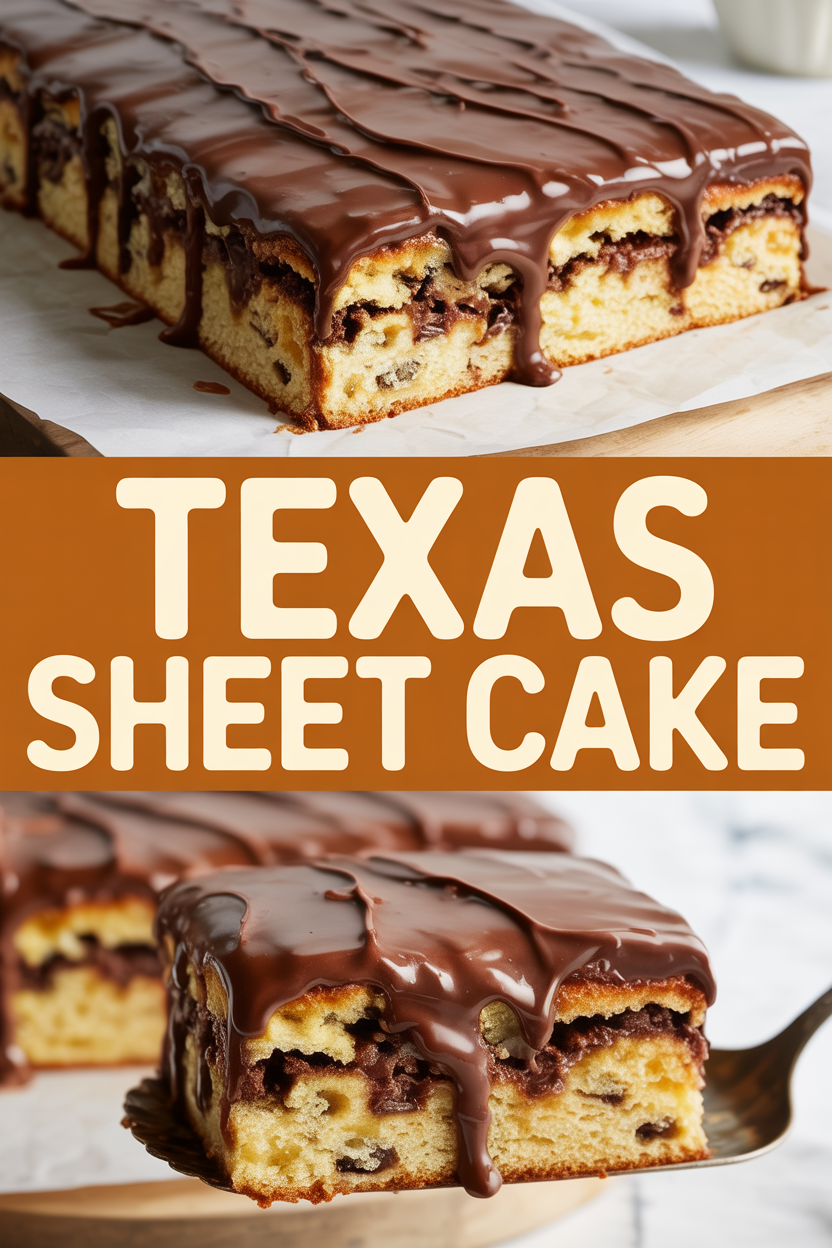
I remember plunking my elbows on my grandmother’s Formica counter while she slid a shiny jelly-roll pan into the oven and whispered, “This one feeds an army.” That Texas sheet cake smelled like a chocolate factory — hot cocoa steam, butter, and a whisper of vanilla — and everybody in the house suddenly had a mission: to stand guard while it cooled. I still make this cake when I need something that comforts a crowd, a cake that gives crispy, caramelized edges and a tender, fudgy middle. It comes together fast, glues the family to the kitchen, and the glossy, nut-studded frosting melts into every crack. If you love brownies but want sheet-pan quantity, welcome home.
Quick Facts
- Yield: Serves 12–16
- Prep Time: 15 minutes
- Cook Time: 18 minutes
- Total Time: 40 minutes
Why This Recipe is Awesome
This recipe makes a wide, wallet-friendly cake with crunchy edges and a slick, fudgy glaze that soaks into the warm top — pure comfort in sheet form. It’s fast, forgiving, and rich without being fussy. My favorite part: the kitchen fills with a warm chocolate aroma that screams “hug in cake form.” It’s so easy even your oven can’t mess it up, and it travels well for potlucks, birthdays, or emergency chocolate cravings.
Ingredients
For the Main Dish:
- 2 cups all-purpose flour
- 2 cups granulated sugar
- 1 tsp baking soda
- 1/2 tsp fine salt
- 1/2 cup (1 stick) unsalted butter
- 1/2 cup vegetable oil
- 1/2 cup unsweetened cocoa powder
- 1 cup boiling water
- 3/4 cup buttermilk (or whole milk + 1 tbsp lemon juice, let sit 5 min)
- 2 large eggs, room temperature
- 1 tsp vanilla extract
For the Sauce / Garnish (Frosting):
- 1/2 cup (1 stick) unsalted butter
- 1/4 cup unsweetened cocoa powder
- 6 tbsp whole milk
- 3 1/2 cups powdered sugar, sifted if lumpy
- 1 tsp vanilla extract
- 1 cup chopped pecans (optional — traditional and delicious)
How I Make It
Step 1:
I preheat the oven to 350°F and grease a 15×10-inch jelly-roll pan (or line it with foil for easier cleanup). In a large bowl I whisk together the dry ingredients: 2 cups flour, 2 cups sugar, 1 tsp baking soda, and 1/2 tsp salt. The dry mix smells faintly of sweetness and prepares the stage for the chocolatey drama.
Step 2:
On the stove, I melt 1/2 cup butter with 1/2 cup oil in a medium saucepan over medium heat. I whisk in 1/2 cup cocoa until the mixture smells toasty and deep. Then I pour in 1 cup boiling water — it steams, it puffs up the scent, and the batter will thin out into glossy chocolate liquid. I remove the pan from heat right away.
Step 3:
I stir the warm chocolate into a bowl, whisk in the 3/4 cup buttermilk, 2 eggs, and 1 tsp vanilla until glossy. Then I pour this warm mixture into the dry ingredients and fold gently with a spatula until everything comes together — a few small streaks are okay. Don’t overmix; I want tender crumb, not a chewy loaf.
Step 4:
I pour the batter into the prepared pan, smooth the top, and tap it once on the counter to settle. I slide it into the oven and bake for about 18 minutes — watch for shiny, cracked edges and a center that springs back slightly. If a toothpick comes out with a few moist crumbs, you’re golden. The top will look soft, but the edges should feel set and slightly crisp.
Step 5:
While the cake bakes, I make the frosting: melt 1/2 cup butter with 1/4 cup cocoa and 6 tbsp milk over medium heat until it simmers once, then remove from heat. I whisk in the 3 1/2 cups powdered sugar until glossy, stir in 1 tsp vanilla, and fold in 1 cup chopped pecans if I’m using them. The glaze should be pourable but thick.
Right when the cake comes out — piping hot — I drizzle the frosting across the surface and smooth with a spatula. The frosting will melt into the warm cake and create that signature shiny, slightly wrinkled top. Let it cool for at least 20 minutes so the glaze sets and slices hold together.
Pro Tips
- Warm ingredients mingle better: bring eggs and buttermilk to room temperature to avoid shocking the batter.
- If your frosting runs too thin, stir in a little more powdered sugar; if it’s too stiff, add a teaspoon of milk at a time.
- Swap pecans for chopped walnuts or leave them out for a nut-free crowd — the cake still sings.
- For extra depth, add 1 tsp instant espresso powder to the boiling water when you mix the cocoa — it won’t make it taste like coffee, just richer chocolate.
Common Mistakes to Avoid
- Skipping preheating: Classic rookie move. It changes texture and bake time.
- Overmixing: Leads to dense or chewy results. Mix until just combined.
- Guessing cook time: Always use visual cues or a timer, not just vibes.
- Overcrowding pans: Give your food some breathing room to crisp properly.
Alternatives & Substitutions
- Use gluten-free 1-to-1 flour for a gluten-free cake; texture may be a touch crumblier but still delicious.
- Swap buttermilk with whole milk + 1 tbsp lemon juice if you don’t have buttermilk — it keeps the cake tender.
- For dairy-free: use coconut oil or vegan butter in equal measure and a non-dairy milk in the frosting; the flavor shifts slightly but stays comforting.
- Replace pecans with sunflower seeds for a nut-free crunch or omit nuts completely for a smooth top.
Variations & Tips
- Add a tablespoon of instant espresso to the boiling water for a deeper chocolate flavor.
- Stir in 1 cup mini chocolate chips into the batter for melty pockets throughout.
- Top the frosted cake with flaky sea salt for a salted-chocolate twist.
- Make it into a birthday cake: pipe whipped cream rosettes and sprinkle with colorful nonpareils.
- Turn it into a cakey brownie by baking a little longer (watch closely) for firmer slices.
- For a fruity note, drizzle warm raspberry sauce over slices just before serving.
FAQ (Frequently Asked Questions)
- Can I make this ahead of time?
- Yes! Bake the cake and store it in an airtight container at room temperature for up to 2 days. If you need longer, refrigerate for up to 5 days (bring to room temp before serving). You can bake the cake a day ahead and pour warm frosting right before guests arrive for best shine.
- Can I double the recipe?
- Sure thing. Use two pans and bake each separately; don’t stack two pans in the oven at once. Baking time stays about the same, but check edges and center for doneness. Alternatively, use a half-sheet pan and watch closely — a larger volume may need a few extra minutes.
- Can I substitute butter with oil?
- Technically yes, but you’ll miss that buttery magic. Use ¾ the amount of oil if you fully replace butter; I prefer a blend of butter and oil for flavor and moistness.
- How do I know it’s done?
- Look for glossy, cracked top with set, slightly crisp edges and a center that springs back. A toothpick should come out with a few moist crumbs — avoid a wet batter smear.
- What if I don’t have ingredient X?
- No panic: swap buttermilk with milk + lemon, powdered sugar with an extra sift to avoid lumps, or nuts with seeds. Most pantry staples play nice here.
How I Like to Serve It
I slice this cake into big, forgiving pieces and serve one with a scoop of vanilla ice cream or a dollop of whipped cream. It shines at potlucks, backyard barbecues, or lazy Sunday afternoons with a strong cup of coffee. The fudgy center and crunchy edge work year-round — cold winter evenings or sticky summer nights both deserve chocolate.
Notes
- Store covered at room temperature up to 2 days, or refrigerate up to 5 days. Rewarm slices in the microwave for 8–12 seconds for that just-baked feel.
- If you plan to freeze, wrap tightly and freeze up to 2 months; thaw overnight in the fridge.
Final Thoughts
Closing: Now go impress someone — or just yourself — with your homemade masterpiece!