
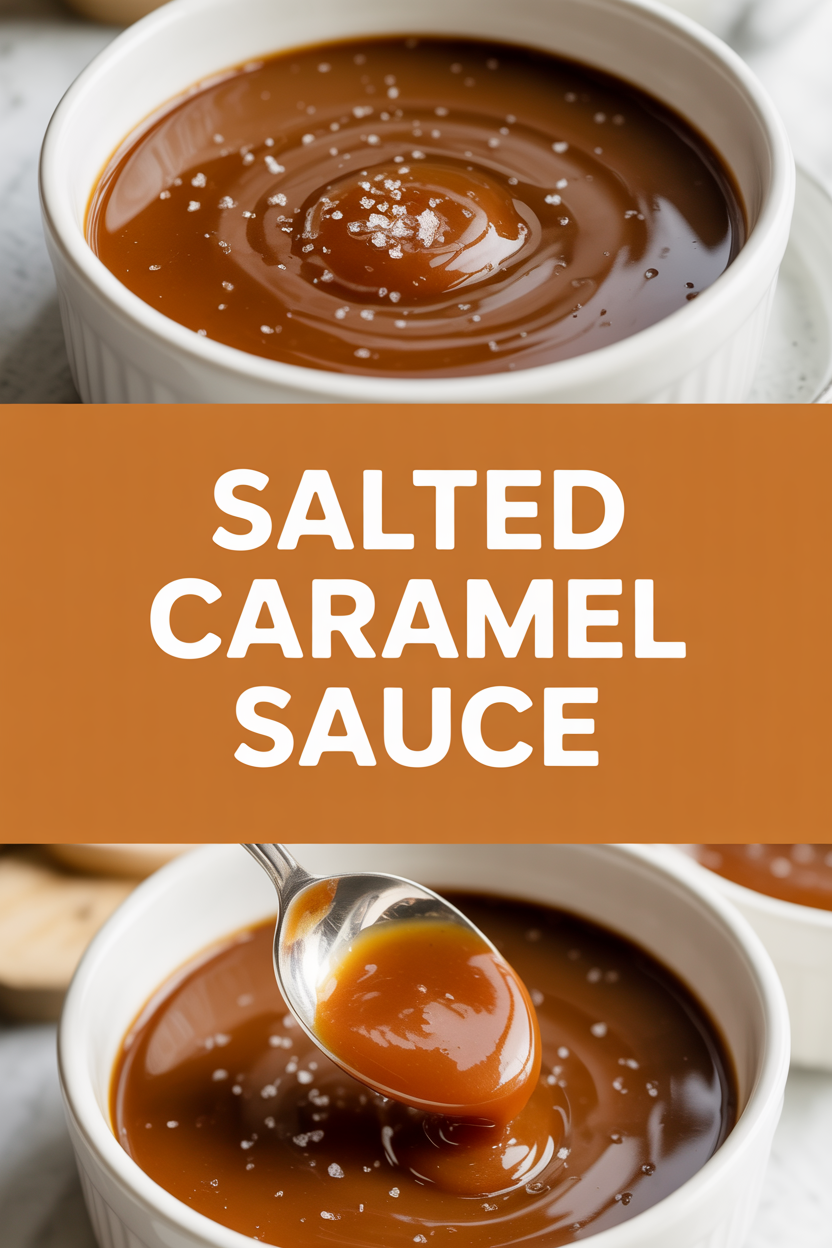
Chef’s Secret: If you want a little kitchen flex, this salted caramel is my go-to move when I want guests to whisper “did you buy this?” I stumbled onto the trick for ultra-smooth caramel after a long night of crystallized disasters: a splash of light corn syrup and a patient, non-stirring watch over the sugar. I love how the sugar turns an amber color, the whole kitchen smells like toasted sugar and butter, and the first taste makes people stop mid-sentence. I’ll show you a simple, reliable method that gives you glossy, pourable caramel every time — no fancy equipment required, just a good eye and a heavy-bottomed pan.
Quick Facts
- Yield: Serves 8 (about 1 1/2 cups)
- Prep Time: 5 minutes
- Cook Time: 12 minutes
- Total Time: 20 minutes
Why This Recipe is Awesome
This salted caramel tastes like a tiny celebration spooned from the pot. It blends rich, buttery sweetness with a hit of flaky salt for contrast. The texture stays glossy and pourable — great over ice cream, apples, brownies, or stirred into coffee. It’s so simple that even on a sleepy weeknight you can pull off something that tastes restaurant-level. (Plus, last-minute homemade gifts? You’ll look like a wizard.)
Ingredients
For the Main Dish:
- 1 cup granulated sugar
- 2 tbsp water
- 1 tbsp light corn syrup (optional but helps prevent crystallization)
- 6 tbsp unsalted butter, cut into pieces
- 1/2 cup heavy cream, warmed
- 1 tsp kosher salt (or 3/4 tsp fine sea salt), plus extra flaky sea salt for finishing
- 1/4 tsp vanilla extract (optional)
For the Sauce / Garnish (if applicable):
- Flaky sea salt for sprinkling
- Toasted chopped pecans or sliced almonds (optional)
How I Make It
Step 1:
Line up everything before heat touches the sugar. I put the warm cream, cut butter, and a small bowl of salt within arm’s reach. Add 1 cup granulated sugar, 2 tbsp water, and 1 tbsp corn syrup to a heavy-bottomed saucepan over medium heat. Swirl the pan once to wet the sugar evenly — don’t stir. Watch closely as the sugar melts and turns from crystalline to clear to pale gold.
Step 2:
When the edges start to brown and the center follows — usually around 6–8 minutes — gently tilt the pan to even out color. If you use a candy thermometer, the sugar reaches the golden caramel stage around 340–350°F. I listen for a soft, steady bubbling and smell that toasty, almost nutty aroma. Avoid walking away; sugar browns quickly and can burn in seconds.
Step 3:
Remove the pan from heat and immediately add the 6 tbsp butter pieces, stirring vigorously. The mixture will sputter and steam — that’s normal, not dangerous. Stir until the butter melts and the mixture quiets, about 30 seconds. Slowly pour in the warm 1/2 cup heavy cream while stirring. The caramel will foam and hiss; keep stirring until it smooths into a glossy sauce.
Step 4:
Stir in 1 tsp kosher salt and 1/4 tsp vanilla if using. Taste carefully (it will be hot!) and add a pinch more salt if you like bolder contrast. Let the caramel rest in the pan for about 5 minutes; it thickens as it cools. If it seems too thick, whisk in a tablespoon of warm cream until you reach the desired pourability.
Step 5:
Transfer the sauce to a heatproof jar or container. Sprinkle with flaky sea salt and, if you want, a few toasted nuts. Let it cool to room temperature before covering. I like to label jars and chill extras for later. Warm gently in the microwave or over a double boiler before serving to regain pourable perfection.
Pro Tips
- Use a heavy-bottomed pan for even heat distribution — thin pans create hot spots and burn sugar faster.
- Warm the heavy cream before adding it to the caramel; cold cream shocks the sugar and can seize or splatter more violently.
- If crystals form on the pan sides, brush them down with a wet pastry brush to avoid grainy caramel.
- If you want ultra-silky caramel, use light corn syrup or a tablespoon of glucose; it prevents crystallization without changing flavor noticeably.
Common Mistakes to Avoid
- Skipping preheating: Classic rookie move. It changes texture and bake time.
- Overmixing: Leads to dense or chewy results. Mix until just combined.
- Guessing cook time: Always use visual cues or a timer, not just vibes.
- Overcrowding pans: Give your food some breathing room to crisp properly.
Alternatives & Substitutions
- Skip the heavy cream for a dairy-free version: use full-fat canned coconut milk; expect a slight coconut flavor and thicker texture.
- Replace unsalted butter with coconut oil for dairy-free caramel; you’ll lose a bit of that buttery magic, but it still tastes dreamy.
- Use honey or maple syrup instead of corn syrup to reduce refined ingredients — caramel may crystallize more easily and taste slightly different.
- To reduce sweetness, stir in a tablespoon of espresso or a pinch of cocoa for depth without extra sugar.
Variations & Tips
- Bourbon Caramel: Stir in 1–2 tbsp bourbon off heat for an adult twist.
- Spicy Caramel: Add 1/4 tsp cayenne or 1/2 tsp chili powder for a sweet-heat hit.
- Miso Caramel: Whisk in 1 tsp white miso for umami complexity — amazing on roasted veggies.
- Brown Butter Caramel: Brown the butter first for a nutty, deeper flavor before adding to the caramel.
- Espresso Caramel: Dissolve 1 tsp instant espresso in the warm cream for a coffee-kiss flavor great on ice cream.
- Chocolate Caramel: Stir in 2 oz chopped dark chocolate off heat until melted for a boozy twix vibe.
FAQ (Frequently Asked Questions)
- Can I make this ahead of time?
- Yes! Cool the caramel to room temperature and store it in an airtight jar in the refrigerator for up to 2 weeks. Reheat gently in the microwave in 15–20 second bursts or over a double boiler until pourable.
- Can I double the recipe?
- Sure thing. Use a wider, heavy-bottomed pan to allow even evaporation; cooking time may increase slightly. Stirring and heat control stay the same.
- Can I substitute butter with oil?
- Technically yes, but you’ll miss that buttery magic. Use ¾ the amount of oil.
- How do I know it’s done?
- Look for a deep amber color and a nutty aroma. If using a candy thermometer, aim for 340–350°F. Don’t wait too long — burnt caramel tastes bitter.
- What if I don’t have ingredient X?
- If you lack corn syrup, omit it and stir a little more carefully to avoid crystallization. If you lack heavy cream, use full-fat coconut milk for a dairy-free version.
How I Like to Serve It
I drizzle this warm caramel over vanilla ice cream and add a sprinkle of flaky sea salt and crushed pecans. I also stir a spoonful into hot coffee for a decadent latte on chilly mornings. For parties, I set out apple slices and pretzels with a jar of caramel for crowd-pleasing dipping. It brightens winter desserts and turns lazy summer berries into something memorable.
Notes
- Store in a sealed jar in the refrigerator for up to 2 weeks. Reheat gently to loosen.
- Not applicable for meat temperatures — no meat here. If you ever pair this with meat sauces, cook meats to safe temps (e.g., 165°F for poultry).
Final Thoughts
Closing: Now go impress someone — or just yourself — with your homemade salted caramel masterpiece!