
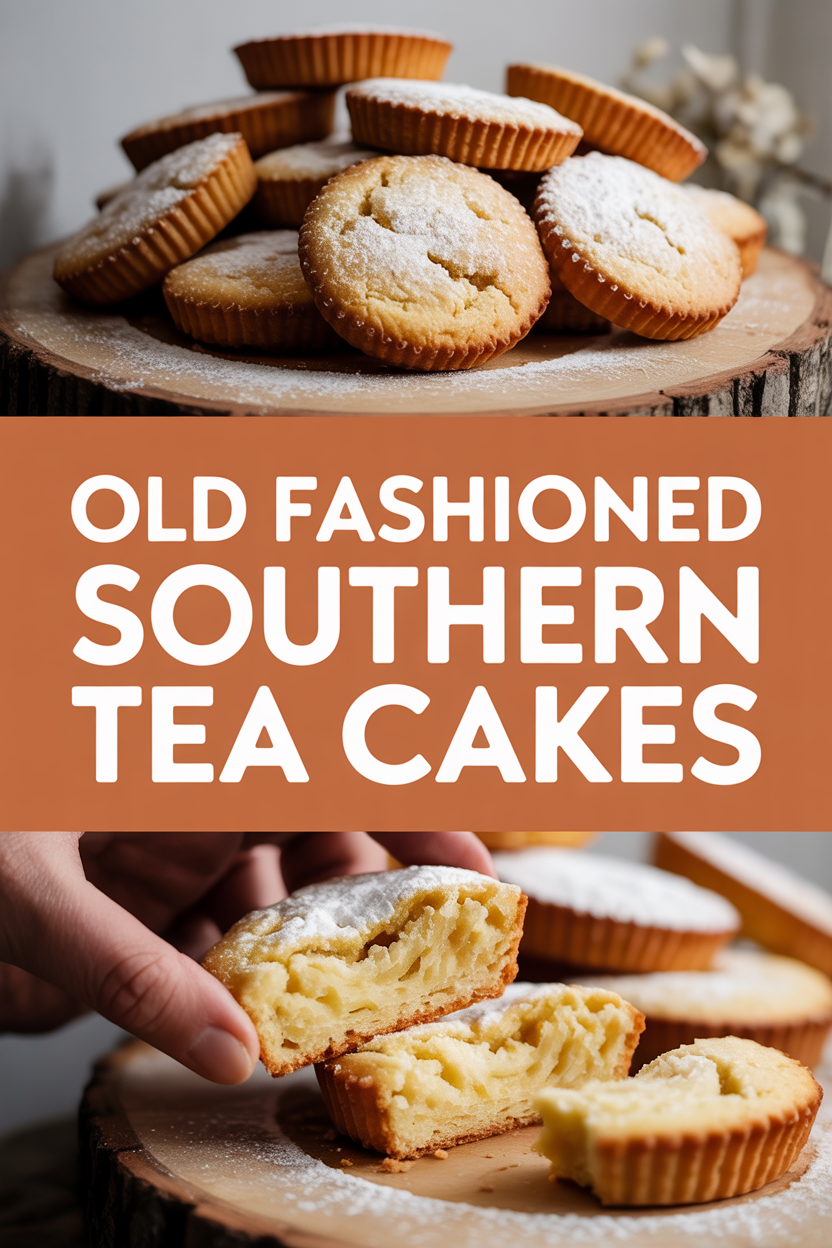
My grandmother kept a battered metal tin on the top shelf of her kitchen cabinet that smelled faintly of vanilla and sugar, and every Sunday she’d pull it down to reveal perfect little rounds of tea cakes. I remember the warm, buttery aroma that drifted through the house—like a soft hug in cookie form—and how we’d sneak the edges as she wasn’t looking. Those sweet, tender cakes taught me that simple ingredients and small rituals make the best memories. I still make these tea cakes when I want something gentle and old-fashioned: crisp at the edges, cakey in the center, and just sweet enough to pair with a hot cup of tea or cold milk.
Quick Facts
- Yield: Serves 24
- Prep Time: 15 minutes
- Cook Time: 12 minutes
- Total Time: 27 minutes
Why This Recipe is Awesome
These Old Fashioned Southern Tea Cakes deliver a tender, cakey center with slightly crisp edges and a buttery vanilla flavor that sings with a cuppa. They use simple pantry staples and a quick method, so you’ll have warm cookies in under half an hour. They stay soft for days and freeze beautifully—perfect for sneaking into lunchboxes or passing around at church socials. It’s so easy even your oven can’t mess it up.
Ingredients
For the Main Dish:
- 2 1/4 cups all-purpose flour
- 1 tsp baking powder
- 1/2 tsp baking soda
- 1/2 tsp fine salt
- 3/4 cup unsalted butter, room temperature (1 1/2 sticks)
- 1 cup granulated sugar
- 1 large egg, room temperature
- 1 tsp pure vanilla extract
- 1/2 cup sour cream or plain yogurt (for tender crumb)
- 2 tbsp milk (as needed to loosen dough)
- Optional: 1 tsp lemon zest or 1/2 cup chocolate chips
For the Sauce / Garnish (if applicable):
- Optional dusting of powdered sugar or a simple glaze (1/2 cup powdered sugar + 1–2 tsp milk)
How I Make It
Step 1:
Preheat the oven to 350°F and line two baking sheets with parchment paper. In a bowl, whisk together the all-purpose flour, baking powder, baking soda, and salt. I always sift or whisk the dry mix to avoid surprises—nobody likes a pocket of baking soda mid-bite.
Step 2:
In a large bowl, beat the room-temperature butter and granulated sugar until light and fluffy, about 2–3 minutes. Add the egg and vanilla, and beat until glossy. You’ll smell that sweet, buttery perfume right away—pure kitchen comfort. If your butter feels cold, let it sit on the counter for a few minutes; too-cold butter won’t cream properly.
Step 3:
Fold the dry ingredients into the butter mixture in two additions, alternating with sour cream. Stir gently until just combined; the dough should look soft and slightly sticky. If it feels too stiff, add up to 2 tbsp milk to loosen. Avoid overmixing—stop when you still see a few streaks of flour turning into dough.
Step 4:
Drop rounded tablespoons of dough onto the prepared sheets about 2 inches apart (you should get roughly 24). Smooth any high peaks with a damp fingertip for even baking. Bake on the center rack for 10–12 minutes until the edges turn golden and the centers spring back when lightly pressed. You’ll hear a soft, gentle crackle as they set—magic.
Step 5:
Cool the tea cakes on the sheet for 5 minutes, then transfer to a wire rack. Dust with powdered sugar or drizzle a simple glaze while they’re still warm if you like. Let them rest for at least 10 minutes before stacking; they finish setting and become tender and perfect.
Pro Tips
- Use room-temperature butter and egg for the lightest texture—cold ingredients resist creaming and make dense cakes.
- If you want crispier edges, chill the cookie dough for 15 minutes before scooping; chilled dough spreads less but still browns nicely.
- Bake on the center rack and rotate pans halfway through for even color—hot spots sneak up on you if you don’t.
- Freeze baked tea cakes in a single layer, then transfer to a freezer bag. Thaw on the counter or warm briefly in a 300°F oven for a couple minutes to revive softness.
Common Mistakes to Avoid
- Skipping preheating: Classic rookie move. It changes texture and bake time.
- Overmixing: Leads to dense or chewy results. Mix until just combined.
- Guessing cook time: Always use visual cues or a timer, not just vibes.
- Overcrowding pans: Give your food some breathing room to crisp properly.
Alternatives & Substitutions
- Swap sour cream for plain Greek yogurt for tang and richness; expect a slightly firmer crumb.
- Trade unsalted butter for salted butter—reduce added salt to 1/4 tsp.
- For dairy-free, use vegan butter and non-dairy yogurt or full-fat coconut yogurt; texture will stay tender but taste a bit different.
- For gluten-free, replace flour with a 1-to-1 gluten-free baking blend that contains xanthan gum. The cakes should behave similarly, though they can crumble more easily.
Variations & Tips
- Lemon Tea Cakes: Add 1 tsp lemon zest and 1 tbsp lemon juice to the batter for a bright, sunny cookie.
- Chocolate Chip: Fold in 1/2 cup mini chocolate chips for a kid-friendly twist.
- Spiced: Add 1/2 tsp cinnamon and a pinch of nutmeg for a warm, cozy edge.
- Nuts & Fruit: Stir in chopped pecans and dried cranberries for texture and chew.
- Glazed: Make a thin vanilla glaze (powdered sugar + milk) and dunk the tops for tear-and-share sweetness.
- Tea-Infused: Steep 1/4 cup heavy cream with a teabag (Earl Grey or chamomile), cool, and add in place of milk for subtle tea flavor.
FAQ (Frequently Asked Questions)
- Can I make this ahead of time?
- Yes! Bake the tea cakes, cool completely, and store in an airtight container at room temperature for up to 3 days. Freeze for up to 2 months and thaw at room temperature or warm briefly in a 300°F oven.
- Can I double the recipe?
- Sure thing. Use two baking sheets and rotate them halfway through baking. Keep the same bake time but watch for color—more trays in the oven can change circulation.
- Can I substitute butter with oil?
- Technically yes, but you’ll miss that buttery magic. Use ¾ the amount of oil (so about 9 tbsp) and expect a slightly less tender crumb and different mouthfeel.
- How do I know it’s done?
- Look for golden edges and a center that springs back when pressed lightly. Avoid waiting until the center browns—overbaking dries them out.
- What if I don’t have ingredient X?
- If you don’t have sour cream, use plain yogurt. Missing vanilla? Add a pinch of almond extract or an extra touch of lemon zest for flavor instead.
How I Like to Serve It
I serve these tea cakes warm with a pat of butter and a strong pot of black tea in the morning, or with cold milk for a midnight snack. They work great on dessert tables, tucked into picnic baskets, or paired with fresh berries and whipped cream for a simple summer finish. They feel just right for cozy afternoons and breezy porch sittings alike.
Notes
- Store in an airtight container at room temperature up to 3 days or freeze for up to 2 months.
- No meat in this recipe, so no safe cooking temp needed—just watch the 10–12 minute bake window for perfect doneness.
Final Thoughts
Closing: These tea cakes bring a little Southern comfort to your kitchen with minimal fuss—now go impress someone, or just yourself, with your homemade little rounds of joy!