
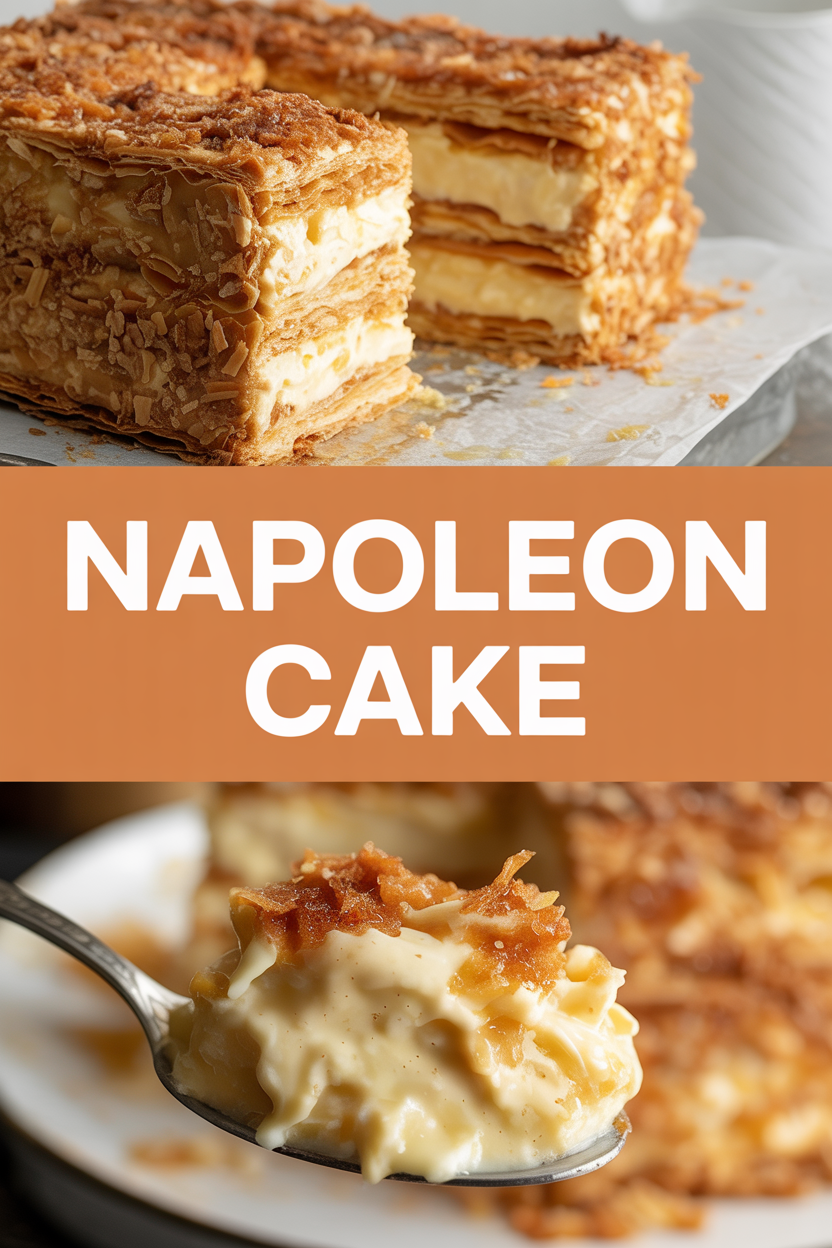
I remember my grandmother pulling a dusting of powdered sugar over a towering Napoleon while the whole kitchen smelled like warm butter and vanilla — flaky layers everywhere, and crumbs on my shirt like a trophy. That memory sticks because this cake feels like a tiny, edible heirloom: delicate, show-stopping, and somehow forgiving. I’ll walk you through an easy, home-cook version that keeps the flaky, buttery crunch of puff pastry and the silky vanilla custard that makes everyone go quiet at the first bite. You’ll hear the pastry crack under your fork, smell the rich vanilla, and feel ridiculously proud. Let’s make a dessert that deserves celebration (or Tuesday night).
Quick Facts
- Yield: Serves 8
- Prep Time: 45 minutes (active)
- Cook Time: 25 minutes (baking + stovetop)
- Total Time: 130 minutes (includes 1 hour chilling)
Why This Recipe is Awesome
This Napoleon cake nails the contrast everyone loves: super-crisp, buttery pastry layers and a luxuriously smooth vanilla cream. It’s fancy enough for guests but simple enough that your oven can’t mess it up. The textures — flaky snaps, creamy richness, and a sweet dusting on top — make every forkful feel like a little celebration.
Ingredients
For the Main Dish:
- 3 sheets frozen puff pastry, thawed (if your brand comes in 2-sheet packs, pick up an extra pack or see swaps below)
- 2 1/2 cups whole milk
- 1/2 cup granulated sugar
- 4 large egg yolks
- 1/3 cup cornstarch
- 2 tbsp unsalted butter, room temperature
- 1 tsp vanilla extract
- Pinch of salt
- Optional: 1 cup heavy cream + 2 tbsp powdered sugar (to fold into the custard for a lighter filling)
- For the top: powdered sugar for dusting or a simple glaze (1 cup powdered sugar + 1–2 tbsp milk)
For the Sauce / Garnish (if applicable):
- Fresh berries or thinly sliced fruit for garnish (optional)
- Toasted sliced almonds or crushed praline for crunch (optional)
How I Make It
Step 1:
Preheat the oven to 400°F. Line two baking sheets with parchment. Unfold each sheet of thawed puff pastry and trim the rough edges to make neat rectangles; you want three roughly equal rectangles total. Prick the pastry all over with a fork (this keeps it from puffing into a giant dome) and place a second sheet of parchment over each piece with another baking sheet on top to weigh it down. Bake until deep golden and crisp, about 12–15 minutes. You’ll smell rich, toasty butter — that’s the good stuff.
Step 2:
While the pastry cools, make the pastry cream. In a medium saucepan, warm 2 1/2 cups whole milk with half the sugar until just steaming and tiny bubbles form at the edge (do not boil). In a bowl, whisk 4 yolks with the remaining sugar and 1/3 cup cornstarch until smooth and pale.
Step 3:
Temper the yolks: slowly stream about 1/2 cup of the hot milk into the yolk mixture, whisking constantly to avoid curdling. Pour the tempered yolk mixture back into the saucepan with the remaining hot milk. Cook over medium heat, whisking constantly, until the custard thickens and comes to a gentle boil — it will sound like a steady simmer and turn glossy. Remove from heat and stir in 2 tbsp butter, 1 tsp vanilla, and a pinch of salt. That aroma — rich vanilla and butter — will make you want to lick the spoon.
Step 4:
Press plastic wrap directly onto the surface of the hot pastry cream to prevent a skin from forming and chill until cold, at least 1 hour. If you want a lighter cream, whip 1 cup heavy cream with 2 tbsp powdered sugar to soft peaks and fold gently into the chilled pastry cream just before assembling.
Step 5:
Assemble the Napoleon: place one baked pastry rectangle on your serving plate, spread a generous layer of pastry cream, add the second pastry, more cream, and finish with the third pastry. Dust the top with powdered sugar or spread a thin glaze and sprinkle toasted nuts if you like crunchy contrast. Chill for 30 minutes to set, then slice with a sharp knife (run the blade under hot water and dry for cleaner cuts). Serve cold or at cool room temperature.
Pro Tips
- Keep everything cold until assembly — cold filling helps the pastry stay crisp longer.
- Trim pastry edges evenly for tidy layers; use the trimmings to make cute mini Napoleons or crumbled garnish.
- Run your knife under hot water between slices to get clean, neat pieces — it makes plating look pro.
- If your pastry puffs unevenly, press it gently with a spatula right after baking while still warm to flatten slightly.
Common Mistakes to Avoid
- Skipping preheating: Classic rookie move. It changes texture and bake time.
- Overmixing: Leads to dense or chewy results. Mix until just combined.
- Guessing cook time: Always use visual cues or a timer, not just vibes.
- Overcrowding pans: Give your food some breathing room to crisp properly.
Alternatives & Substitutions
- Use store-bought gluten-free puff pastry if you need a gluten-free Napoleon (expect a slightly different flake).
- For dairy-free, substitute whole milk with canned full-fat coconut milk and use a dairy-free butter for the custard; whip chilled coconut cream instead of heavy cream.
- Swap vanilla for almond extract (use 1/2 tsp) for a nutty twist.
- If you don’t have cornstarch, use 1/2 cup all-purpose flour (it will be a touch less glossy and take slightly longer to thicken).
Variations & Tips
- Chocolate Napoleon: Whisk 2 tbsp cocoa powder into the pastry cream for a chocolate layer.
- Fruit Napoleon: Add a thin layer of jam or fresh sliced strawberries between cream layers for bright flavor.
- Mini Napoleons: Cut pastry into small squares and assemble individual portions for parties.
- Nutty Crunch: Sprinkle toasted hazelnuts or crushed praline between layers for texture.
- Savory twist: Make a cheddar cream and use savory puff pastry layers for an appetizer-style “Napoleon” (fun for brunch!).
FAQ (Frequently Asked Questions)
- Can I make this ahead of time?
- Yes! Bake the pastry and make the custard up to 1 day ahead. Store the pastry airtight at room temp and the custard in the fridge. Assemble a few hours before serving so the pastry keeps some crunch.
- Can I double the recipe?
- Sure thing. Use larger baking sheets or bake in batches. You’ll need more chilling space and possibly extra pans, but nothing else changes.
- Can I substitute butter with oil?
- Technically yes, but you’ll miss that buttery magic. Use ¾ the amount of oil if you must, and expect a slight change in flavor and mouthfeel.
- How do I know it’s done?
- The pastry should be deep golden and crisp; the custard should be thick, glossy, and coat the back of a spoon. The assembled cake holds its shape and slices cleanly after a short chill.
- What if I don’t have ingredient X?
- Swap pantry staples: cornstarch ↔ flour, whole milk ↔ 2% (creamier with whole milk), heavy cream ↔ chilled coconut cream for dairy-free. I’ll always suggest cornstarch for a silkier custard.
How I Like to Serve It
I serve Napoleon chilled with a handful of fresh berries and a cup of strong coffee or black tea — the bitterness balances the sweetness perfectly. It shines at dinner parties because you can assemble ahead. It also makes a luxurious weekend dessert when you want something a little special but not intimidatinly fussy.
Notes
- Store assembled Napoleon in the refrigerator for up to 2 days; the pastry will soften over time—best eaten within 24 hours for maximum crunch.
- Reheat slices briefly in a warm oven (300°F) for a few minutes if you prefer slightly warm pastry, but avoid too much heat or the filling will loosen.
Final Thoughts
Closing: Now go impress someone — or just yourself — with your homemade Napoleon cake. That crisp, buttery crack and silky cream will make it worth every second of effort. Enjoy!