
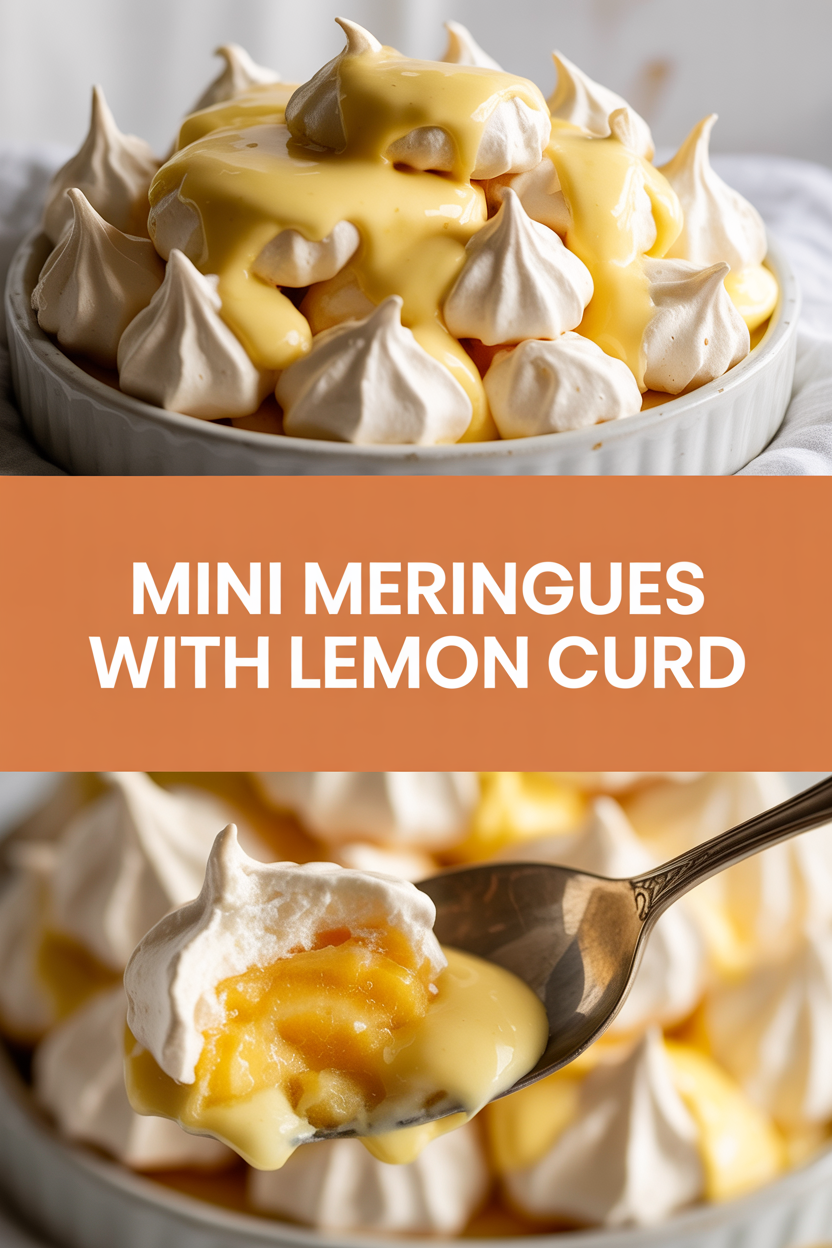
I’ve made a lot of desserts that try to be impressive, but these mini meringues with lemon curd? They laugh in the face of effort and still steal the show. Picture tiny, snowy kisses—crackly exteriors that shatter like little sugar fireworks and reveal marshmallowy centers, topped with bright, sunshine-y lemon curd that pings your taste buds like a bell. I love making them when I want something dainty for guests or a fun treat to snack on while I sip tea and pretend I didn’t just lick the spatula. They feel fancy, but they play nice with a busy weeknight schedule. Plus, who doesn’t love foods that look like they belong on a pastry tray but taste like childhood?
Quick Facts
- Yield: Serves 6 (makes about 30–36 mini meringues)
- Prep Time: 20 minutes
- Cook Time: 1 hour 20 minutes (oven time)
- Total Time: 1 hour 40 minutes (including brief cooling)
Why This Recipe is Awesome
This recipe gives you the best of two worlds: airy, crunchy-shelled meringues and a silky, tangy lemon curd that makes every bite pop. They taste bright, look elegant, and behave well at parties (no knife required). Easy enough for a weekday treat and impressive enough to bring to a potluck—plus the kitchen smells like warm sugar and fresh citrus while you work. It’s so easy even your oven can’t mess it up.
Ingredients
For the Main Dish:
- 3 large egg whites, room temperature
- Pinch of cream of tartar (about 1/8 tsp)
- Pinch of salt
- 3/4 cup granulated sugar
- 1 tsp vanilla extract or 1/2 tsp lemon zest for extra zing
For the Sauce / Garnish (Lemon Curd):
- 3 large egg yolks
- 1/3 cup fresh lemon juice (about 2 lemons)
- 1/2 cup granulated sugar
- 4 tbsp unsalted butter, cold and cut into cubes
- 1 tsp lemon zest (optional, for more aroma)
- Fresh berries or mint leaves for garnish (optional)
How I Make It
Step 1:
Preheat the oven to 225°F. Line two baking sheets with parchment paper. In a clean, dry bowl, I whisk the 3 large egg whites with the pinch of cream of tartar and salt until soft peaks form—this gives the meringues structure. I add the 3/4 cup sugar slowly, one tablespoon at a time, while whisking at high speed. Watch the mixture go glossy and thick; when it holds stiff, shiny peaks, it feels like whipped clouds. Tip: no yolk in your whites—one speck ruins the lift. If that happens, fish it out with an eggshell.
Step 2:
Stir in the vanilla or lemon zest gently with a spatula—don’t deflate the foam. Spoon or pipe tiny dollops (about 1 tablespoon each) onto the parchment, leaving room between them. I like a small star tip for a cute swirl that crisps into ridged edges. You’ll hear the mixer’s whirr stop and then the oven will hum; that’s your cue to move quickly so nothing loses its pep.
Step 3:
Bake at 225°F for about 1 hour 20 minutes. The meringues will dry and firm up; they should sound slightly hollow when you tap the bottom and show no sticky spots. The kitchen smells like sweet air and a whisper of toasted sugar. If you want perfectly white meringues, avoid browning—keep the temp steady and resist the urge to crank the heat.
Step 4:
While the meringues bake, make the lemon curd. Whisk the 3 egg yolks, 1/2 cup sugar, and 1/3 cup lemon juice in a heatproof bowl. Set the bowl over simmering water (double boiler) and stir constantly until thick—about 6–8 minutes. The curd will take on a glossy, custard-like texture and smell vibrantly citrusy. Remove from heat and whisk in the 4 tbsp butter one cube at a time until smooth. Chill briefly if it still runs too much; it should hold softly on a spoon.
Step 5:
Let meringues cool on the baking sheet for 10 minutes, then transfer to a wire rack to finish cooling. Pair each meringue with a small spoonful of lemon curd on top, or sandwich two together with curd in the middle for a dainty bite. Garnish with a tiny lemon zest curl or a fresh berry. Serve right away or store properly (notes below).
Pro Tips
- Use room-temperature egg whites to get more volume—they whip up faster and higher.
- If humidity tries to ruin your day, bake meringues on a dry day or use a dehumidifier; humidity makes them sticky.
- Slowly add sugar—this prevents gritty meringue and gives that glossy, firm shine.
- For perfectly smooth curd, strain it through a fine-mesh sieve after cooking to catch any cooked bits of yolk.
Common Mistakes to Avoid
- Skipping preheating: Classic rookie move. It changes texture and bake time.
- Overmixing: Leads to dense or chewy results. Mix until just combined.
- Guessing cook time: Always use visual cues or a timer, not just vibes.
- Overcrowding pans: Give your food some breathing room to crisp properly.
Alternatives & Substitutions
- Skip eggs: use aquafaba (chickpea brine) whipped like egg whites for a vegan meringue—taste tests differ slightly but texture stays fun.
- Make the curd dairy-free by swapping butter for solid coconut oil (flavor tilts tropical).
- Use cane sugar or superfine sugar for faster dissolving; powdered sugar will ruin the structure.
- These meringues are naturally gluten-free. For dairy-free, follow the coconut oil curd tip above.
Variations & Tips
- Add cocoa to the meringue (fold in 1 tbsp sifted cocoa) for chocolate kisses—kids love them.
- Fold in finely chopped pistachios for a nutty crunch and a pop of green.
- Swap lemon curd for raspberry jam or passionfruit curd for tropical flair.
- Make sandwich-style “pavlova bites” with whipped cream and berries instead of curd.
- For adult-friendly versions, add a splash of limoncello to the curd after it cools.
- Create ombré meringues by tinting whites lightly with gel food color—playful for parties.
FAQ (Frequently Asked Questions)
- Can I make this ahead of time?
- Yes! Keep baked meringues in an airtight container at room temperature for up to 3 days. Store lemon curd in the fridge for up to 1 week and spoon it on just before serving to keep the meringue crisp.
- Can I double the recipe?
- Sure thing. Use two baking sheets and rotate them halfway through baking if your oven has hot spots. Make curd in a larger bowl and watch the same thickening cues.
- Can I substitute butter with oil?
- Technically yes, but you’ll miss that buttery magic. Use ¾ the amount of oil and expect a slightly different mouthfeel and flavor.
- How do I know it’s done?
- The meringues should feel dry and lift cleanly from the parchment, sound slightly hollow when tapped, and show no sticky gloss on the surface. The curd thickens until it coats the back of a spoon and gains a glossy sheen.
- What if I don’t have ingredient X?
- Short on eggs? Try aquafaba for the meringues. Out of lemons? Use half orange juice and add a touch more zest for brightness.
How I Like to Serve It
I plate these on a pretty tiered tray for a brunch crowd, or nestle a handful in a picnic basket with sweet tea. For afternoon tea, I serve them with delicate china and a pot of Earl Grey; for summer patios, pair them with a glass of sparkling wine. They feel right at home at baby showers, bridal parties, or quiet nights when I want a small, triumphant dessert.
Notes
- Store meringues in an airtight container at room temperature; keep lemon curd in the fridge. Rewarm curd gently over a bowl of warm water to loosen before using.
- If you worry about raw eggs, use pasteurized eggs for both whites and yolks.
Final Thoughts
Closing: Now go impress someone — or just yourself — with these tiny clouds of citrus joy. They look fancy, taste like sunshine, and hardly ask for anything in return.