
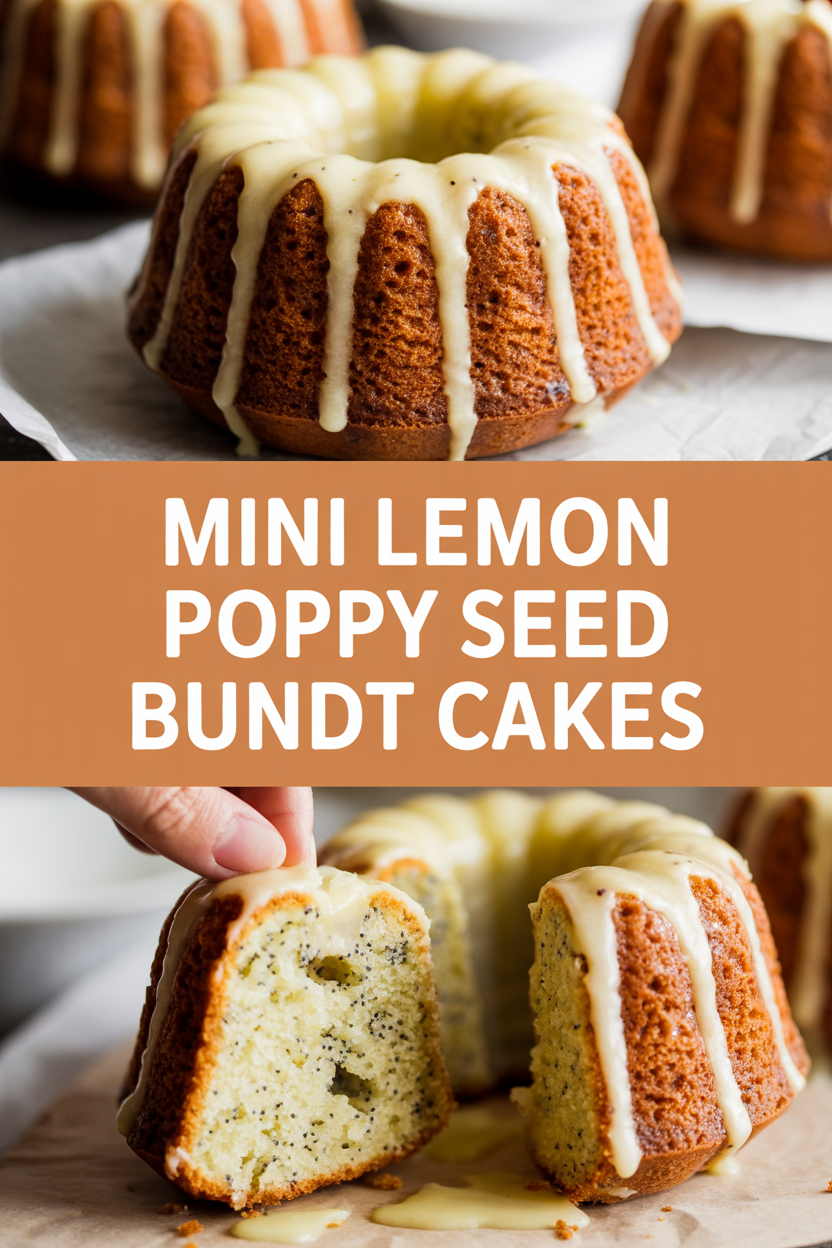
I promise I didn’t plan to become the person who bakes tiny, ridiculous cakes purely to brighten Tuesday mornings, but here we are — and these mini lemon poppy seed bundt cakes are my latest joy. I’ll be honest: I love anything that smells like sunshine, and the kitchen fills with a bright, zesty lemon perfume the second the batter hits the pan. They bake up with tender, buttery crumbs studded with little crunchy poppy seeds, and that tangy glaze? Pure happiness in drippy, glossy form. These are the perfect size for a cozy coffee break, a small gift, or a cheeky dessert when you don’t want leftovers haunting you for days. Let’s make something that smells amazing and looks fancy, but is actually wonderfully simple.
Quick Facts
- Yield: Serves 8
- Prep Time: 15 minutes
- Cook Time: 18–22 minutes per batch
- Total Time: 33–37 minutes
Why This Recipe is Awesome
This recipe gives you moist, tender mini bundts with a bright lemon flavor and a little pop from the seeds — crunchy, soft, tangy, buttery, all at once. They look fancy enough for guests but come together in under 40 minutes, which means you get that “I made something beautiful” feeling without committing your whole afternoon. It’s so easy even your oven can’t mess it up; plus, the glaze puddles into the nooks just right, making each bite a little celebration.
Ingredients
For the Main Dish:
- 1 3/4 cups all-purpose flour
- 1 cup granulated sugar
- 2 tsp baking powder
- 1/2 tsp baking soda
- 1/2 tsp salt
- 1 stick (1/2 cup) unsalted butter, softened
- 2 large eggs, room temperature
- 1/2 cup whole milk, room temperature
- 1/2 cup sour cream or plain Greek yogurt
- 2 tbsp poppy seeds
- zest of 2 lemons (about 2 tbsp) — use fresh lemon zest
- 2 tbsp fresh lemon juice
- 1 tsp vanilla extract
For the Sauce / Garnish (Glaze):
- 1 1/2 cups powdered sugar
- 2–3 tbsp fresh lemon juice (start with 2)
- 1 tbsp milk (optional, for a smoother drizzle)
- pinch of salt
- extra lemon zest or thin lemon slices for garnish (optional)
How I Make It
Step 1:
Preheat the oven to 350°F. I grease and flour my mini bundt pan (use a pastry brush to get into those nooks) or lightly spray with baking spray that contains flour. In a bowl, whisk together the **flour**, **sugar**, **baking powder**, **baking soda**, and **salt**. The dry mix should look uniform and pale — like the beginning of something delightful.
Step 2:
In a separate bowl, cream the **butter** with the eggs, then stir in the **sour cream**, **milk**, **lemon zest**, **lemon juice**, and **vanilla**. Add the wet mixture to the dry ingredients and fold gently until just combined — don’t overdo it. Fold in the **poppy seeds** last. The batter will smell like a bright lemon cupcake batter and feel thick but pourable.
Step 3:
Spoon or pipe the batter into the prepared mini bundt cavities, filling each about 3/4 full. Smooth the tops with the back of a spoon. Slide the pan into the oven and listen for that gentle oven hum — the first sign that chemistry is happening. Bake at 350°F for about 18–22 minutes, rotating halfway if your oven runs hot. The cakes should rise and show golden edges.
Step 4:
Check doneness with a toothpick: it should come out with a few moist crumbs, not raw batter. I let the cakes cool in the pan for about 10 minutes — if you try to unmold them immediately they might tear. Then I invert the pan onto a rack; if a cake sticks, tap the pan and wiggle gently. The tops should look pale gold with a slightly glossy glaze-ready surface.
Step 5:
Whisk the glaze: combine the **powdered sugar**, **lemon juice**, **milk**, and a pinch of salt until smooth. Drizzle generously over the cooled mini bundts so it pools in the crevices. Sprinkle extra zest or a tiny lemon slice on each for texture and color. Let the glaze set for 10 minutes before serving so it forms those pretty glossy ridges.
Pro Tips
- Use room-temperature eggs and dairy for a silkier batter and even rise.
- If your batter curdles when you add wet to dry, keep stirring gently — the final cake still tastes great; the key is not to overmix.
- Grease mini bundt pans well and consider dusting with sugar instead of flour for an extra-crisp exterior that unmolds beautifully.
- For a stronger lemon hit, add 1 tsp of lemon extract, but don’t overdo it — real zest sings best.
Common Mistakes to Avoid
- Skipping preheating: Classic rookie move. It changes texture and bake time.
- Overmixing: Leads to dense or chewy results. Mix until just combined.
- Guessing cook time: Always use visual cues or a timer, not just vibes.
- Overcrowding pans: Give your food some breathing room to crisp properly.
Alternatives & Substitutions
- Swap sour cream for equal parts plain Greek yogurt — texture stays tangy and moist.
- Replace butter with 3/4 the amount of neutral oil (vegetable or canola) if you need a dairy-free option; note you’ll lose some of that buttery magic.
- For gluten-free: use a 1:1 gluten-free flour blend and add 1/4 tsp xanthan gum if your blend lacks it; expect a slightly different crumb.
- Use almond milk instead of whole milk for a lighter dairy-free tweak; flavor shifts subtly nutty.
Variations & Tips
- Add a teaspoon of poppy seed and lemon crumb topping for a crunchy finish.
- Swap lemon for orange zest and juice for a sweet, mellow citrus version.
- Mix in 1/2 cup blueberries for a lemon-blueberry mini bundt — toss berries with a teaspoon of flour before folding in to prevent sinking.
- Make them kid-friendly by reducing lemon juice to 1 tbsp and adding a vanilla drizzle instead of tangy glaze.
- Turn them into tea cakes: serve warm with a dollop of whipped cream and a mint leaf for afternoon company.
- Creative twist: brush warm cakes with a tablespoon of limoncello before glazing for an adult-only treat.
FAQ (Frequently Asked Questions)
- Can I make this ahead of time?
- Yes! Bake the mini bundts, let them cool completely, then store in an airtight container at room temperature for 1–2 days. For longer storage, freeze unfrosted cakes in a single layer, then transfer to a freezer bag for up to 2 months; thaw and glaze when ready.
- Can I double the recipe?
- Sure thing. Double the ingredients and bake in two pans or in batches. Avoid overfilling: stick to filling each cavity about 3/4 full. Baking time stays roughly the same for mini pans; for full-size pans, increase baking time and check frequently.
- Can I substitute butter with oil?
- Technically yes, but you’ll miss that buttery magic. Use ¾ the amount of oil.
- How do I know it’s done?
- Look for golden edges, a slight spring back when you press the top, and a toothpick with a few moist crumbs (not wet batter). The surface should feel set and not wobbly.
- What if I don’t have ingredient X?
- If you lack sour cream, use plain Greek yogurt. No lemons? Use 1 tsp lemon extract and extra zest if available; if not, add 1/2 tsp vanilla and call it a citrus-inspired cake.
How I Like to Serve It
I love these warm with a strong cup of coffee for a solo morning treat. They also shine on a brunch spread next to scrambled eggs and fruit, or boxed up as a neighborly gift. In summer, serve with iced tea; in winter, pair with a cozy chai — citrus brightens any season.
Notes
- Store glazed cakes at room temperature for up to 2 days in an airtight container; refrigerate up to 4 days if your kitchen is very warm.
- If freezing, glaze after thawing for best texture.
Final Thoughts
Closing: Go bake something that makes your kitchen smell like sunshine — and then eat a tiny cake for breakfast because you absolutely deserve it.