
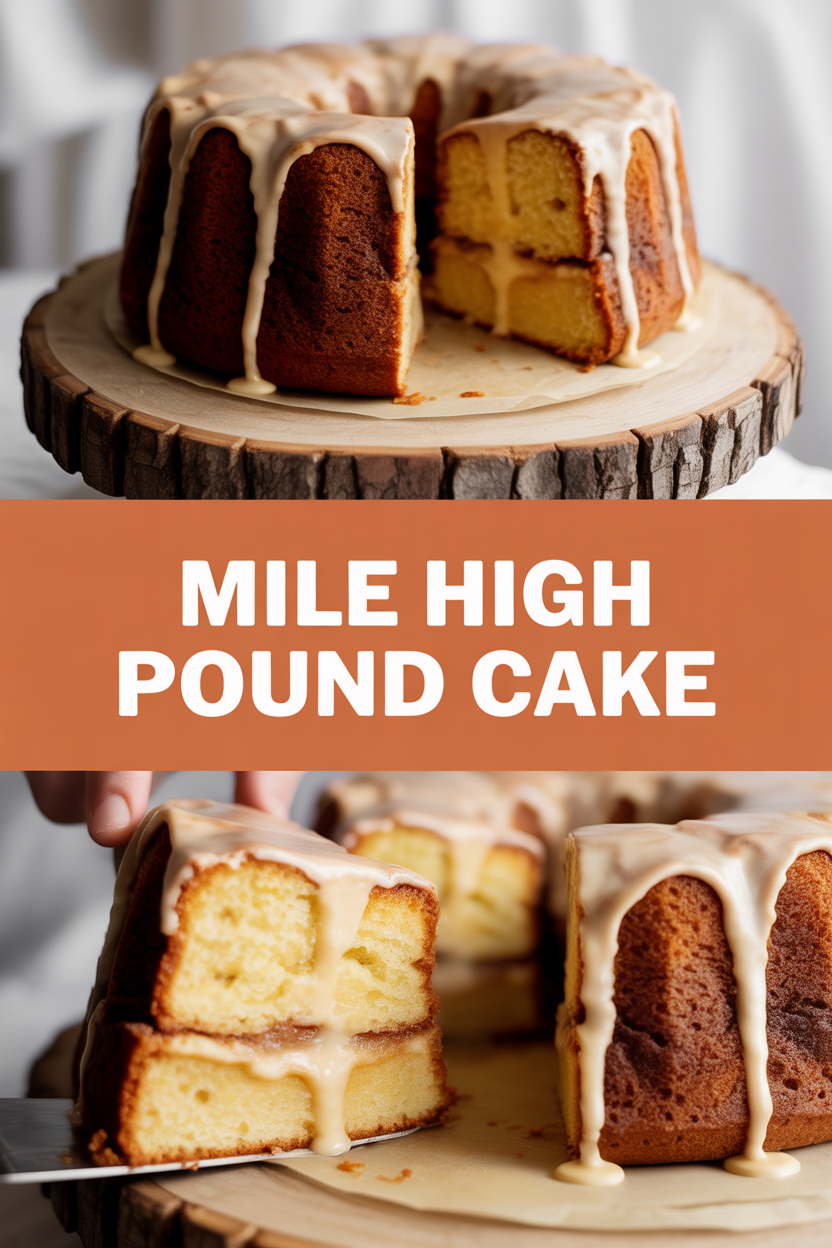
Chef’s secret time: I’m about to let you into a little kitchen hack that makes this “Mile High Pound Cake” actually earn its name. I learned to separate the eggs and whip the whites just like I would for an angel food cake — extra air = height without sacrificing that classic, buttery pound-cake crumb. Think velvet-soft interior with golden, crackly edges and a scent of browned butter and vanilla that sneaks into every corner of the house. I use simple pantry staples and one tiny trick (folding the whipped whites at the end) that turns an ordinary loaf into something you’ll slice like a show-off at brunch. Ready to impress people with something that looks fussy but behaves mostly like a friend?
Quick Facts
- Yield: Serves 8–10
- Prep Time: 20 minutes (plus 15 minutes for whipping egg whites)
- Cook Time: 50–60 minutes
- Total Time: 1 hour 30 minutes (including cooling)
Why This Recipe is Awesome
This cake hits that dreamy balance: dense in the best way (a real pound cake should feel substantial), but lifted and airy so slices don’t collapse. It smells like butter and vanilla, browns to a perfect golden crust, and keeps beautifully — which means you can bake ahead and still look like a hero. Plus, it’s so straightforward that even if your oven and I aren’t best friends, you’ll still end up with tall slices that make people ask for the recipe. Who doesn’t love dramatic height with simple ingredients?
Ingredients
For the Main Dish:
- Unsalted butter — 1 1/2 cups (3 sticks, 12 oz), softened
- Granulated sugar — 2 cups
- Large eggs — 6, separated (yolks and whites)
- Vanilla extract — 2 tsp
- Cake flour — 3 cups, sifted (or all-purpose flour + 6 tbsp cornstarch)
- Baking powder — 1 tsp
- Salt — 1/2 tsp
- Buttermilk — 1/2 cup
- Lemon zest — 1 tbsp (optional, for brightness)
- Powdered sugar — for dusting
For the Sauce / Garnish (if applicable):
- Lemon glaze (optional): 1 cup powdered sugar + 2 tbsp fresh lemon juice + 1–2 tsp milk to thin
How I Make It
Step 1:
I preheat the oven to 350°F and grease a 10-inch tube pan (or a deep 9×5 loaf pan). I cream the butter and sugar together in a stand mixer on medium-high until the mixture looks pale and fluffy — about 3–4 minutes. The kitchen starts to smell like brown sugar and warm butter; that’s your cue that you’re on the right track.
Step 2:
I add the egg yolks one at a time, scraping the bowl between additions, then stir in the vanilla and lemon zest if I’m using it. I sift the cake flour, baking powder, and salt together, and then add them to the butter mixture in thirds, alternating with the buttermilk — flour, milk, flour, milk, flour — mixing on low just until combined. Don’t overmix here; you want the batter cohesive, not rubbery.
Step 3:
Now the trick: I beat the egg whites in a clean bowl to soft peaks (about 3–4 minutes). You’ll hear a gentle roar from the mixer and see glossy, billowy peaks form — gorgeous. I fold about a cup of the whites into the batter to lighten it, then gently fold in the rest until no white streaks remain. Fold like you mean it, but gently — patience saves height.
Step 4:
I pour the batter into the prepared pan, smooth the top, and tap the pan on the counter a couple of times to settle air pockets. I bake at 350°F for about 50–60 minutes, or until the top turns deep golden and a toothpick comes out with just a few moist crumbs. The house fills with a rich, buttery scent and you’ll hear the faint crackle as the crust sets. If the cake browns too fast, I tent it with foil after 35 minutes.
Step 5:
I cool the cake in the pan for 10–15 minutes, then run a knife around the edge and invert onto a rack to cool completely. For a pretty finish, I whisk the optional lemon glaze until smooth and drizzle it over the cooled loaf, or dust with powdered sugar. Slice with a serrated knife so you keep those tall, clean slices.
Pro Tips
- Use room-temperature butter and eggs — they incorporate easier and produce a smoother batter.
- Clean, dry equipment for the egg whites makes all the difference; any grease kills volume.
- If you don’t have cake flour, use all-purpose flour and remove 6 tbsp from each cup, replacing it with 6 tbsp cornstarch, then sift well.
- Rotate the pan halfway through baking if your oven heats unevenly, and tent with foil if the top gets too dark.
Common Mistakes to Avoid
- Skipping preheating: Classic rookie move. It changes texture and bake time.
- Overmixing: Leads to dense or chewy results. Mix until just combined.
- Guessing cook time: Always use visual cues or a timer, not just vibes.
- Overcrowding pans: Give your food some breathing room to crisp properly.
Alternatives & Substitutions
- Butter → oil: Use ¾ the amount of oil for moisture, but you’ll lose some of that buttery magic.
- Cake flour → all-purpose + cornstarch (see Pro Tips); texture gets a touch heavier but still lovely.
- Buttermilk → plain yogurt or milk + 1 tsp vinegar (let sit 5 minutes); this keeps tang and tenderness.
- Dairy-free: swap in vegan butter and a non-dairy milk; texture changes slightly but still tasty.
- Gluten-free: use a 1:1 gluten-free flour blend and add 1/2 tsp xanthan gum for structure.
Variations & Tips
- Chocolate swirl: fold in 1/2 cup melted, cooled chocolate to half the batter and layer for a marbled effect.
- Almond pound cake: swap 1 tsp almond extract for half the vanilla and sprinkle sliced almonds on top.
- Citrus burst: add 2 tbsp orange zest and glaze with orange juice for a brighter flavor.
- Mini loaves: divide batter into 4 mini pans and bake 30–35 minutes for giftable treats.
- Boozy glaze: whisk 1–2 tbsp rum into the lemon glaze for an adult twist.
FAQ (Frequently Asked Questions)
- Can I make this ahead of time?
- Yes! Bake the cake, cool completely, wrap tightly in plastic wrap, and store at room temperature for up to 3 days or freeze for up to 2 months. Thaw overnight in the fridge, then bring to room temp before serving.
- Can I double the recipe?
- Sure thing. Use two pans (two 10-inch tube pans or two 9×5 loaves) rather than one oversized pan, and expect the bake time per pan to stay similar — monitor with a toothpick.
- Can I substitute butter with oil?
- Technically yes, but you’ll miss that buttery magic. Use ¾ the amount of oil and expect a slightly different crumb and flavor profile.
- How do I know it’s done?
- You’ll see a deep golden top and the cake will pull slightly from the pan edges. Insert a toothpick in the center: it should come out with a few moist crumbs, not wet batter. The cake should feel set and spring back lightly when you press the top.
- What if I don’t have ingredient X?
- Swap smart: no buttermilk? Use plain yogurt or milk + 1 tsp vinegar. No cake flour? Use all-purpose plus cornstarch (see Pro Tips). Missing eggs is trickier — try a commercial egg replacer for emergencies, but texture will change.
How I Like to Serve It
I love a thick wedge with a dollop of whipped cream and fresh berries for brunch, or a thin slice alongside a strong cup of black coffee in the afternoon. It plays nicely at holiday tables, potlucks, or as an everyday treat. In summer I drizzle chilled lemon glaze; in winter I serve it warm with hot tea and a good book.
Notes
- Store wrapped at room temperature up to 3 days, or refrigerate for up to 5 days. Freeze slices in a single layer for up to 2 months.
- Not applicable for meat temperatures; this is a cake. If you ever bake chicken, aim for 165°F.
Final Thoughts
Closing: Go on — bake the tall one. It looks fancy, tastes even better, and you’ll love how simple that secret trick feels once you try it.