
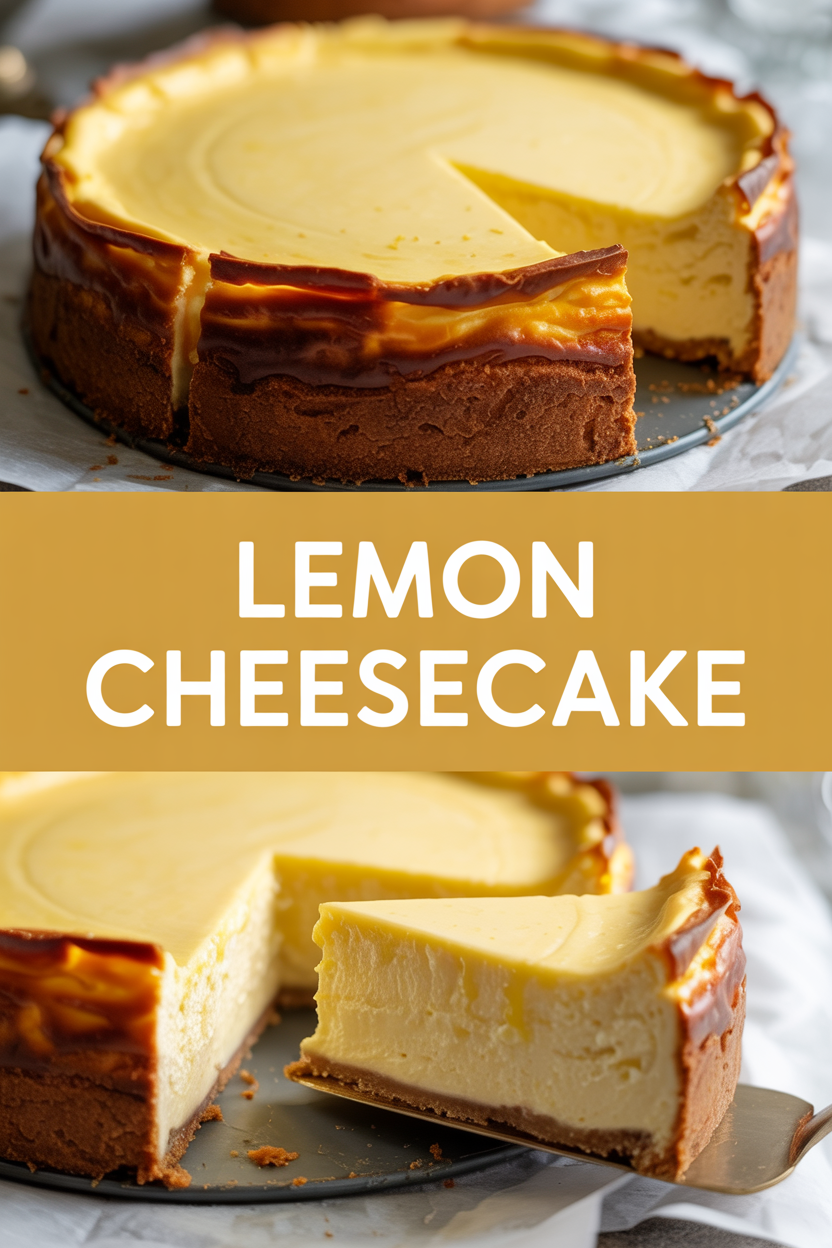
I’m about to let you in on a little kitchen secret: the trick to a perfectly smooth, tangy lemon cheesecake doesn’t come from fancy equipment — it comes from a few tiny hacks I picked up while stalking pastry chefs and burning one too many crusts. I love a cheesecake that wakes up your taste buds with bright lemon, without tasting like a cleaning product. Follow my method and you’ll get a silky, crack-light surface, a buttery graham crust that makes a satisfying snap, and that citrus perfume that fills the kitchen and makes everyone ask, “Is that for me?” Trust me — I guard this recipe jealously, but I’m sharing it with you because friends don’t let friends buy boxed cheesecake.
Quick Facts
- Yield: Serves 8–10
- Prep Time: 20 minutes (plus 30 minutes for chilling ingredients)
- Cook Time: 45–55 minutes (plus water bath time)
- Total Time: About 5 hours (includes 4 hours chilling or overnight)
Why This Recipe is Awesome
This lemon cheesecake balances creamy richness with bright citrus zing so well it practically does the happy dance on your tongue. The crust snaps, the filling stays silky (no rubbery texture), and the lemon aroma wakes up the whole house. It’s forgiving enough for weeknight bakers and impressive enough for company — honestly, it’s so easy even your oven can’t mess it up if you follow the water-bath trick.
Ingredients
For the Main Dish:
- 1 1/2 cups graham cracker crumbs (about 10 full crackers)
- 6 tbsp unsalted butter, melted
- 2 tbsp granulated sugar (for crust)
- 3 (8 oz) packages cream cheese, room temperature
- 1 cup granulated sugar
- 3 large eggs, room temperature
- 1/2 cup sour cream, room temperature
- 1/2 cup heavy cream
- 3 tbsp fresh lemon juice (about 1 large lemon)
- 1 tbsp lemon zest (finely grated)
- 1 tsp pure vanilla extract
- 2 tbsp all-purpose flour (or 2 tbsp cornstarch for gluten-free)
- Pinch of fine sea salt
For the Sauce / Garnish (optional):
- Fresh berries or a quick lemon curd (store-bought or homemade)
- Whipped cream for softness and extra pretty
How I Make It
Step 1:
Preheat the oven to 325°F. Press the graham cracker crumbs, melted butter, and 2 tbsp sugar into the bottom of a 9-inch springform pan. Press firmly with the bottom of a measuring cup so the crust compacts and sings when you tap it — you want a solid base that will snap when you cut a slice. Pop the pan in the fridge while you prepare the filling so the butter firms up.
Step 2:
Beat the cream cheese in a large bowl on medium speed until completely smooth and creamy. Scrape the bowl often. Add 1 cup sugar and beat until incorporated. Add the eggs one at a time, beating gently after each so you don’t whip excess air into the batter — overbeating equals cracks. Stir in the sour cream, heavy cream, lemon juice, lemon zest, vanilla, flour, and a pinch of salt. The batter should look glossy and smell bright and lemony.
Step 3:
Pour the filling onto the chilled crust. Wrap the bottom and sides of the springform pan with a double layer of heavy-duty foil (I keep water out this way). Set the pan in a roasting pan and pour hot water into the roasting pan until it reaches halfway up the sides of the springform — that water bath keeps the edges from cooking too fast and helps prevent cracks. Slide the whole setup into the oven and bake for 45–55 minutes, until the center still jiggles slightly but the edges look set and a light golden hue appears.
Step 4:
Turn off the oven and crack the door open. Let the cheesecake rest inside for 30 minutes to cool slowly — the gradual drop in temperature helps avoid dramatic cracking. Then remove it from the water bath, peel off the foil, and cool on a rack to room temperature. You’ll already smell the citrus and cream mingling into something irresistible.
Step 5:
Chill the cheesecake in the fridge for at least 4 hours, preferably overnight. When you’re ready to serve, run a thin knife around the edge, release the springform, and top with fresh berries, a dollop of whipped cream, or a spoonful of lemon curd. Slice with a hot, clean knife for neat edges — wipe the knife between cuts.
Pro Tips
- Soften your cream cheese at room temperature for at least 30 minutes so the batter mixes smooth with no lumps.
- Beat gently once eggs go in — fewer bubbles = fewer cracks. I stir with a rubber spatula at the end to get out stubborn streaks.
- Use a water bath and heavy foil. I never skip this — it stabilizes the oven temp and gives you a silky texture.
- If you want a brighter lemon hit, add up to 1 tbsp more lemon juice, but taste the batter first so it doesn’t get too tart.
Common Mistakes to Avoid
- Skipping preheating: Classic rookie move. It changes texture and bake time.
- Overmixing: Leads to dense or chewy results. Mix until just combined.
- Guessing cook time: Always use visual cues or a timer, not just vibes.
- Overcrowding pans: Give your food some breathing room to crisp properly.
Alternatives & Substitutions
- Swap graham crackers for gluten-free graham crumbs or crushed almonds for a nutty crust (affects texture and flavor).
- Replace sour cream with plain Greek yogurt for a tangy lift and slightly lighter texture.
- For dairy-free: use full-fat coconut cream in place of heavy cream and a vegan cream cheese alternative (expect a subtle coconut note).
- Use 2 tbsp cornstarch instead of flour to keep it gluten-free and just as stable.
Variations & Tips
- Berry-Studded: Fold 1 cup of fresh blueberries into the batter for a summer twist.
- Lemon-Blueberry Swirl: Drop spoonfuls of lemon curd before baking and swirl with a skewer for dramatic looks.
- Savory-Sweet: Add a tablespoon of fresh thyme to the crust for an herbaceous undertone — unexpected and delightful.
- Mini Cheesecakes: Make in a muffin tin; reduce bake time to about 18–22 minutes.
- Chocolate Layer: Add a thin layer of melted dark chocolate on the cooled crust for a rich contrast.
- Gluten-free: Use almond flour and 2 tbsp coconut oil in the crust for a nut-forward gluten-free option.
FAQ (Frequently Asked Questions)
- Can I make this ahead of time?
- Yes! Make the cheesecake up to two days ahead and keep it chilled, covered. Add fresh toppings just before serving to keep them vibrant.
- Can I double the recipe?
- Sure thing. Use two springform pans or a 10–12 inch pan. Bake time may increase; check for a slight jiggle in the center as your doneness cue.
- Can I substitute butter with oil?
- Technically yes, but you’ll miss that buttery magic. Use ¾ the amount of oil and expect a slightly softer, less snap-able crust.
- How do I know it’s done?
- Look for set edges and a center that still jiggles gently when you shake the pan. The top should be mostly set with a tiny wobble in the middle — it firms while chilling.
- What if I don’t have ingredient X?
- No panic. If you lack sour cream, use plain Greek yogurt. No graham crackers? Use vanilla wafers or crushed digestive biscuits. Always taste the batter if you swap citrus or sugar to balance flavors.
How I Like to Serve It
I serve this cheesecake chilled with a spoonful of lemon curd and a handful of fresh raspberries for color and tartness. A small espresso or a glass of sparkling wine plays nicely alongside for celebrations. For casual nights, cut it thin and offer a dollop of whipped cream so everyone can indulge without overdoing it.
Notes
- Store covered in the fridge up to 4 days. Freeze slices for up to 2 months; thaw overnight in the fridge.
- Not relevant here, but note: safe cooking temps for meat: 165°F for poultry, as a general kitchen safety reminder.
Final Thoughts
Closing: Go bake this lemon cheesecake and let the citrusy smell take over your kitchen — now go impress someone, or just yourself, with your homemade masterpiece!