
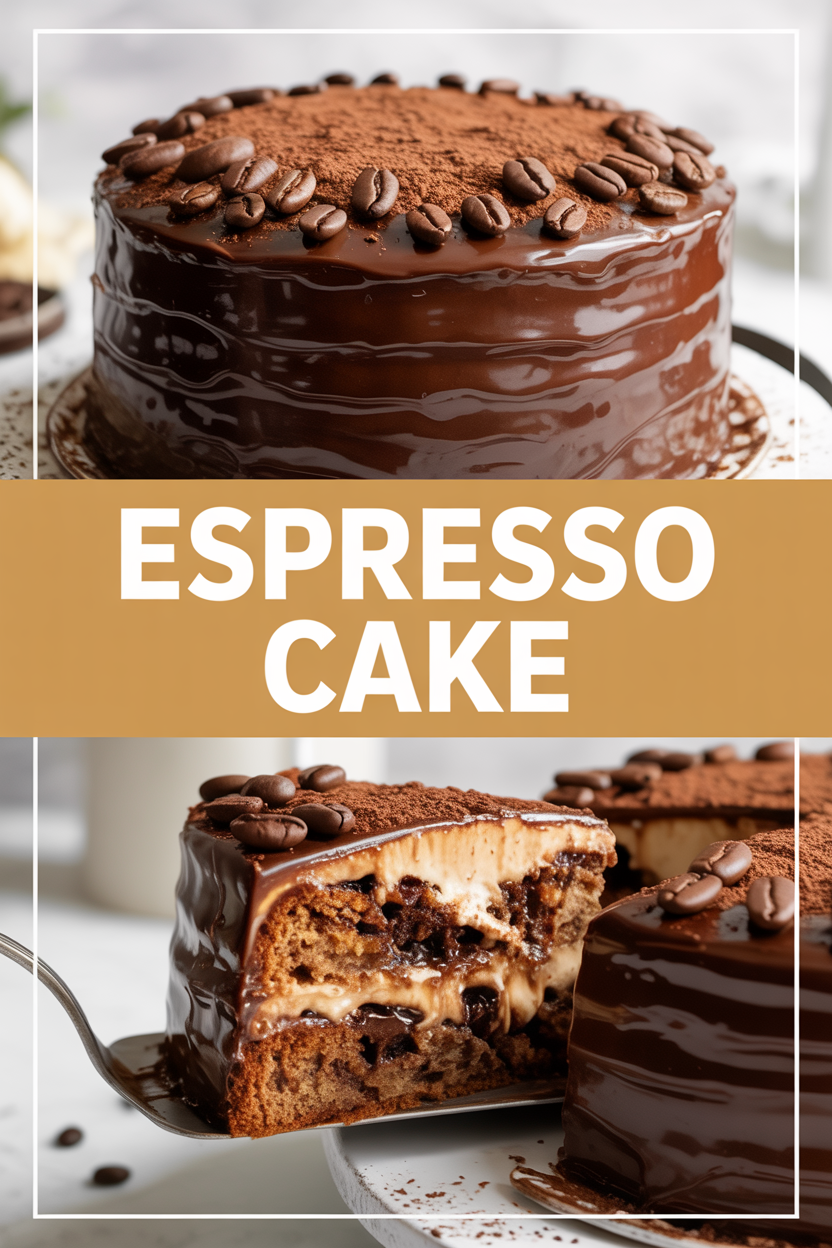
I have to confess: I make this cake whenever I need an instant pick-me-up that smells like a coffee shop and eats like a hug. I call it my “emergency espresso cake” because it fixes bad mornings, celebrates small wins, and doubles as dessert when neighbors drop by unannounced. It wakes the kitchen with warm, roasted coffee notes and a crackly chocolate top that sings when you slice it. If you love coffee, chocolate, or anything that pairs beautifully with a lazy Sunday, stick around — I’ll walk you through every step, share little tricks I learned the hard way, and promise you a loaf that tastes way fancier than it looks.
Quick Facts
- Yield: Serves 8–10
- Prep Time: 15 minutes
- Cook Time: 40–45 minutes
- Total Time: 55–60 minutes
Why This Recipe is Awesome
You get deep, coffee-forward flavor without any complicated techniques. The crumb stays moist and tender thanks to a touch of sour cream, and the espresso cuts through the chocolate for a grown-up sweetness. It smells like a café and slices like a dream — plus, it’s so forgiving even a sleepy baker can nail it. Who doesn’t love a cake that doubles as breakfast and dessert?
Ingredients
For the Main Dish:
- 1 3/4 cups all-purpose flour
- 3/4 cup unsweetened cocoa powder (preferably Dutch-process)
- 1 1/4 cups granulated sugar
- 1 tsp baking powder
- 1/2 tsp baking soda
- 1/2 tsp fine salt
- 2 large eggs, at room temperature
- 1/2 cup unsalted butter, melted and slightly cooled
- 1/2 cup sour cream (or plain Greek yogurt)
- 1/2 cup whole milk (or any milk you have)
- 1/3 cup strong brewed espresso or very strong coffee, hot
- 1 tsp vanilla extract
For the Espresso Glaze (optional):
- 1 cup powdered sugar, sifted
- 1–2 tbsp brewed espresso (or milk for a milder glaze)
- 1 tbsp unsweetened cocoa powder (optional, for chocolate-gloss)
- Pinch of salt
How I Make It
Step 1:
I preheat the oven to 350°F and grease a 9×5-inch loaf pan, then line it with parchment for easy removal. I whisk the dry ingredients — flour, cocoa, sugar, baking powder, baking soda, and salt — in a large bowl until they look evenly dark and fluffy. That scent? Chocolate powder blooming — one of my favorite smells.
Step 2:
In a separate bowl, I beat the eggs with the melted butter, then stir in the sour cream, milk, hot espresso, and vanilla. The hot coffee wakes the cocoa and loosens the butter so the batter comes together silky-smooth. Tip: if your espresso sits too long and cools, warm it briefly; you want it hot enough to melt the cocoa but not so hot that it cooks the eggs.
Step 3:
I pour the wet mixture into the dry and fold with a spatula until the streaks disappear — I stop when I still see a few streaks because overmixing makes cakes tough. The batter smells like a mocha latte, and it looks glossy and slightly thick. I scrape it into the prepared pan, smooth the top, and tap the pan on the counter once to settle air bubbles.
Step 4:
I bake at 350°F for 40–45 minutes, keeping an eye on the top: the edges should pull away slightly, the center should spring back to the touch, and a toothpick comes out with a few moist crumbs — not wet batter. The kitchen fills with roasted coffee and chocolate aroma; the top develops a pretty crackle where it concentrates flavor. If the edges brown too quickly, I tent a sheet of foil over the pan about 10 minutes before the end.
Step 5:
I let the loaf cool in the pan for about 10 minutes, then lift it out using the parchment and finish cooling on a rack. For the glaze, I whisk powdered sugar, espresso, cocoa, and a pinch of salt until glossy, then drizzle it over the warm loaf. The glaze sinks into the top in ribbons and makes the cake sing. Serve slightly warm or at room temperature with a big mug of coffee.
Pro Tips
- Use hot espresso when you mix the batter; it blooms the cocoa and deepens the flavor instantly.
- Bring eggs and milk to room temperature for a more even rise and tender crumb.
- If you only have instant espresso powder, dissolve 1 tbsp in 1/3 cup hot water — it works great and keeps the flavor bright.
- Want extra moisture? Swap half the milk for buttermilk or add a tablespoon of molasses for richness.
Common Mistakes to Avoid
- Skipping preheating: Classic rookie move. It changes texture and bake time.
- Overmixing: Leads to dense or chewy results. Mix until just combined.
- Guessing cook time: Always use visual cues or a timer, not just vibes.
- Overcrowding pans: Give your food some breathing room to crisp properly.
Alternatives & Substitutions
- Replace sour cream with equal plain Greek yogurt — you get the same tang and moisture.
- Use olive oil instead of butter for a dairy-free option (use ¾ the amount); the cake stays moist but lacks that buttery magic.
- For gluten-free: swap the flour for a 1:1 gluten-free baking blend and add 1/4 tsp xanthan gum if the blend lacks it; texture will stay tender but a bit crumblier.
- Milk-free: use almond or oat milk; flavor becomes slightly nuttier but still delicious.
Variations & Tips
- Add ½ cup chocolate chips or chopped nuts for texture — they sink a little and create gooey pockets.
- Stir in a tablespoon of orange zest for a bright citrus note that plays beautifully with espresso.
- Swap the glaze for a quick mascarpone frosting: beat 4 oz mascarpone with 1/2 cup powdered sugar and 1 tbsp espresso.
- Make a coffee walnut version: fold in toasted walnuts and sprinkle sea salt on top for contrast.
- Turn it into cupcakes: bake at 350°F for 18–22 minutes instead; check early.
FAQ (Frequently Asked Questions)
- Can I make this ahead of time?
- Yes! Bake the loaf, cool completely, and wrap tightly. Store at room temperature for up to 2 days or refrigerate for up to 5 days. Reheat slices briefly in the microwave (10–15 seconds) to revive that just-baked warmth.
- Can I double the recipe?
- Sure thing. Use two loaf pans and stagger oven placement so air circulates; baking time might run a little longer (add 5–10 minutes) — trust the toothpick test.
- Can I substitute butter with oil?
- Technically yes, but you’ll miss that buttery magic. Use ¾ the amount of oil and expect a slightly denser crumb.
- How do I know it’s done?
- Look for a crackly top, golden edges pulling away from the pan, and a toothpick that comes out with a few moist crumbs. The center should spring back when pressed lightly.
- What if I don’t have ingredient X?
- Out of sour cream? Use plain Greek yogurt. No brewed espresso? Dissolve 1 tbsp instant espresso in hot water. Short on milk? Plain water + an extra tablespoon of butter works in a pinch.
How I Like to Serve It
I serve a warm slice with a dollop of whipped cream or a smear of mascarpone and extra espresso drizzle for serious coffee lovers. It plays nicely with a glass of cold milk for kids (or the inner child inside you). This loaf makes a lovely after-dinner treat, a weekend brunch centerpiece, or a thoughtful neighbor gift — and it travels well to picnics and potlucks.
Notes
- Store wrapped at room temperature for 2 days or refrigerate up to 5 days; warm slices briefly before serving for best texture.
- If you convert to cupcakes or a bundt pan, watch the bake time closely and use the toothpick test to confirm doneness.
Final Thoughts
Closing: Now go bake this espresso cake — fill your kitchen with that amazing coffee-and-cocoa aroma and treat yourself to a slice. You earned it.