
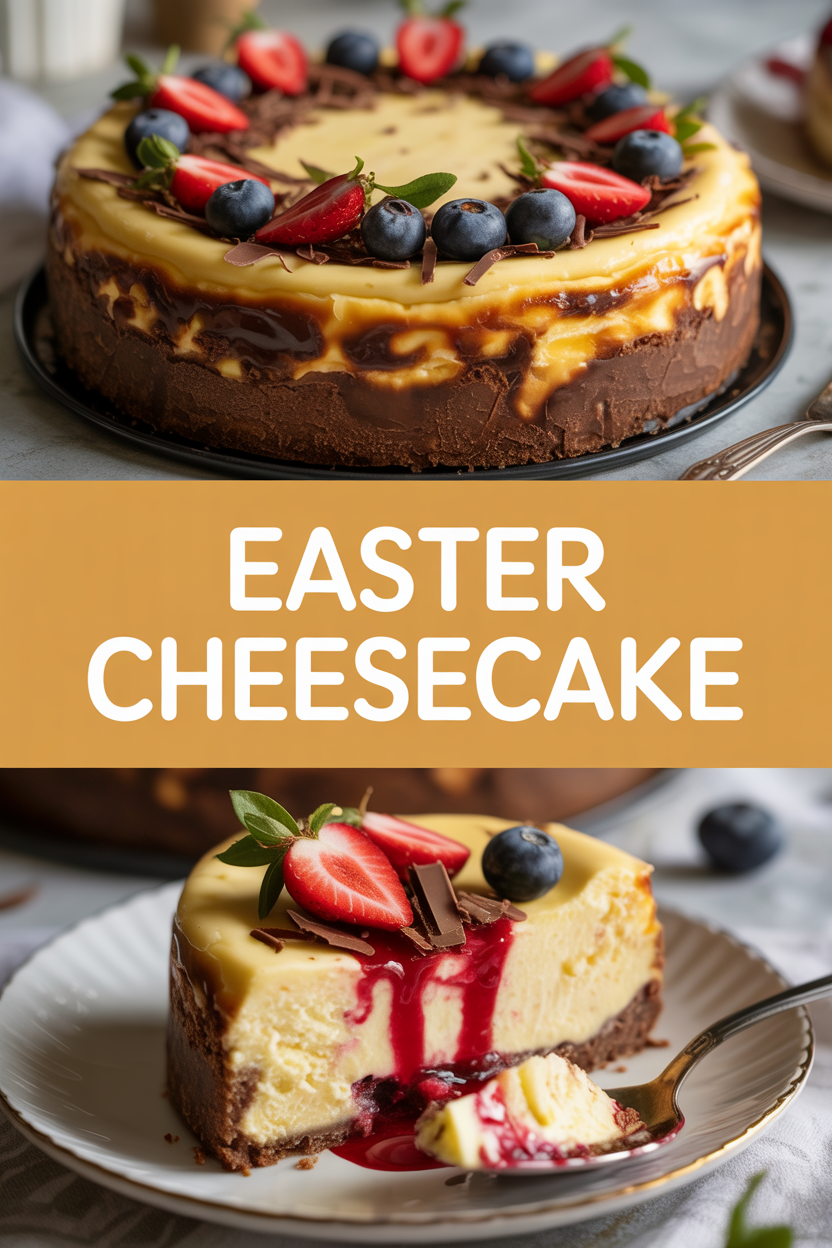
Chef’s Secret: Okay, lean in — I’ve been saving this little trick for years because it makes a cheesecake that wobbles like a crème brûlée and slices like a dream. I learned it while staging in a bakery: the key isn’t some magic ingredient, it’s the way you tame the batter and the oven. I’ll show you how I coax a perfectly creamy cheesecake out of simple groceries — no sous-vide, no fancy pans. Think velvety cream cheese, a buttery graham crust, a zesty whisper of lemon, and a bake that ends with a slow, patient chill. Follow my timing, and you’ll get clean slices and happy faces at the Easter table.
Quick Facts
- Yield: Serves 10–12
- Prep Time: 20 minutes
- Cook Time: 75 minutes
- Total Time: 385 minutes
Why This Recipe is Awesome
You’ll love this cheesecake because it’s creamy, slightly tangy, and reliably smooth — no cracks, just silky texture and clean slices. The crust gives a buttery snap and the lemon brightens every forkful. It’s so forgiving that even if your mixer gets a little enthusiastic, you can still rescue it with my tips. Who doesn’t love a dessert that looks fancy but eats like home?
Ingredients
For the Main Dish:
- Crust: 1 1/2 cups graham cracker crumbs (about 10 full sheets)
- 3 tbsp granulated sugar
- 6 tbsp unsalted butter, melted
- Filling: 32 oz (4 packages) full-fat cream cheese, room temperature
- 1 cup granulated sugar
- 3/4 cup sour cream, room temperature
- 3 large eggs, room temperature
- 1 large egg yolk, room temperature
- 2 tsp pure vanilla extract
- 2 tsp lemon zest (about 1 medium lemon)
- 2 tbsp fresh lemon juice
- 2 tbsp all-purpose flour (optional — helps stabilize)
For the Sauce / Garnish (optional):
- 1 cup fresh strawberries (or frozen, thawed) + 2 tbsp sugar, mashed into a quick sauce
- 1 cup heavy whipping cream, whipped to soft peaks for topping
- Pastel sprinkles or lemon slices for Easter flair
How I Make It
Step 1:
I preheat my oven to 325°F and line a 9-inch springform pan with parchment on the bottom, then grease the sides. For the crust, I pulse the graham crackers in a food processor until fine, stir in 3 tbsp sugar, then pour in the 6 tbsp melted butter and press the mixture firmly into the bottom (and slightly up the sides) of the pan. Pressing gives you that satisfying, crunchy base. Pop it in the fridge while you make the filling — cold crust, warm filling contrast makes the final texture nicer.
Step 2:
I beat the 32 oz cream cheese in a large bowl on medium speed until super-smooth, scraping the sides so no lumps hide. Add 1 cup sugar and beat until glossy. Then I mix in the 3/4 cup sour cream, 2 tsp vanilla, and the 2 tsp lemon zest and 2 tbsp lemon juice. Mix gently — I aim for velvety, not aerated. Overwhipping folds extra air into the batter and that’s what causes cracks, so keep it calm.
Step 3:
I add the 3 eggs and 1 yolk one at a time on low speed, just until combined. If you hear the mixer hum loudly, slow down. Stir in the optional 2 tbsp flour if you want a little extra stability. The batter should look silky and have a pale sheen — it smells faintly of lemon and cream. Pour it into the chilled crust and gently tap the pan on the counter to remove big air bubbles.
Step 4:
I bake at 325°F for about 60–75 minutes. Look for slightly puffed edges and a center that still jiggles like gelatin when you shake the pan — that wobble means creamy middle, not raw. If the top looks like it might brown too much, tent with foil. After baking, I crack the oven door open, turn the oven off, and let the cheesecake sit in there for 1 hour to cool slowly. That gentle temperature drop prevents cracks. Then I run a thin knife around the rim, cool it to room temp, and chill in the fridge for at least 4 hours (overnight if you can).
Step 5:
When ready to serve, I loosen the springform, transfer the cheesecake to a plate, and top with a drizzle of mashed strawberry sauce, a dollop of whipped cream, and a sprinkle of pastels for Easter charm. For clean slices, I dip a sharp knife in hot water, wipe dry between cuts, and slice in long, confident strokes. The first cut comes with a little creak and then that satisfying, creamy reveal.
Pro Tips
- Use room-temperature cream cheese and eggs. Cold ingredients make lumpy batter — warm them on the counter for 30–60 minutes.
- I avoid a water bath; instead I cool slowly in the oven for one hour to reduce steam and sogginess. If you prefer, wrap the pan in foil and use a water bath for extra insurance.
- Don’t overmix. Treat the batter gently to prevent cracks and a dense texture.
- For perfect slices, chill overnight and warm the knife under hot water before each cut.
Common Mistakes to Avoid
- Skipping preheating: Classic rookie move. It changes texture and bake time.
- Overmixing: Leads to dense or chewy results. Mix until just combined.
- Guessing cook time: Always use visual cues or a timer, not just vibes.
- Overcrowding pans: Give your food some breathing room to crisp properly.
Alternatives & Substitutions
- Swap graham crackers for gluten-free crumbs or crushed vanilla cookies for a different base — texture stays similar, flavor shifts slightly sweeter.
- Use Greek yogurt instead of some sour cream for tang with a bit less fat; the texture gets a touch firmer.
- Dairy-free option: use vegan cream cheese and coconut cream, but expect a coconut note and slightly looser texture.
- For lower sugar, cut the filling sugar to 3/4 cup; cheesecake still tastes rich because of the cream cheese.
Variations & Tips
- Lemon-Blueberry: fold 1 cup fresh blueberries into the batter and top with lemon glaze for a springtime twist.
- Chocolate Swirl: melt 4 oz dark chocolate and swirl into the batter before baking for a marbled effect.
- Mini Cheesecakes: make 12 in a muffin tin with shorter bake time (20–25 minutes) — great for potlucks.
- Caramel-Pecan: top with warm caramel sauce and toasted pecans for nutty crunch.
- Kid-Friendly: skip the lemon and decorate with colorful sprinkles and whipped cream bunnies for festive fun.
- Herby Twist: add 1 tbsp finely chopped fresh basil for a grown-up strawberry-basil pairing.
FAQ (Frequently Asked Questions)
- Can I make this ahead of time?
- Yes! Make the cheesecake a day ahead; it actually tastes better after resting. Keep it covered in the fridge and add fresh toppings just before serving.
- Can I double the recipe?
- Sure thing. Use two pans or a larger pan, and expect slightly longer bake time for a deeper cake. Keep an eye on that center wobble.
- Can I substitute butter with oil?
- Technically yes, but you’ll miss that buttery magic. Use ¾ the amount of oil.
- How do I know it’s done?
- Look for gently puffed edges and a center that jiggles like soft gelatin. If the center flows, bake 5–10 minutes longer and recheck. Avoid a fully firm center or it will be dry.
- What if I don’t have ingredient X?
- No cream cheese? Use 2 cups ricotta + 2 cups mascarpone as a substitute, though texture will lighten. No graham crackers? Use digestive biscuits or shortbread cookies.
How I Like to Serve It
I serve this cheesecake with a spoonful of bright strawberry sauce, a curl of whipped cream, and a scattering of pastel sprinkles for Easter. It pairs beautifully with a light coffee or a chilled glass of Moscato. I also slice it small for a brunch spread — a little goes a long way, and guests always come back for seconds.
Notes
- Store covered in the refrigerator for up to 4 days. Freeze slices for up to 1 month; thaw overnight in the fridge.
- Cheesecake reaches best texture after chilling 4+ hours; no meat temps apply here, but keep chilled below 40°F for safety.
Final Thoughts
Closing: You just made a show-stopping Easter cheesecake with real, simple ingredients — now go impress someone, or enjoy a generous slice yourself!