
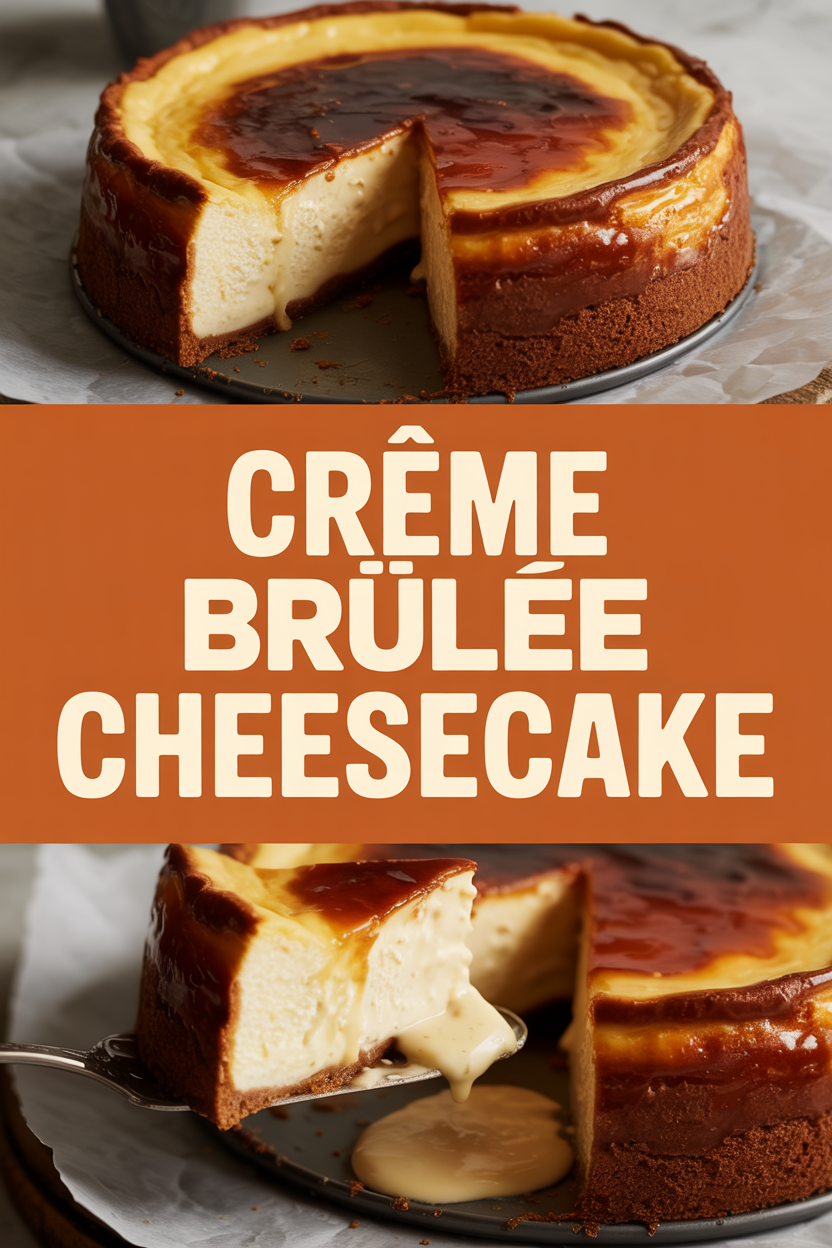
Alright, here’s a little kitchen secret I can’t keep to myself: when you marry the silky custard of crème brûlée with a rich, creamy cheesecake, magic happens. I stumbled on this combo after one evening of stubbornly trying to make the perfect cheesecake and deciding it needed a crackly, caramelized crown — like a crown for dessert royalty. The first torch crackle hooked me; the sugar sings and the filling stays velvet-smooth. I’ll show you how to coax that custardy texture without fuss, how to avoid cracks, and how to create a glossy brûlée top that snaps like a tiny sugar cymbal. You’ll impress guests (and yourself) with one recipe that feels fancy but plays nice with weeknight schedules.
Quick Facts
- Yield: Serves 10
- Prep Time: 30 minutes
- Cook Time: 60 minutes
- Total Time: 330 minutes
Why This Recipe is Awesome
This cheesecake gives you the best of both worlds: the dense, creamy body of a classic cheesecake with a delicate, custard-like mouthfeel and a crackling, caramelized top like crème brûlée. It smells like warm vanilla and toasted sugar, feels silky on the tongue, and offers that satisfying crack when you tap the brûlée. It’s fancy enough for dinner guests but easy enough for a Sunday afternoon. Who doesn’t love a dessert that looks elegant but really just wants to be eaten?
Ingredients
For the Main Dish:
- 1 1/2 cups graham cracker crumbs (about 10 full crackers)
- 5 tbsp unsalted butter, melted
- 2 tbsp granulated sugar (for crust)
- 24 oz cream cheese (three 8-oz blocks), room temperature
- 1 cup granulated sugar
- 1 tbsp cornstarch
- 3 large eggs + 1 egg yolk, room temperature
- 1 tsp vanilla extract (or 1 tsp vanilla bean paste)
- 1 cup heavy cream
- 2 tbsp sour cream
- Pinch of kosher salt
For the Sauce / Garnish (if applicable):
- 3 tbsp granulated sugar (for caramelizing the top)
- Optional: flaky sea salt, fresh berries, or a drizzle of salted caramel
How I Make It
Step 1:
Preheat your oven to 325°F. Mix the graham cracker crumbs, melted butter, and 2 tbsp sugar in a bowl until the crumbs look evenly moistened. Press the mixture into the bottom of a 9-inch springform pan and about 1/2 inch up the sides. I press with the bottom of a measuring cup so the crust feels compact and even. Pop the pan in the freezer while you make the filling — chilling helps the crust hold up against the creamy filling.
Step 2:
Beat the cream cheese on medium-low until smooth, then add 1 cup sugar and cornstarch. Scrape the bowl, then add the eggs one at a time, mixing gently — avoid whipping in too much air. Add vanilla, heavy cream, sour cream, and a pinch of salt. Stop when the batter looks glossy and homogenous; it should flow slowly off a spatula.
Step 3:
Pour the filling over the chilled crust. Set the springform pan inside a larger roasting pan and pour hot water into the roasting pan until it reaches halfway up the side — a water bath keeps the heat gentle and the texture custardy. Slide the whole thing into the oven and bake for about 55–65 minutes, until the edges look set and the center jiggles like gelatin when you gently shake it. You’ll smell warm vanilla and a whisper of toasted crust as it bakes.
Step 4:
Turn off the oven and crack the door open. Let the cheesecake rest in the warm oven for 30 minutes — this helps prevent cracks. Remove it from the water bath, run a thin knife around the edge to loosen it, and cool on a wire rack for another hour. Then chill it in the fridge for at least 4 hours, preferably overnight, until fully set and glossy.
Step 5:
Right before serving, sprinkle an even layer of 3 tbsp granulated sugar over the top. Use a kitchen torch to caramelize the sugar, holding it about 2–3 inches away and moving in small circles until the sugar melts, bubbles, and turns deep amber — listen for that delightful crackle. Don’t have a torch? Slide the cheesecake under a hot broiler 2–3 inches away for 1–2 minutes, watching very closely so the sugar doesn’t burn. Let the caramel harden for a minute, then garnish with flaky sea salt or berries, slice, and enjoy the crisp snap with every creamy bite.
Pro Tips
- Use full-fat cream cheese and heavy cream for the richest, silkiest texture.
- Warm your eggs and cream cheese to room temp so the filling blends smoothly — cold ingredients lead to lumps.
- Don’t overmix once you add the eggs; stop at smooth to avoid incorporating air that causes cracks.
- If you don’t have a torch, preheat the broiler and keep the oven door slightly open so you can watch every second.
Common Mistakes to Avoid
- Skipping preheating: Classic rookie move. It changes texture and bake time.
- Overmixing: Leads to dense or chewy results. Mix until just combined.
- Guessing cook time: Always use visual cues or a timer, not just vibes.
- Overcrowding pans: Give your food some breathing room to crisp properly.
Alternatives & Substitutions
- Swap graham crackers for gluten-free graham crumbs or crushed almonds for a nutty crust (affects texture and flavor slightly).
- Replace sour cream with full-fat Greek yogurt for a tangier note and slightly lighter texture.
- Dairy-free option: use vegan cream cheese + full-fat coconut cream; expect a coconut undertone and a slightly looser set.
- For a lower-fat version, use 2/3 cup heavy cream + 1/3 cup Greek yogurt, but don’t expect the same ultra-rich mouthfeel.
Variations & Tips
- Add 1 tsp espresso powder to the filling for a mocha-brûlée cheesecake.
- Stir in 1/2 cup chopped dark chocolate after the batter mixes for a chocolate-streaked version.
- Fold in 2 tbsp lemon zest for a bright, citrusy twist — great in spring and summer.
- Make mini ramekin versions for individual brûlée cheesecakes (reduce bake time by ~15–20 minutes).
- Swirl a ribbon of salted caramel into the filling before baking for extra drama.
- Top with toasted nuts or candied orange peel for texture and color contrast.
FAQ (Frequently Asked Questions)
- Can I make this ahead of time?
- Yes! Bake the cheesecake up to 48 hours in advance and keep it tightly wrapped in the fridge. Wait to caramelize the top until just before serving so the sugar stays crisp.
- Can I double the recipe?
- Sure thing. Use two 9-inch pans or one 10–12 inch pan; increase bake time slightly and check for that gentle center jiggle.
- Can I substitute butter with oil?
- Technically yes, but you’ll miss that buttery magic. Use ¾ the amount of oil.
- How do I know it’s done?
- Look for firm, golden-set edges and a center that still jiggles like gelatin when you nudge the pan — that telltale jiggle turns into custardy silk when chilled.
- What if I don’t have ingredient X?
- If you lack heavy cream, use 1/2 cup heavy cream + 1/2 cup whole milk (texture slightly lighter). No graham crackers? Try crisped-up vanilla wafers or a thin shortbread crust.
How I Like to Serve It
I slice this cheesecake thinly because it’s rich — pair it with bright berries and a bitter espresso or a late-harvest Riesling. For dinner parties, torch the sugar at the table for a little show-and-tell. It works for celebrations, cozy date nights, or when you want to feel fancy after a regular Tuesday.
Notes
- Store covered in the fridge up to 4 days. Freeze slices up to 1 month; thaw in the fridge before torching sugar.
- This dessert doesn’t involve meat, so no internal meat temps needed — just trust the visual cues and the jiggle.
Final Thoughts
Closing: Now go impress someone — or just yourself — with your homemade masterpiece!