
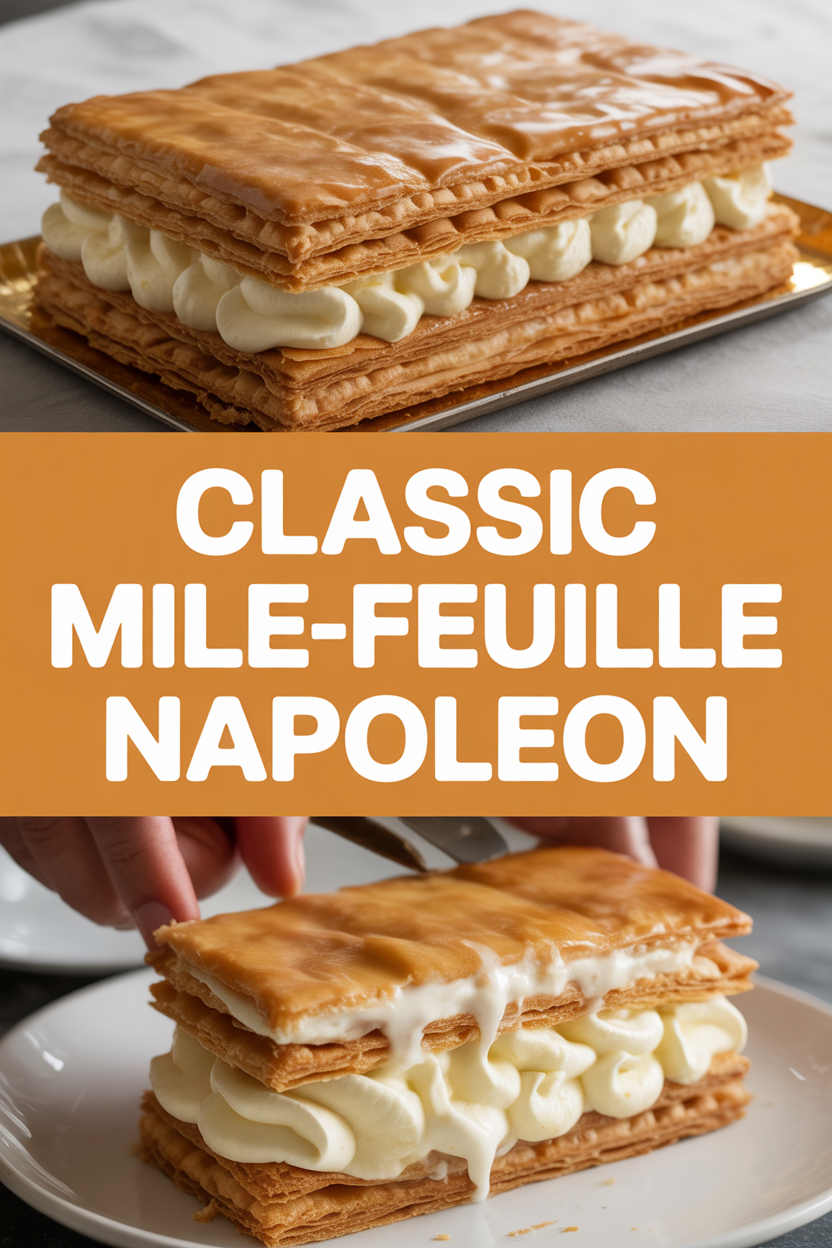
Chef’s Secret: Ok, lean in — I’ll tell you something most bakery versions don’t: the difference between a good mille-feuille and a jaw-dropping one comes down to two things — a properly set pastry cream and a crisp, paper-thin layer of puff pastry that snaps under your fork. I swear, once you master that silky cream and the flaky crunch, you’ll get the “oohs” every time. I learned this trick from a pastry chef friend who insisted on chilling the cream completely before assembling; it sounds boring, but it makes the whole thing sing.
Quick Facts
- Yield: Serves 8
- Prep Time: 45 minutes active
- Cook Time: 30 minutes
- Total Time: About 3 hours (includes 2 hours chilling)
Why This Recipe is Awesome
This classic Mille-Feuille (Napoleon) balances a crisp, buttery crunch with an impossibly smooth, vanilla-scented cream. The contrast — flaky, golden layers and a cool, velvet filling — makes every bite a little celebration. It’s elegant but totally doable with store-bought puff pastry, and it looks fancy on the plate (bonus: your oven can’t mess up pastry cream if you pay attention to heat). Plus, it gives you dramatic, crunchy edges and that satisfying crack when you slice into it.
Ingredients
For the Main Dish:
- 2 sheets frozen puff pastry (17.3 oz total; typically two 8.6 oz sheets), thawed in the fridge
- 3 cups whole milk
- 5 large egg yolks
- 3/4 cup granulated sugar, divided
- 1/3 cup cornstarch
- 2 tbsp unsalted butter, room temperature
- 1 1/2 tsp pure vanilla extract
- 1 cup powdered sugar (for glaze)
- 2–3 tbsp milk (for glaze)
- 1 oz dark chocolate, melted (for feathering)
- Optional: fresh berries for garnish
For the Sauce / Garnish (if applicable):
- Extra powdered sugar for dusting
How I Make It
Step 1:
Start the pastry cream. In a medium saucepan, warm 3 cups whole milk over medium heat until it just starts to steam and tiny bubbles form around the edge — you want it hot but not boiling. Meanwhile, whisk 5 egg yolks with 1/2 cup sugar and 1/3 cup cornstarch until pale and smooth. Slowly temper the hot milk into the yolks, whisking constantly so you don’t get scrambled eggs. Return the mixture to the pan and cook over medium heat, whisking until it thickens and comes to a gentle boil—about 1–2 minutes of steady bubbling. Remove from heat and whisk in 2 tbsp butter and 1 1/2 tsp vanilla. Press plastic wrap directly onto the surface to prevent a skin and chill for at least 2 hours.
Step 2:
Preheat the oven to 400°F. Unfold the thawed puff pastry sheets on parchment. Trim each sheet into a neat rectangle (about 10×4 inches or to fit your baking sheet). To keep the layers flat and crisp, dock the pastry with a fork all over, then place another parchment-lined baking sheet on top to weigh them down — this keeps that signature thin, even layer. Bake each sheet for 15–20 minutes until deep golden and dry. Let cool completely on a rack. If the edges puff, gently press them while still warm to flatten slightly.
Step 3:
Once cooled, cut each sheet into three equal rectangles so you have nine layers. Spread a generous layer of chilled pastry cream (about 3/4 cup) on the first layer using an offset spatula — smooth but don’t overwork it. Stack another layer, press lightly, and repeat until you build a three-layer stack. Reserve one layer for the top.
Step 4:
Make the glaze by whisking 1 cup powdered sugar with 2–3 tbsp milk until glossy and spreadable. Spread the glaze on the top pastry layer while it’s still quite flat. Drizzle thin lines of melted dark chocolate across the glaze and drag a skewer through the lines to create that classic feathered pattern — it looks professional and tastes like a dream.
Step 5:
Assemble and chill. Place the glazed pastry on top of the stack and press gently to adhere. Refrigerate the whole mille-feuille for at least 30 minutes to set (longer is better). When ready to serve, use a sharp serrated knife to cut — score lightly first to prevent squashing. Listen for the crack of crisp pastry and enjoy the vanilla aroma and creamy texture. Garnish with berries or a dusting of powdered sugar.
Pro Tips
- Chill the pastry cream fully — warm cream makes the pastry soggy during assembly.
- Bake with a second sheet on top to keep layers flat and create that classic thin crunch.
- Use a very sharp serrated knife and score before cutting to get clean slices with intact layers.
- If your top glaze sets too fast for feathering, microwave chocolate for 8–10 seconds until fluid; work quickly while the glaze is tacky.
Common Mistakes to Avoid
- Skipping preheating: Classic rookie move. It changes texture and bake time.
- Overmixing: Leads to dense or chewy results. Mix until just combined.
- Guessing cook time: Always use visual cues or a timer, not just vibes.
- Overcrowding pans: Give your food some breathing room to crisp properly.
Alternatives & Substitutions
- Swap whole milk for 2% for a lighter cream — texture becomes slightly less rich but still tasty.
- Make a chocolate pastry cream by whisking 2 tbsp cocoa into the cornstarch mixture — expect a deeper flavor.
- Dairy-free option: use full-fat canned coconut milk for the cream and a vegan puff pastry; expect a subtle coconut flavor and slightly looser cream.
- Gluten-free: buy a labeled gluten-free puff pastry or make thin almond-flour layers (texture will differ — nuttier and denser).
Variations & Tips
- Berry Mille-Feuille: Add a layer of sliced strawberries or raspberries between cream layers for fresh brightness.
- Chocolate Twist: Replace one pastry cream layer with chocolate ganache for a rich, adult version.
- Mini Napoleons: Use a cookie cutter to make bite-sized versions for parties — quicker to assemble and adorable.
- Caramelized Top: Sprinkle a little sugar on the top pastry and torch it for a brûlée-like finish.
- Spiced Cream: Add 1/2 tsp ground cinnamon or orange zest to the pastry cream for seasonal flair.
FAQ (Frequently Asked Questions)
- Can I make this ahead of time?
- Yes! You can make the pastry cream up to 2 days ahead and keep it refrigerated, and bake the puff pastry a day ahead stored in an airtight container. Assemble within 24 hours for best texture so layers stay crisp.
- Can I double the recipe?
- Sure thing. Double the ingredients and bake the pastry sheets in batches to keep them evenly cooked. You may need an extra baking sheet or to work in two shifts to keep things tidy.
- Can I substitute butter with oil?
- Technically yes, but you’ll miss that buttery magic. Use ¾ the amount of oil.
- How do I know it’s done?
- For the pastry: it should be golden, dry, and very crisp. For the cream: it should coat the back of a spoon and thicken to a pudding-like consistency; when chilled it should be firm but still spreadable.
- What if I don’t have ingredient X?
- If you lack cornstarch, use an equal amount of all-purpose flour (it will thicken but taste slightly different). No puff pastry? Use phyllo layered and brushed with butter for a lighter, crisp alternative.
How I Like to Serve It
I slice the mille-feuille into neat rectangles and serve on a simple white plate so the layers shine. I love pairing it with a bright espresso in the morning or a fragrant black tea in the afternoon. For dinner parties, I add a few macerated berries on the side — they cut the richness beautifully and look pretty too.
Notes
- Store assembled mille-feuille in the refrigerator and eat within 24 hours to keep the top layer crisp. If pastry softens, re-crisp briefly under a hot broiler for a few seconds, watching closely.
- No meat temps here — but for reference: if you ever do a savory puff pastry dish with chicken, cook to 165°F.
Final Thoughts
Closing: Now go impress someone — or just yourself — with your homemade masterpiece! Trust me: that first crisp crack and the creamy vanilla hit will make the effort totally worth it.