
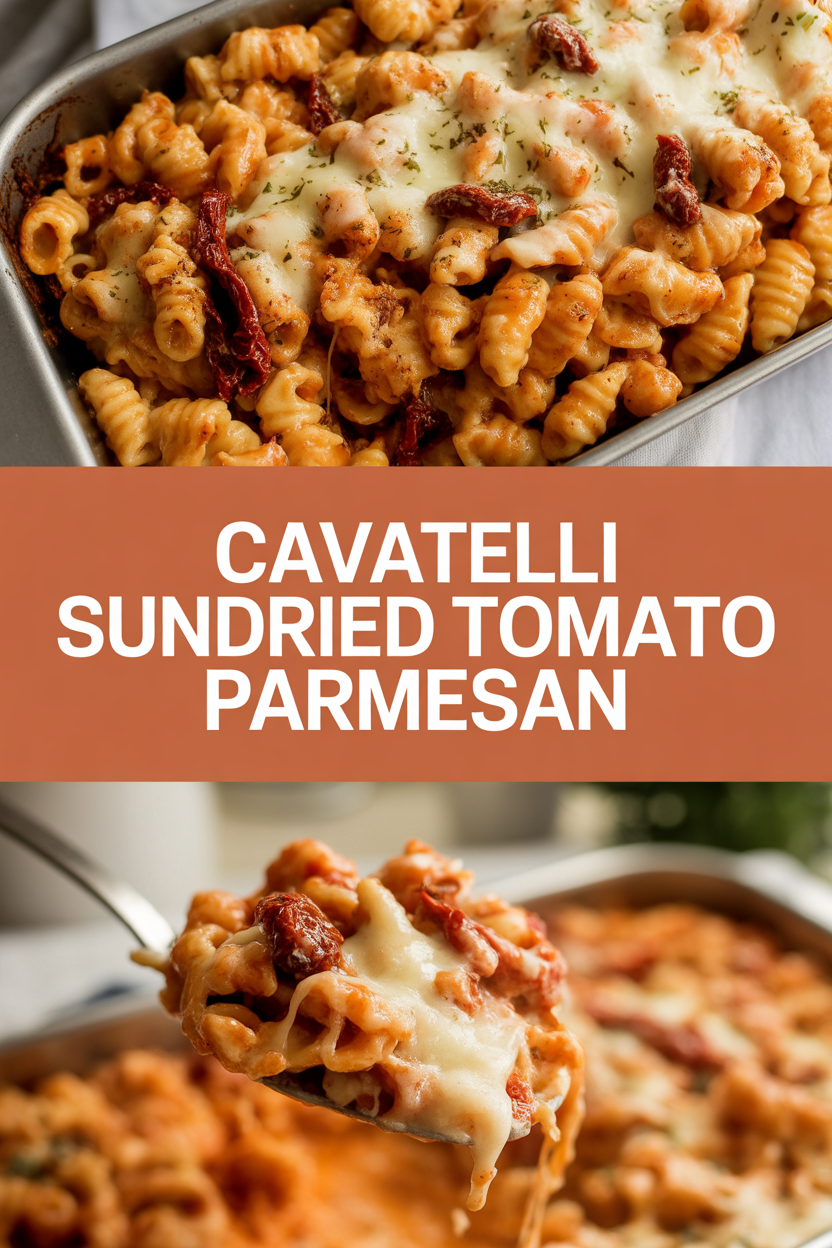
Okay, kitchen secret time: I keep a jar of **sundried tomatoes in oil** like a little magic potion. This recipe came from one of those “what’s in my fridge?” nights when I needed dinner fast but wanted something that felt special. Once you smell the garlic hitting that oil and the tomatoes releasing that jammy, sweet-tangy perfume, you’ll whisper thanks to your future self. Cavatelli soaks up sauces like a sponge and the chewy little nooks cradle flecks of **Parmesan** and bright pockets of lemon. This dish cooks in under 35 minutes, uses pantry-friendly staples, and looks way fancier than it actually is—chef’s secret, now yours.
Quick Facts
- Yield: Serves 4
- Prep Time: 15 minutes
- Cook Time: 20 minutes
- Total Time: 35 minutes
Why This Recipe is Awesome
This Cavatelli with sundried tomatoes and Parmesan balances chewy pasta, silky sauce, and bright lemon zing. It tastes tangy, savory, and a little buttery—without a heavy cream hangover. The textures sing: pillowy cavatelli, tender wilted spinach, and crunchy toasted pine nuts if you add them. It’s so easy even your oven can’t mess it up, and the aroma will pull everyone into the kitchen like a culinary magnet.
Ingredients
For the Main Dish:
- 12 oz cavatelli (store-bought or fresh)
- 1/2 cup sundried tomatoes, oil-packed, drained and roughly chopped
- 2 tbsp olive oil (use oil from sundried tomatoes if available)
- 2 tbsp unsalted butter
- 1 small shallot, finely chopped (about 2 tbsp)
- 3 cloves garlic, minced
- 8 oz cherry tomatoes, halved
- 4 cups baby spinach (packed)
- 1 cup freshly grated Parmesan (plus extra for serving)
- 1/2 cup reserved pasta cooking water (start with this, add more if needed)
- 1 tbsp fresh lemon juice (about 1/2 lemon)
- 1 tsp lemon zest
- 1/4 tsp red pepper flakes (optional)
- Salt and freshly ground black pepper to taste
- 2 tbsp toasted pine nuts or chopped toasted walnuts (optional)
- Fresh basil leaves for garnish (optional)
For the Sauce / Garnish (if applicable):
- Extra grated Parmesan and a drizzle of olive oil for serving
How I Make It
Step 1:
Bring a large pot of water to a rolling boil, salt it generously (think seawater), and add the 12 oz cavatelli. Cook until al dente, usually about 8–10 minutes depending on the package. Before you drain, scoop out 1/2 cup of the starchy pasta water. The steam will smell like cooked wheat and make your kitchen cozy.
Step 2:
While pasta cooks, heat a large skillet over medium heat and add the 2 tbsp olive oil (I often pour a spoonful of sundried tomato oil in here for extra depth). Add the 1 small shallot and sauté until translucent, about 2 minutes. Add the 3 cloves garlic and chopped 1/2 cup sundried tomatoes, stirring until the garlic smells toasty and the oil looks infused—about 30–45 seconds. Don’t let the garlic brown; it turns bitter fast.
Step 3:
Toss in the 8 oz cherry tomatoes and let them sizzle and soften, about 3–4 minutes. You’ll hear tiny pops and see the skins wrinkle and pearl. Add the 2 tbsp butter, then stir in the reserved 1/2 cup pasta water to loosen the pan and make a glossy sauce. The sauce should coat the back of a spoon—if it looks dry, add another tablespoon of pasta water.
Step 4:
Add the drained cavatelli directly into the skillet with the sauce. Toss in the 4 cups baby spinach and stir until it wilts—bright green and silky in under a minute. Sprinkle in the 1 cup grated Parmesan, 1 tbsp lemon juice, 1 tsp lemon zest, and 1/4 tsp red pepper flakes if you want a kick. Taste and season with salt and pepper. The kitchen should smell tangy, cheesy, with a hint of butter and garlic.
Step 5:
Finish with toasted pine nuts and torn basil if using. Give everything a final toss so the sauce clings to the nooks of the cavatelli. Plate immediately and shave extra Parmesan over the top. Serve hot with a squeeze of lemon if you like a brighter finish.
Pro Tips
- Use some oil from the sundried tomato jar for more flavor; it acts like a tiny flavor shortcut.
- Reserve pasta water every time—its starchy gloss makes a silky sauce faster than cream.
- If your sauce feels grainy after adding Parmesan, remove the pan from heat and stir in a splash more pasta water to smooth it out.
- Toast nuts in a dry skillet over medium heat for 2–3 minutes until fragrant—watch closely, they burn fast.
Common Mistakes to Avoid
- Skipping preheating: Classic rookie move. It changes texture and bake time.
- Overmixing: Leads to dense or chewy results. Mix until just combined.
- Guessing cook time: Always use visual cues or a timer, not just vibes.
- Overcrowding pans: Give your food some breathing room to crisp properly.
Alternatives & Substitutions
- Swap cavatelli for orecchiette, rigatoni, or a gluten-free pasta—texture changes slightly but the flavors still sing.
- Use Greek yogurt (2 tbsp) instead of extra butter for a tangier, lighter finish—stir it in off the heat to avoid curdling.
- For dairy-free: use nutritional yeast (2–3 tbsp) and extra olive oil instead of Parmesan; texture becomes less creamy but still savory.
- To add protein, toss in cooked shrimp or sliced grilled chicken (if adding chicken, cook to 165°F).
Variations & Tips
- Make it spicy: add 1/2 tsp red pepper flakes and a splash of Calabrian chili oil.
- Kid-friendly: halve the red pepper flakes and chop sundried tomatoes very small so little ones don’t find surprises.
- Vegetarian boost: stir in roasted red peppers and a tablespoon of capers for briny complexity.
- Herby twist: swap basil for parsley and add a teaspoon of chopped fresh thyme for an earthy note.
- One-pan dinner: toss in cooked white beans or chickpeas for a protein-rich, no-meat meal.
- Creamier version: stir in 2 tbsp mascarpone or heavy cream at the end for a velvetier sauce.
FAQ (Frequently Asked Questions)
- Can I make this ahead of time?
- Yes! Cook the pasta slightly under al dente, toss with a little olive oil, store separately from the sauce in airtight containers for up to 3 days. Reheat the sauce gently, add the pasta, and loosen with reserved pasta water.
- Can I double the recipe?
- Sure thing. Use a larger pot and skillet so the pasta and sauce have room to combine evenly. You may need an extra 1/4–1/2 cup pasta water when doubling.
- Can I substitute butter with oil?
- Technically yes, but you’ll miss that buttery magic. Use ¾ the amount of oil.
- How do I know it’s done?
- Look for al dente pasta with a slight chew, wilted bright-green spinach, and a glossy sauce that clings to the pasta. If the sauce coats the back of a spoon, you’re golden.
- What if I don’t have ingredient X?
- No worries — swap sundried tomatoes with sun-ripened cherry tomatoes roasted briefly, or use jarred roasted red peppers for a sweet-tangy note. No Parmesan? Use Pecorino or 2–3 tbsp nutritional yeast for a savory boost.
How I Like to Serve It
I love this on a weeknight with a simple green salad and a crusty baguette to mop up the sauce. For guests, I serve it family-style in a big skillet with extra Parmesan and torn basil on top. It pairs nicely with a crisp white wine or an easy-bodied red. Warm nights call for lemon-forward versions; cold nights crave the butterier, cozier one.
Notes
- Store leftovers in an airtight container in the fridge for up to 3–4 days. Reheat gently with a splash of water or olive oil to revive the sauce.
- If you add chicken, cook to a safe internal temperature of 165°F.
Final Thoughts
Closing: Now go impress someone — or just yourself — with your homemade masterpiece!