
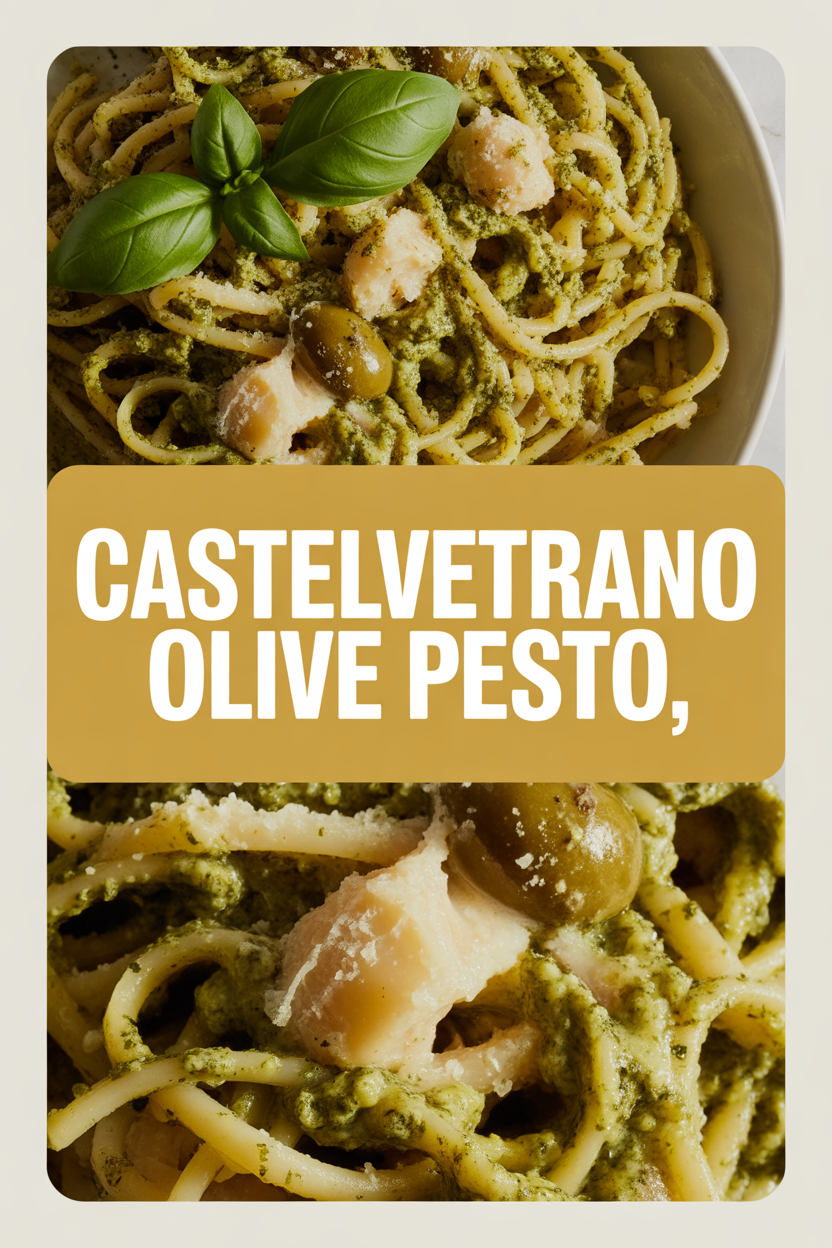
I love pretending I unlocked a hidden door in my kitchen the first time I made this — so here’s my little chef’s secret: swap basil-only pesto for the buttery, bright magic of Castelvetrano olives, and you’ll never look back. I learned it when I launched a lazy weeknight dinner experiment and found that those neon-green, mild olives make a pesto that tastes like sunshine, salty butter, and a hint of green apple all at once. Keep a jar of this in your fridge and you’ll rescue pasta, toast, grilled chicken, and snack boards faster than you can say “more, please.” Warning: friends will start asking for the recipe at 8 PM sharp.
Quick Facts
- Yield: Serves 4
- Prep Time: 10 minutes
- Cook Time: 0 minutes
- Total Time: 10 minutes
Why This Recipe is Awesome
This pesto needs zero cooking and delivers creamy, briny, and herbaceous layers in one scoop. It spreads like velvet, smells like a citrusy olive grove, and has tiny crunchy bites from toasted nuts. It’s so easy even your oven can’t mess it up — and it’s special because the Castelvetrano olives keep the flavor buttery rather than sharp, so you get rich pesto without the typical intense saltiness.
Ingredients
For the Main Dish:
- 1 cup pitted Castelvetrano olives (about 6–7 oz)
- 1/3–1/2 cup extra-virgin olive oil, divided
- 1 cup packed fresh basil leaves (about 1 oz)
- 1/4 cup toasted almonds or pistachios (or pine nuts)
- 1 large garlic clove, roughly chopped
- 1 tbsp fresh lemon juice (about half a lemon)
- 1/3 cup finely grated Parmesan or Pecorino (optional)
- 1/4 tsp freshly ground black pepper
- Flaky sea salt, to taste (start small — olives are already salty)
For the Sauce / Garnish (if applicable):
- Extra olive oil for drizzling
- Shaved Parmesan and lemon zest for serving
- Optional 1–2 tbsp capers for extra briny punch
How I Make It
Step 1:
Drop the pitted Castelvetrano olives and toasted nuts into a food processor and pulse in short bursts — 10–15 seconds at a time — until the mixture looks coarsely chopped. You should hear the motor change pitch and see little olive chunks. This keeps texture; you don’t want a smooth paste yet.
Step 2:
Add the basil, garlic, and lemon juice. Pulse again while scraping down the sides with a spatula. Smell the lemon wake up the basil — that bright, green citrus hit is what makes the whole jar sing. If your processor clogs, stop and stir; don’t force it.
Step 3:
With the processor running, pour in 1/3 cup olive oil in a slow stream to emulsify. Stop and check texture: you want a chunky, spreadable pesto, not oily soup. Add more oil (up to 1/2 cup) if you want silkier spreadability. Taste for balance — add salt or a squeeze more lemon if it needs pep.
Step 4:
Stir in the Parmesan if using, and pulse once to combine. Listen for a gentle whirr and watch the color: finished pesto stays a bright, vibrant green with little flecks of olive and nut — not dull or brown.
Step 5:
Transfer to a bowl, drizzle a little extra olive oil on top, and garnish with shaved cheese and lemon zest. Serve immediately on pasta, crostini, or tossed with roasted vegetables. Refrigerate any leftovers in an airtight container with a thin layer of oil on top to keep the surface from oxidizing.
Pro Tips
- Toast nuts in a dry skillet over medium heat for 3–4 minutes until fragrant; they’ll add a deeper, warm note. Watch closely — nuts go from toasty to burned fast.
- If you don’t have a food processor, chop everything finely and stir in the oil — you’ll keep more texture and control.
- Start with less salt — Castelvetrano olives carry salt. You can always add more, but you can’t take it away.
- Freeze pesto in ice cube trays for easy portions; pop a cube onto hot pasta or a chicken breast for instant flavor.
Common Mistakes to Avoid
- Skipping preheating: Classic rookie move. It changes texture and bake time.
- Overmixing: Leads to dense or chewy results. Mix until just combined.
- Guessing cook time: Always use visual cues or a timer, not just vibes.
- Overcrowding pans: Give your food some breathing room to crisp properly.
Alternatives & Substitutions
- If you can’t find Castelvetrano olives, use pitted green olives or mild cerignola olives — expect a slightly sharper, saltier flavor.
- Swap nuts: use sunflower seeds for a nut-free version (good for allergies); texture becomes a little denser and earthier.
- For dairy-free, skip the Parmesan and add 2 tbsp nutritional yeast for umami (vegan-friendly).
- Pesto is naturally gluten-free. If you plan to serve with chicken, cook to a safe internal temp of 165°F.
Variations & Tips
- Spicy twist: Add 1/4 tsp red pepper flakes or a small jalapeño for heat.
- Herb swap: Replace half the basil with parsley for a fresher, grassy note.
- Seafood topper: Spoon onto grilled shrimp or scallops for a quick, elegant finish.
- Kid-friendly: Omit the garlic or use roasted garlic for a milder, sweeter flavor.
- Twist: Add 1 tbsp sun-dried tomatoes for a sweet-tangy color punch.
FAQ (Frequently Asked Questions)
- Can I make this ahead of time?
- Yes! Store in an airtight container in the fridge for up to 5 days. Press a layer of olive oil on top or cover the surface with plastic wrap to prevent browning. For longer storage, freeze in ice cube trays for up to 2 months.
- Can I double the recipe?
- Sure thing. Blend in batches if your food processor gets crowded. Two batches will save you from ending up with uneven texture.
- Can I substitute butter with oil?
- Technically yes, but you’ll miss that buttery magic. Use ¾ the amount of oil if a recipe calls for butter, and expect a looser texture.
- How do I know it’s done?
- Look for a bright green color, a slightly coarse but spreadable texture, and a balanced taste of olive, lemon, and nut. If it tastes flat, add a pinch more salt or a squeeze of lemon.
- What if I don’t have ingredient X?
- No worries — swap similar items: different mild green olives for Castelvetrano, almonds for pine nuts, or nutritional yeast for cheese. Add lemon to brighten anything that feels too rich.
How I Like to Serve It
I smear this pesto on toast for a vibrant breakfast, toss it with hot pasta and a splash of pasta cooking water for a silky sauce, or spoon it over roasted chicken breasts for weeknight glamour. It also shines on a summer charcuterie board with fresh tomatoes, crusty bread, and a chilled glass of white wine. It works for cozy winter dinners and sun-drenched picnics alike.
Notes
- Store in the fridge up to 5 days or freeze in portions for quick use. Thaw in the fridge or stir a frozen cube into hot pasta.
- If serving with cooked meats, ensure poultry reaches 165°F internal temperature for safety.
Final Thoughts
Closing: Now go impress someone — or just yourself — with this bright, buttery Castelvetrano olive pesto. It makes ordinary meals feel like a little celebration.