
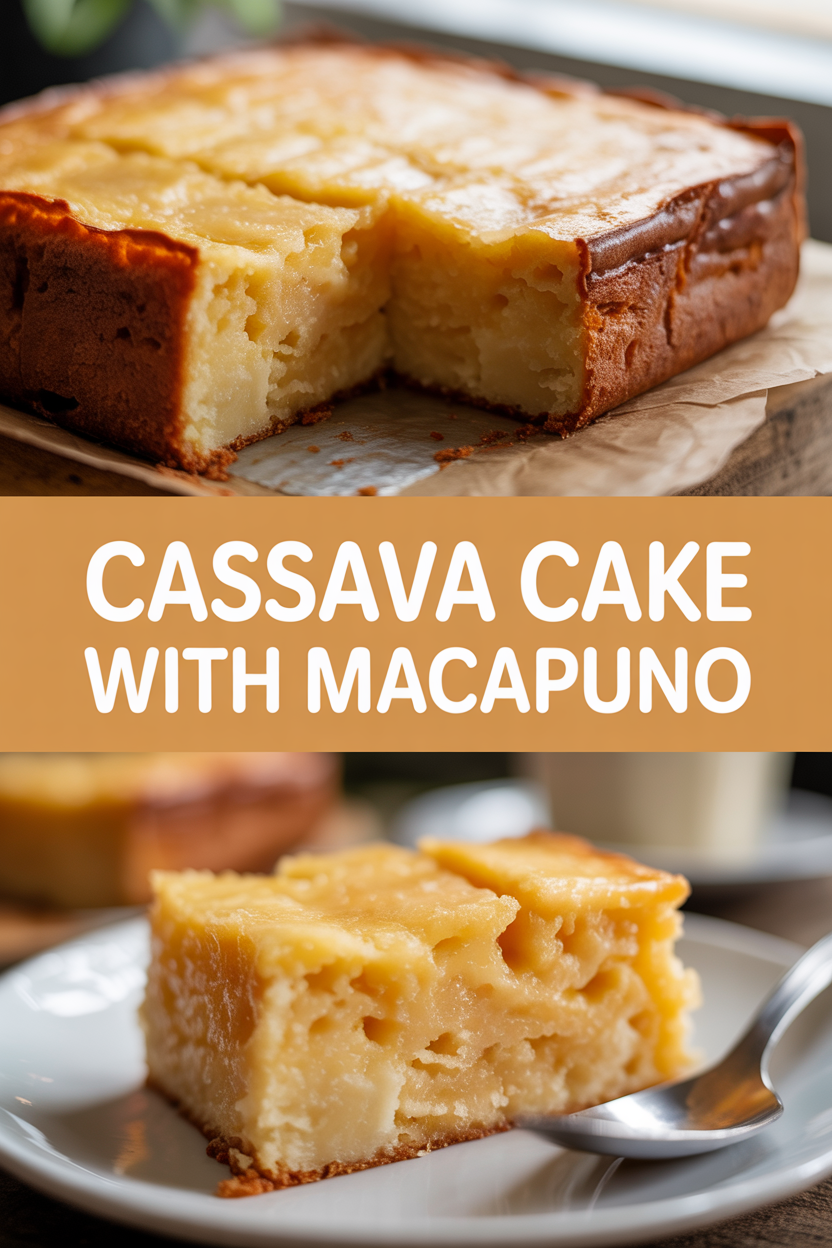
I am so excited to share this — seriously, my kitchen does a little happy dance every time I make it. This Cassava Cake with Macapuno packs coconutty richness, chewy-yet-tender texture, and that glossy, custardy top that makes everyone ask for seconds. I first discovered it at a potluck and immediately stole the plate (in a very polite way), then spent a few weekends perfecting the balance between sweet, creamy, and slightly caramelized edges. The smell of toasty coconut and warm vanilla fills the house, and the macapuno strings add a fun, chewy contrast that feels like a tropical hug. If you love coconut desserts or want a showstopping yet simple bake, this one will become your new signature.
Quick Facts
- Yield: Serves 8–10
- Prep Time: 20 minutes
- Cook Time: 65–75 minutes (including topping bake)
- Total Time: 85–95 minutes (including cool time)
Why This Recipe is Awesome
This cassava cake tastes like sunshine and comfort mashed together. It offers a chewy, slightly grainy cassava base, a silky coconut-custard top, and little pearls of sweet **macapuno** that surprise you with every bite. It’s surprisingly forgiving — you don’t have to be a pastry pro to get a golden, custardy finish. Plus, who doesn’t love that contrast of a slightly crisp edge and a custardy center? Also: your oven can’t mess it up if you follow the simple visual cues.
Ingredients
For the Main Dish:
- 4 cups grated cassava (fresh, frozen & thawed, or jarred grated cassava)
- 1 cup coconut milk
- 1 cup evaporated milk (reserve an extra 1/2 cup for topping)
- 1 cup sweetened condensed milk (reserve 1/4 cup for topping)
- 2 large eggs
- 4 tbsp unsalted butter, melted
- 1/2 cup granulated sugar (adjust to taste)
- 1 tsp vanilla extract
- 1/2 tsp salt
- 1 cup macapuno strings (sweetened young coconut from a jar)
For the Custard Topping:
- 1/2 cup evaporated milk (from the can above)
- 1/4 cup sweetened condensed milk
- 2 egg yolks
- 2 tbsp unsalted butter, melted
- Extra macapuno and optional grated cheddar for sprinkling
How I Make It
Step 1:
Preheat the oven to 350°F and grease an 8×8-inch baking pan (or line it with parchment for clean slices). In a large bowl, combine the 4 cups grated cassava, 1 cup coconut milk, 1 cup evaporated milk, 1 cup sweetened condensed milk, 2 eggs, 4 tbsp melted butter, 1/2 cup sugar, 1 tsp vanilla, and 1/2 tsp salt. Stir with a sturdy spatula until the mixture looks homogenous — you’ll see tiny specks of cassava and a wet, slightly grainy batter. Fold in 1 cup macapuno gently so you keep those chewy strands intact.
Step 2:
Pour the batter into the prepared pan and smooth the top with the back of a spoon. Tap the pan on the counter once to release air bubbles. Slide it into the oven and bake for 45–55 minutes, until the edges turn golden and the center looks set but still slightly jiggly. You’ll smell a warm coconut aroma filling the kitchen — that’s your cue to peek.
Step 3:
While the base bakes, whisk together the custard: 1/2 cup evaporated milk, 1/4 cup condensed milk, 2 egg yolks, and 2 tbsp melted butter. Strain if you want an ultra-smooth finish. When the base looks set, remove the pan and gently pour the custard over the hot cake — it will seep in and create that glossy top. Scatter a few extra macapuno strings across the surface for pretty bites.
Step 4:
Return the pan to the oven and bake for another 15–20 minutes until the topping puffs slightly and turns golden brown in spots. Watch closely near the end; the custard sets quickly. A toothpick inserted in the center should come out mostly clean with a few moist crumbs — not soupy.
Step 5:
Let the cake cool to room temperature, then chill for at least 1 hour to firm up completely. Slice with a sharp knife and serve slightly chilled or at room temp. I like to sprinkle a little grated cheddar on top for that sweet-salty Filipino twist — it melts into little pockets of flavor.
Pro Tips
- Use store-bought grated cassava to save time; if you use fresh, squeeze excess water so the cake doesn’t turn soggy.
- Let the cake cool fully before slicing to get tidy pieces — warm cassava cake tends to fall apart.
- If you want extra caramel color on top, broil for 1–2 minutes at the very end, watching like a hawk.
- For a dairy-free version, swap evaporated milk and butter for extra-thick coconut cream and melted coconut oil (same amounts).
Common Mistakes to Avoid
- Skipping preheating: Classic rookie move. It changes texture and bake time.
- Overmixing: Leads to dense or chewy results. Mix until just combined.
- Guessing cook time: Always use visual cues or a timer, not just vibes.
- Overcrowding pans: Give your food some breathing room to crisp properly.
Alternatives & Substitutions
- If you don’t have macapuno, use sweetened shredded coconut or canned young coconut — texture changes slightly but flavor stays tropical.
- Swap unsalted butter for coconut oil for a dairy-free version; expect a subtle coconut aroma increase.
- Use full-fat coconut milk instead of evaporated milk for a richer, dairy-free cake (adds thickness).
- This cake is naturally gluten-free because cassava contains no gluten.
Variations & Tips
- Make it extra festive: sprinkle lightly toasted coconut flakes and edible flowers before serving.
- Kid-friendly: fold in tiny chocolate chips for a surprise in each bite.
- Spicy-sweet twist: add a pinch of ground ginger to the batter.
- Savory touch: top with a thin layer of grated sharp cheddar before the final bake for a Filipino-style contrast.
- Mini muffins: bake in a muffin tin for portable, quick-bake treats (reduce bake time to 25–30 minutes).
FAQ (Frequently Asked Questions)
- Can I make this ahead of time?
- Yes! Bake the cake, cool completely, then refrigerate in an airtight container for up to 4 days. Chill for at least 30 minutes before slicing. Reheat single slices in the microwave for 20–30 seconds if you prefer it warm.
- Can I double the recipe?
- Sure thing. Use a 9×13-inch pan and add 10–15 minutes to the initial bake; keep the topping bake the same and watch for visual doneness cues.
- Can I substitute butter with oil?
- Technically yes, but you’ll miss that buttery magic. Use ¾ the amount of oil (so 3 tbsp oil for 4 tbsp butter) and expect a slightly different mouthfeel.
- How do I know it’s done?
- Look for golden edges, a set center that jiggles slightly, and a custard top that has small golden spots. A toothpick should come out mostly clean with a few moist crumbs.
- What if I don’t have ingredient X?
- No panic. Swap macapuno for sweetened shredded coconut or canned young coconut. Replace evaporated milk with more coconut milk for a dairy-free option. Small swaps change texture slightly but keep the soul of the cake.
How I Like to Serve It
I slice this cake into squares and serve it chilled at family gatherings with black coffee or hot tea — the warmth of the drink plays wonderfully against the cool, creamy cake. It works for potlucks, summer barbecues, or a cozy winter dessert when you crave something tropical. For a fun party presentation, top each square with a tiny spoonful of macapuno and a toasted coconut flake.
Notes
- Store leftovers in the fridge for up to 4 days; freeze slices wrapped tightly for up to 2 months.
- Reheat gently in the microwave or warm oven; cassava keeps best at cool-to-room temperature for slicing.
Final Thoughts
Closing: Now go impress someone — or just yourself — with your homemade cassava cake. Trust me: when that coconut scent hits your kitchen, you’ll know it was worth every minute.