
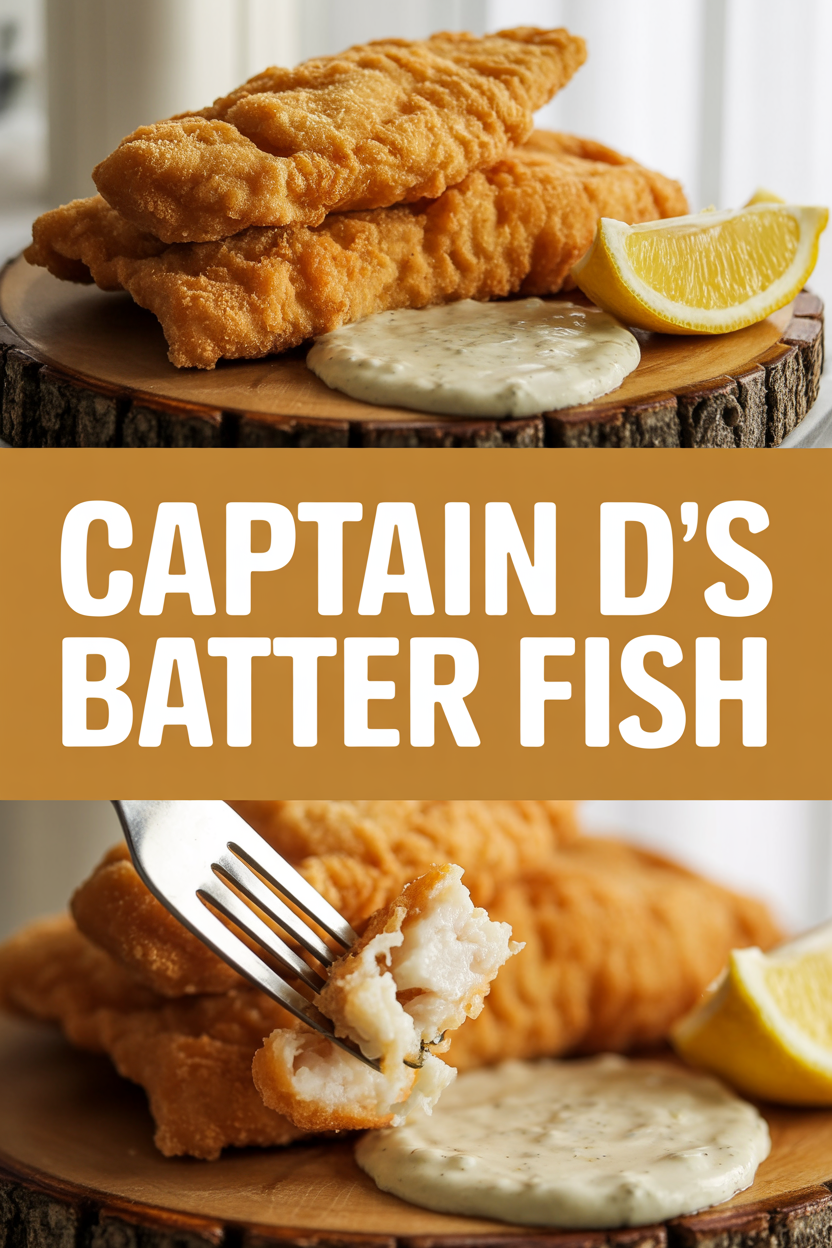
I’m about to let you in on a little kitchen secret I stumbled on after too many soggy takeout nights: you can get that satisfyingly crunchy Captain D’s-style batter right at home without a deep fryer or mysterious commercial mixes. Think light, airy batter that crackles when you bite in, a clean white flake of **cod** or **haddock**, and that bright lemon zing that makes your eyes water in the best way. I’ll walk you through a straightforward batter (and a quick tartar), plus the small timing and temperature tricks that turn good fried fish into “stop-talking-and-eat” fried fish. Trust me — your stovetop will start to smell like heaven in about ten minutes.
Quick Facts
- Yield: Serves 4
- Prep Time: 15 minutes
- Cook Time: 15 minutes
- Total Time: 30 minutes
Why This Recipe is Awesome
This recipe nails that classic fast-fried fish texture: a super-crisp, golden batter that shatters with a delightful crunch and tender, flaky fish inside. It’s easy enough for a weeknight but impressive enough for guests. Plus, it uses simple pantry staples — no mystery powders, just flour, cornstarch, baking powder, and bubbly liquid for the batter. It’s so reliable even your overcautious smoke alarm won’t complain (most of the time).
Ingredients
For the Main Dish:
- 1 lb **cod** or **haddock** fillets, cut into 4–6 pieces (about 16 oz)
- 1 cup **all-purpose flour**, plus extra for dusting
- 1/2 cup **cornstarch**
- 1 tsp **baking powder**
- 1 tsp **salt**, plus more to taste
- 1/2 tsp **black pepper**
- 1 large **egg**, beaten
- 1 cup **cold club soda** or **cold beer** (lager works great)
- 6 cups **vegetable oil** or **canola oil** for frying
- 1 lemon, cut into wedges (for serving)
- Fresh parsley for garnish (optional)
For the Sauce / Garnish (if applicable):
- 1/2 cup **mayonnaise**
- 2 tbsp **sweet pickle relish** or chopped dill pickles
- 1 tsp **Dijon mustard**
- 1 tbsp **lemon juice**
- Salt & pepper to taste
How I Make It
Step 1:
Pat the fish dry with paper towels — moisture fights crispiness, so really dab those fillets. Season the fish lightly with **1 tsp salt** and **1/2 tsp pepper**. Dust each piece in a little **all-purpose flour** (about 1–2 tbsp total); this helps the batter cling. Heat the oil in a heavy pot or Dutch oven until it reaches 350°F on a thermometer — you want a steady sizzle when the fish hits the oil.
Step 2:
Mix the batter in a bowl: whisk together **1 cup flour**, **1/2 cup cornstarch**, **1 tsp baking powder**, **1 tsp salt**, and **1/2 tsp pepper**. Add the beaten **egg**, then slowly stir in **1 cup cold club soda** (or beer) until the batter becomes a thick, slightly lumpy pourable batter. Cold liquid keeps the batter airy — you should see tiny bubbles. Don’t overmix; a few lumps are okay.
Step 3:
Coat each floured fillet in the batter, letting excess drip back into the bowl. Carefully lower the fillet into the hot oil — it should sizzle loudly and immediately start browning. Fry in batches; don’t overcrowd the pot or the oil temperature will drop and your batter will absorb oil. Fry each piece for about 3–4 minutes, flipping once if needed, until the exterior turns a deep golden brown and the fish flakes easily with a fork.
Step 4:
Use a slotted spoon or spider to transfer the fish to a wire rack set over a baking sheet (this keeps the underside crispy). If the fish finishes too fast, keep it warm in a 200°F oven for up to 10 minutes without losing crispness. If you see pale, doughy spots, your oil wasn’t hot enough — turn up the heat and let it recover before the next batch.
Step 5:
Whisk together the tartar: **1/2 cup mayo**, **2 tbsp relish**, **1 tsp Dijon**, and **1 tbsp lemon juice**, then season to taste. Serve the fish hot with lemon wedges, a sprinkle of parsley, and the tartar on the side. Listen to that first bite — the crackle tells you everything you need to know.
Pro Tips
- Keep your batter cold: chill the bowl and use ice-cold club soda or beer to maximize crispness.
- Maintain a steady 350°F. Use a thermometer and let the oil come back to temperature between batches.
- If you don’t have a thermometer, drop a pinch of batter into the oil — it should rise steadily and brown in about 30–45 seconds.
- Use a wire rack, not paper towels, to rest fried fish so steam doesn’t soften the crust.
Common Mistakes to Avoid
- Skipping preheating: Classic rookie move. It changes texture and bake time.
- Overmixing: Leads to dense or chewy results. Mix until just combined.
- Guessing cook time: Always use visual cues or a timer, not just vibes.
- Overcrowding pans: Give your food some breathing room to crisp properly.
Alternatives & Substitutions
- Use **tilapia** or **pollock** if cod/haddock costs too much; flavor stays mild but texture varies slightly.
- Swap **club soda** for cold beer for extra flavor; gluten-free beer keeps it gluten-free if you also use GF flour.
- For a gluten-free batter: replace **1 cup flour + 1/2 cup cornstarch** with **1 1/4 cups gluten-free all-purpose flour** (check blend with xanthan gum).
- Dairy-free? This recipe already stays dairy-free; just choose a dairy-free mayo for the tartar if desired.
Variations & Tips
- Spicy: add **1 tsp cayenne** or hot sauce to the batter for a kick.
- Lemony-herb: fold **1 tbsp finely chopped dill** into the tartar sauce and add lemon zest to the batter.
- Beer-batter upgrade: use a pale ale for slightly bolder flavor and a darker, crispier crust.
- Oven-fried version: toss battered fish in oil, place on a greased rack at 425°F for 12–15 minutes, flipping once.
- Kid-friendly: halve the pepper and serve with ketchup and sweet fries.
- Creative twist: add a handful of panko crumbs to the batter for extra texture and rustic crunch.
FAQ (Frequently Asked Questions)
- Can I make this ahead of time?
- Yes! Prep the fish by cutting and seasoning, then keep covered in the fridge for up to 24 hours. Mix the dry batter components ahead and store them separately. Fry just before serving for best crispness. Reheat in a 375°F oven for 6–8 minutes to revive crunch.
- Can I double the recipe?
- Sure thing. Fry in multiple batches and watch your oil temperature — larger volumes need more time between batches for the oil to recover.
- Can I substitute butter with oil?
- Technically yes, but you’ll miss that buttery magic. Use ¾ the amount of oil if you swap in oil for a sauté application (not for deep-frying).
- How do I know it’s done?
- Look for a deep golden-brown crust and flaky, opaque fish that separates easily with a fork. The exterior should sound crispy when you tap it lightly.
- What if I don’t have ingredient X?
- Ran out of cornstarch? Use more flour and add a tablespoon of potato starch or substitute with extra fine breadcrumbs for texture. No club soda? Use very cold water and a pinch more baking powder for lift.
How I Like to Serve It
I serve this with hot fries or corn on the cob and a big wedge of lemon — the kind of plate that makes everyone reach for napkins. It fits a casual Friday night, a backyard BBQ, or a cozy solo dinner with a cold beer. In summer I add a crisp green salad; in winter I make extra tartar and pretend it’s comfort food. It pairs beautifully with a chilled lager or a bright, citrusy white wine.
Notes
- Store leftover fried fish in an airtight container in the fridge for up to 2 days. Re-crisp in a 375°F oven for 6–8 minutes.
- Safe cooking temp for white fish: cook until the flesh flakes easily and looks opaque (internal temp around 145°F if you use a thermometer).
Final Thoughts
Closing: Now go impress someone — or just yourself — with your homemade Captain D’s-style batter fish. Crunchy, flaky, and wildly satisfying. You’ve got this.