
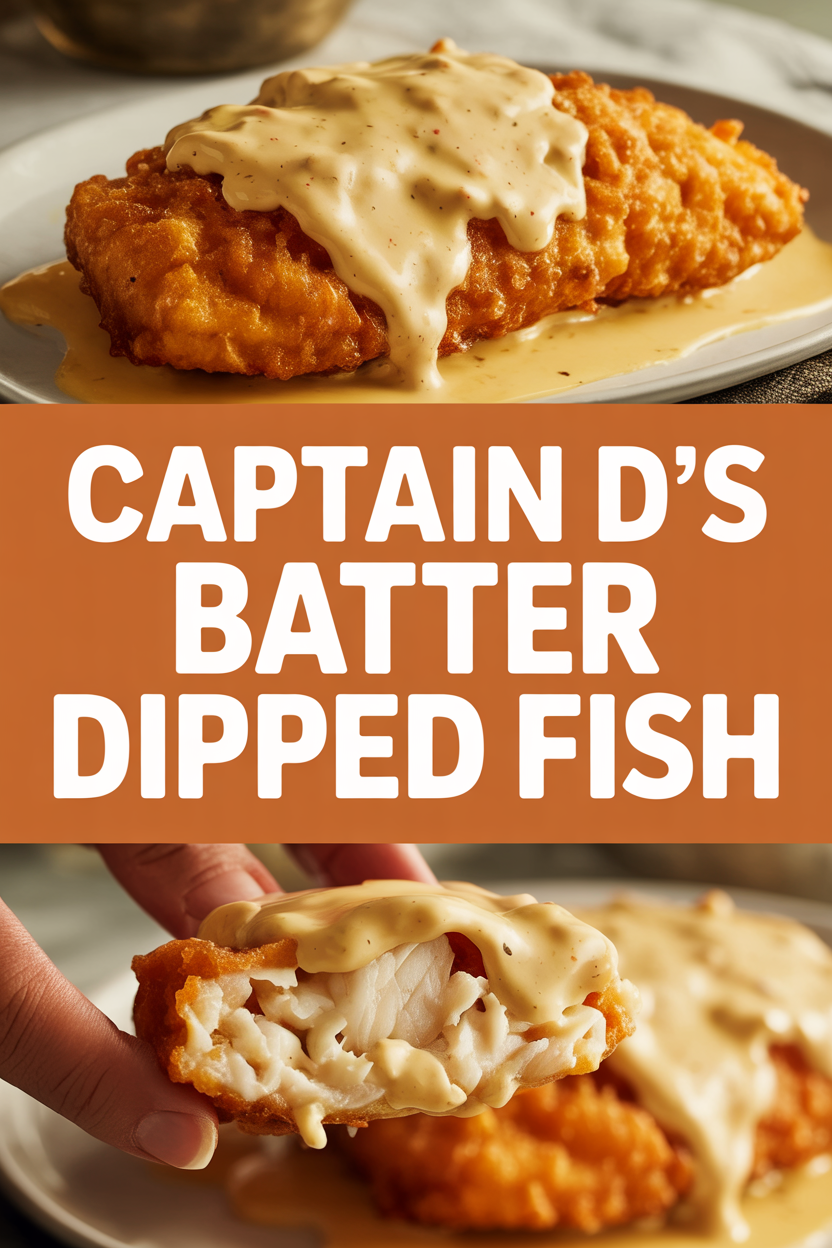
I promise I don’t usually whisper to fried food, but when that batter hits the oil and starts to sing—POP, fizz, golden—my kitchen turns into a tiny seafood circus. This recipe recreates the Captain D’s batter-dipped fish I used to chase down on road trips, except now I control the soundtrack: the sizzle, the crunch, and the proud crunch when you bite into flaky fish. It’s playful, a little nostalgic, and shockingly easy. If you can whisk, you can fry, and I’ll walk you through the little tricks that make the batter light, the crust extra-crisp, and the fish tender and flaky beneath that glorious golden shell.
Quick Facts
- Yield: Serves 4
- Prep Time: 15 minutes
- Cook Time: 15 minutes
- Total Time: 30 minutes
Why This Recipe is Awesome
This batter-dipped fish combines a whisper-light, crackly crust with tender, flaky white fish—think crispy symphony outside, melt-in-your-mouth inside. It’s fast enough for a weeknight and fun enough for company. Plus, the batter puffs and blisters beautifully, smells irresistibly savory while frying, and makes every forkful a little celebration. It’s so easy even your smoke alarm will take a nap.
Ingredients
For the Main Dish:
- 1½ lb white fish fillets (cod, haddock, pollock), cut into 6–8 pieces
- 1 cup all-purpose flour
- ¼ cup cornstarch
- 1 tsp baking powder
- 1 tsp kosher salt
- ½ tsp black pepper
- ½ tsp garlic powder (optional but lovely)
- 1 large egg
- 1 cup cold beer (lager) or sparkling water for a non-alcoholic option
- Vegetable oil or canola oil for frying (about 3–4 cups)
- 1–2 tbsp lemon juice (for finishing)
For the Sauce / Garnish (if applicable):
- ½ cup mayonnaise
- 2 tbsp finely chopped dill pickles or relish
- 1 tbsp Dijon mustard
- 1 tsp capers, chopped (optional)
- Fresh parsley and lemon wedges, for serving
How I Make It
Step 1:
Pat the fish dry with paper towels—don’t skip this. Dry fillets help the batter stick and keep the oil from spitting. Season the fish lightly with a pinch of salt and pepper. In a bowl, whisk together the 1 cup flour, ¼ cup cornstarch, 1 tsp baking powder, 1 tsp salt, ½ tsp pepper, and ½ tsp garlic powder. In a separate bowl, beat the egg with the 1 cup cold beer (or sparkling water); the cold liquid keeps the batter airy and crisp.
Step 2:
Pour the wet mixture into the dry ingredients and whisk until mostly smooth—small lumps are fine. You don’t want a heavy batter; it should coat the back of a spoon and flow with a slight ribbon. If it feels too thick, add a splash more cold beer or water. Let the batter rest for 5 minutes while you heat the oil; this relaxes the batter and improves texture.
Step 3:
Pour oil into a heavy skillet or Dutch oven to a depth of about 1½ inches and heat until a thermometer reads 350°F. If you don’t have a thermometer, drop a bit of batter in: it should sizzle immediately and rise to the surface. Dip each piece of fish into the batter, letting excess drip off, then gently lower into the hot oil. Fry in batches—don’t crowd the pan—or the oil temperature will drop and you’ll get greasy crusts, not crispy ones.
Step 4:
Fry the fish until the crust turns golden brown and the fillet flakes easily with a fork—about 3–4 minutes per side, depending on thickness. Listen for a steady sizzle; that sound tells you things are cooking right. Move pieces to a wire rack set over a sheet pan to drain (paper towels will work, but a rack keeps the crust crisp). Squeeze a little lemon juice over the fish while it’s hot.
Step 5:
Whisk together the tartar-style sauce: mayo, dill pickles, Dijon, a squeeze of lemon, and capers if you like a briny pop. Serve the fish hot with wedges of lemon, chopped parsley, and the sauce on the side. Watch the first bite—a perfect crunch will announce itself, and the fish inside will be tender and flaky. That sound? That’s dinner applause.
Pro Tips
- Keep the batter cold—use chilled beer or sparkling water and even chill the mixing bowl briefly for extra crispiness.
- Use a thermometer: keep oil between 350–360°F. Too cool gives greasy coating; too hot burns the crust before the fish cooks.
- Dry the fish thoroughly and don’t overcrowd the pan—work in batches for the crispiest results.
- If the batter thickens between batches, whisk in a tablespoon of cold water or beer to loosen it up.
Common Mistakes to Avoid
- Skipping preheating: Classic rookie move. It changes texture and bake time.
- Overmixing: Leads to dense or chewy results. Mix until just combined.
- Guessing cook time: Always use visual cues or a timer, not just vibes.
- Overcrowding pans: Give your food some breathing room to crisp properly.
Alternatives & Substitutions
- Swap white fish for firm tofu slices for a vegetarian twist—press tofu first and fry until golden; texture changes but flavor stays fun.
- Replace beer with sparkling water to keep the batter light without alcohol; flavor stays mild and crisp.
- Use rice flour or a gluten-free all-purpose blend in place of wheat flour for a gluten-free version—crispness changes slightly but still delicious.
Variations & Tips
- Add 1 tsp smoked paprika and a pinch of cayenne to the dry mix for a smoky, slightly spicy crust.
- For a kid-friendly version, omit spices and serve with ketchup or a mild lemon-aioli.
- Go Mediterranean: dust fillets in dried oregano and serve with tzatziki instead of tartar.
- Make fish tacos: flake fried fish, top with slaw and chipotle crema for a zesty twist.
- Try panko crumbs folded into the batter for extra crunchy texture—use half panko, half batter.
FAQ (Frequently Asked Questions)
- Can I make this ahead of time?
- Yes! Prep the fish (cut and season) and keep it covered in the fridge for up to 24 hours. Mix the dry ingredients ahead, but batter up and fry just before serving for best crispness. Reheat in a 400°F oven for 5–7 minutes to revive the crunch.
- Can I double the recipe?
- Sure thing. Fry in multiple batches and watch oil temperature closely—it will drop with each addition. Use a larger pot or two skillets to keep things efficient.
- Can I substitute butter with oil?
- Technically yes, but you’ll miss that buttery magic. Use ¾ the amount of oil if you swap; I recommend oil for frying because it handles high heat better.
- How do I know it’s done?
- Look for a deep golden crust, a steady sizzle, and fish that flakes easily with a fork. If the center resists flaking, cook another minute or two; thickness alters time.
- What if I don’t have ingredient X?
- Out of cornstarch? Use an extra 2 tbsp flour for a slightly denser crust. No Dijon? Swap with plain mustard and a pinch of honey.
How I Like to Serve It
I pile the fish on a platter with lemon wedges, the tangy tartar sauce, and a pile of crunchy fries or a crisp green salad. For summer cookouts, serve with coleslaw and cold beer; for cozy dinners, pair with mashed potatoes and steamed green beans. It fits weeknight comfort and weekend show-off meals equally well.
Notes
- Store leftovers in the fridge for up to 2 days; reheat in a 400°F oven for 5–8 minutes to restore crispness.
- Safe cooking temp: fish should flake easily and reach an internal temperature of about 145°F.
Final Thoughts
Closing: Now go impress someone — or just yourself — with your homemade crispy, golden batter-dipped fish. Don’t forget to listen for the sizzle and celebrate the crunch!