
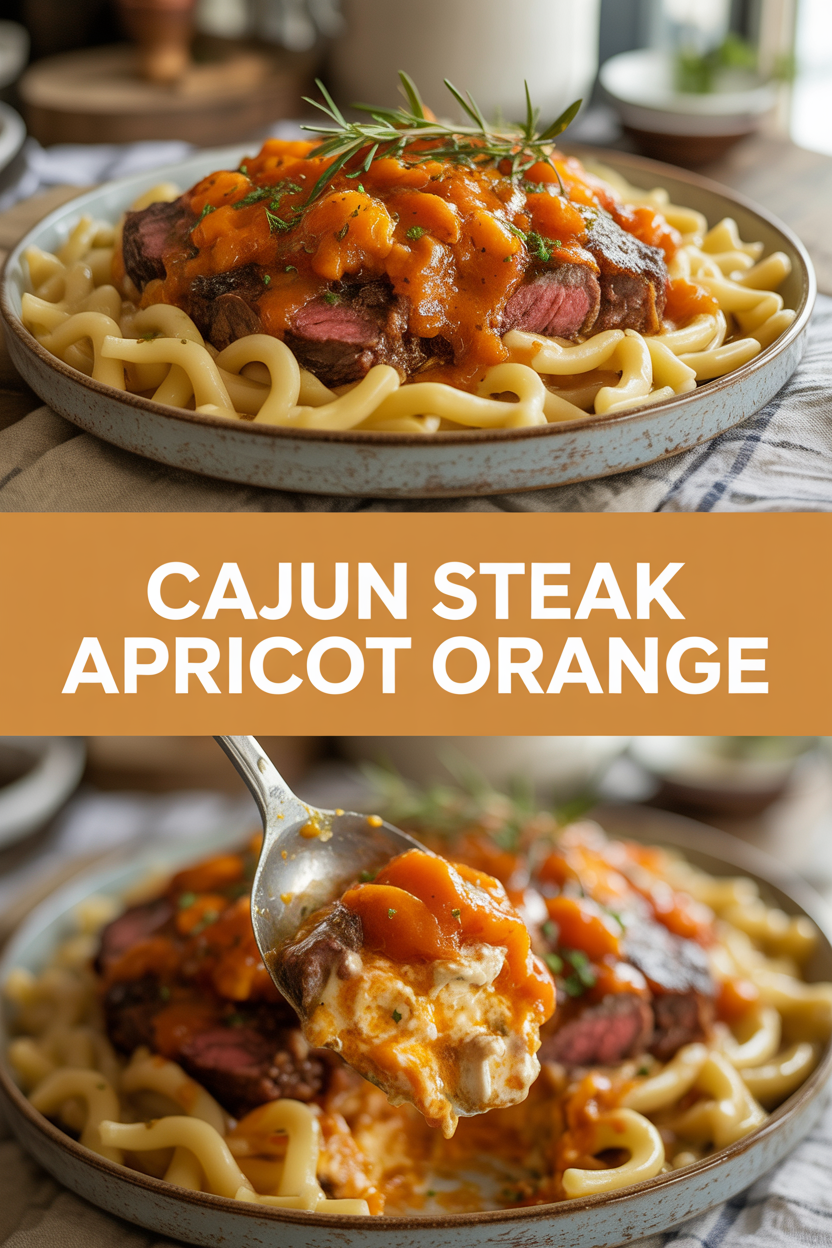
Chef’s Secret: Okay, lean in — I’m about to hand you a tiny kitchen confession that tastes like Saturday night at a fancy bistro with half the effort. I stumbled on this combo when I tried to rescue a too-spicy Cajun-rubbed steak with a jar of apricot preserves and a splash of orange juice. The sweet-tang cut the heat, the citrus brightened the meat, and suddenly the whole pan smelled like tiny fireworks and caramel. I kept the technique simple: sear hard, finish gently, and glaze at the end so the exterior goes glossy and sticky while the inside stays juicy. This feels like an insider trick, but really, it’s just good sense and bold flavors.
Quick Facts
- Yield: Serves 4
- Prep Time: 15 minutes
- Cook Time: 15 minutes
- Total Time: 30 minutes
Why This Recipe is Awesome
This steak hits sweet, spicy, and bright all at once. The crust from the Cajun rub gives you crunchy, smoky notes; the apricot-orange glaze adds a shiny, fruity finish that balances the heat. It smells citrusy and caramelized, and the steak stays tender and juicy if you don’t overcook it. It’s so easy even your pan feels like it earned a gold star.
Ingredients
For the Main Dish:
- 1.5 lb flank steak (or skirt/flat iron)
- 2 tbsp Cajun seasoning (store-bought or homemade)
- 1 tsp kosher salt
- 1/2 tsp freshly ground black pepper
- 2 tbsp olive oil
- 2 cloves garlic, minced
- 1 small shallot, finely chopped (optional)
- 2 tbsp butter
For the Sauce / Garnish:
- 1/2 cup apricot preserves (apricot jam works)
- 1/3 cup fresh orange juice (about 1 large orange)
- 1 tbsp apple cider vinegar or rice wine vinegar
- 1 tsp Dijon mustard
- 1 tsp honey (optional, for extra shine)
- Chopped fresh parsley or chives for garnish
- Orange zest for brightness (optional)
How I Make It
Step 1:
Pat the flank steak dry with paper towels. Rub the steak all over with 2 tbsp olive oil, then press on the 2 tbsp Cajun seasoning, 1 tsp salt, and 1/2 tsp pepper. Let it sit at room temperature for 10 minutes while you prep the sauce. Dry meat sears better and gives you those crunchy edges everyone fights over.
Step 2:
Heat a heavy skillet (cast iron works best) over medium-high until it’s smoking slightly — about 2–3 minutes. Add the steak and listen for the loud, happy sizzle. Sear for about 3–4 minutes per side for medium-rare depending on thickness. Turn only once to build a proper crust. If you want to finish in the oven, preheat to 400°F and transfer the skillet to the oven for 4–6 minutes to reach your desired doneness.
Step 3:
While the steak rests, wipe the skillet clean, then melt 2 tbsp butter over medium heat. Add the minced garlic and chopped shallot; sauté until fragrant and translucent, about 1 minute. Pour in the 1/2 cup apricot preserves and 1/3 cup orange juice, and stir to combine. Add 1 tbsp apple cider vinegar, 1 tsp Dijon, and 1 tsp honey if using. Bring to a gentle simmer and let the sauce reduce until glossy and slightly thickened — about 3–5 minutes. You’ll smell sweet citrus and see the glaze thicken and cling to the spoon.
Step 4:
Slice the steak against the grain into thin strips. Spoon the warm apricot-orange glaze over the slices, tossing lightly so every piece gets that sticky coating. Taste for balance; add a pinch of salt or a squeeze of orange if it needs a lift. You want a glossy, clingy sauce, not a runny puddle.
Step 5:
Finish with a shower of chopped parsley and a little orange zest. Serve immediately while the glaze still glints and the meat stays juicy. Rest the steak at least 5 minutes before slicing so the juices redistribute — that pause makes the difference between juicy and “why is my steak dry?”
Pro Tips
- Use a hot cast-iron skillet for the best sear; it holds heat and gives caramelized edges.
- If your apricot preserves are chunky, pulse them briefly in a blender or smash with a spoon for a smoother glaze.
- Check doneness with an instant-read thermometer: 130–135°F for medium-rare, 145°F for medium.
- Make the sauce ahead and reheat gently; don’t boil the glaze or it will get too thick and lose brightness.
Common Mistakes to Avoid
- Skipping preheating: Classic rookie move. It changes texture and bake time.
- Overmixing: Leads to dense or chewy results. Mix until just combined.
- Guessing cook time: Always use visual cues or a timer, not just vibes.
- Overcrowding pans: Give your food some breathing room to crisp properly.
Alternatives & Substitutions
- Swap flank steak for skirt steak, sirloin, or flat iron — cooking times may change slightly.
- Use apricot nectar or marmalade if you don’t have preserves; reduce sugar by skipping honey.
- For a dairy-free option, replace butter with 1 tbsp coconut oil or extra olive oil.
- Substitute orange juice with tangerine or pineapple for a different citrus note; pineapple adds tropical sweetness and more tenderizing enzymes.
Variations & Tips
- Make it spicy: add 1 tsp red pepper flakes or a squirt of hot sauce to the glaze.
- Kid-friendly: reduce Cajun seasoning by half and skip the red pepper flakes.
- Garnish with chopped toasted almonds for crunch and a nutty contrast.
- Vegetarian twist: grill thick portobello mushrooms with the same rub and glaze for a meaty texture.
- Make it smoky: finish with a quick drizzle of smoked paprika oil or a drop of liquid smoke in the glaze.
FAQ (Frequently Asked Questions)
- Can I make this ahead of time?
- Yes! Prepare the glaze up to 2 days ahead and refrigerate in a sealed container. Reheat gently on the stove and re-warm sliced steak in the glaze over low heat for a few minutes to avoid overcooking.
- Can I double the recipe?
- Sure thing. Use two skillets or cook in batches to avoid overcrowding — searing in batches keeps the crust crisp.
- Can I substitute butter with oil?
- Technically yes, but you’ll miss that buttery magic. Use ¾ the amount of oil.
- How do I know it’s done?
- Look for a deep brown crust, then use an instant-read thermometer: 130–135°F for medium-rare, 145°F for medium. Also watch for glossy glaze and juicy interior when you slice.
- What if I don’t have ingredient X?
- Out of apricot preserves? Use peach or orange marmalade. No shallot? Use a small yellow onion. No Dijon? Use a little grainy mustard or skip it and add a splash more vinegar for balance.
How I Like to Serve It
I serve this over buttery mashed potatoes, creamy polenta, or next to roasted sweet potatoes to play off the apricot’s sweetness. Add a simple green salad with a sharp vinaigrette to cut richness. It works for weeknight dinners and also dresses up for weekend guests — pour a chilled Riesling or a light red like Pinot Noir alongside and watch everyone smile.
Notes
- Store leftovers in an airtight container in the fridge for up to 3 days. Reheat gently in a skillet with a splash of water or extra orange juice to loosen the glaze.
- USDA recommends cooking steaks to 145°F and letting rest for safety; many cooks prefer 130–135°F for medium-rare — pick what you and your guests prefer.
Final Thoughts
Closing: Now go impress someone — or just yourself — with this sweet, spicy, citrusy steak. It glazes like a dream and comes together faster than convincing people to leave the table.