
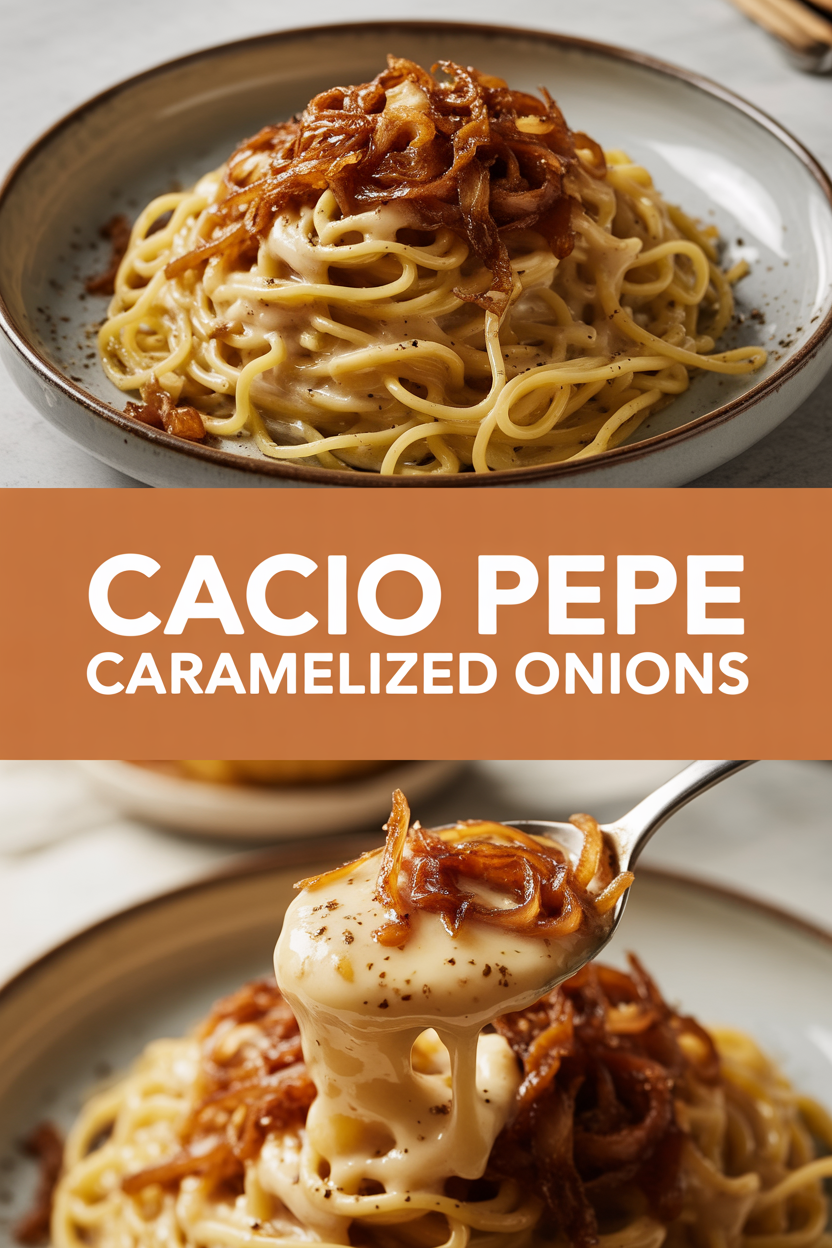
Chef’s Secret: I learned this trick from a sous chef who insisted that caramelized onions deserve the fancy treatment of Cacio e Pepe. I kept my mouth shut and my notebook open as he tossed sweet, honey-browned onions with mountains of sharp Pecorino Romano and a thunderstorm of freshly cracked black pepper. That day I discovered how a humble onion can turn into a sauce so silky and peppery it makes plain pasta feel like a restaurant dish. I’m sharing the shortcut and the tiny missteps I stole from him — so you can make this at home without crying over split cream or burned cheese.
Quick Facts
- Yield: Serves 4 (as a pasta or generous topping for toasts)
- Prep Time: 15 minutes
- Cook Time: 45–60 minutes (for deeply caramelized onions)
- Total Time: 60–75 minutes
Why This Recipe is Awesome
This dish turns ordinary onions into a luxuriously creamy, salty, peppery sauce — think sweet, jammy onion flavor balanced by nutty Pecorino Romano and a bold hit of cracked black pepper. It’s comfort food with brains: silky texture, sticky glossy sheen, and that little pop of heat that makes you go back for another forkful. It’s so easy even your busiest weeknight can wear a fancy hat.
Ingredients
For the Main Dish:
- 4 large yellow onions (about 2 pounds), thinly sliced
- 2 tbsp olive oil
- 1 tbsp butter (optional, for richness)
- 1 tsp fine sea salt
- 1 tsp sugar (helps caramelize; optional)
- 1 cup grated Pecorino Romano (packed)
- 2 tsp freshly cracked black pepper (more to taste)
- 12 oz spaghetti or any long pasta
- 1/2 cup reserved pasta water (adjust as needed)
- 1 tbsp fresh lemon juice (optional, to brighten)
For the Sauce / Garnish (if applicable):
- Extra grated Pecorino Romano for serving
- Flaky sea salt and an extra drizzle of olive oil
How I Make It
Step 1:
Heat a large, heavy skillet over medium-low heat and add 2 tbsp olive oil and 1 tbsp butter. When the butter melts and the pan smells glossy and warm, add the thinly sliced yellow onions with 1 tsp salt and 1 tsp sugar. Stir to coat. The onions will whisper and sigh as they hit the pan — that’s the sound of flavor beginning. Keep the heat steady; you want slow browning, not fast burning.
Step 2:
Cook the onions, stirring every 5–7 minutes, for 45–60 minutes until they turn deep golden-brown and jammy. If pieces stick, scrape them up with a wooden spoon; that brown fond tastes like caramel candy. If the pan dries out or browning stalls, add a splash (a tablespoon) of water or a little more oil to deglaze. Don’t rush this — patience pays off in sweet, complex flavor.
Step 3:
While onions caramelize, bring a pot of salted water to a boil and cook 12 oz spaghetti until just shy of al dente. Reserve 1 cup pasta water before draining. Toss the hot pasta into the pan with the onions, add 1/2 cup reserved pasta water, and stir vigorously to loosen all the sticky bits. The starch in the water helps create a glossy sauce.
Step 4:
Remove the pan from heat and add 1 cup grated Pecorino Romano and 2 tsp freshly cracked black pepper. Toss quickly so the cheese melts into the pasta with the onion juices, adding more pasta water, a tablespoon at a time, until the sauce reaches a silky, clingy texture. Taste and add lemon juice to brighten if you wish. Look for a creamy coating on each strand and a peppery aroma that makes you sniff with approval.
Step 5:
Serve immediately with extra grated Pecorino, another crack of black pepper, and a drizzle of good olive oil. For toasts or crostini, pile the onions on warm bread and finish with cheese and pepper. Garnish with parsley if you like a green pop. Eat while hot — the sauce firms as it cools.
Pro Tips
- Use a wide skillet so onions spread in a single layer and brown evenly; overcrowding steams them instead of caramelizing.
- Keep the heat medium-low. If onions burn, lower the heat and add a splash of water to rescue the fond.
- Grate your Pecorino Romano fresh — pre-grated cheese won’t melt as silky and may clump.
- If your sauce looks dry, stir in reserved pasta water a tablespoon at a time until it loosens to a glossy coat.
Common Mistakes to Avoid
- Skipping preheating: Classic rookie move. It changes texture and bake time.
- Overmixing: Leads to dense or chewy results. Mix until just combined.
- Guessing cook time: Always use visual cues or a timer, not just vibes.
- Overcrowding pans: Give your food some breathing room to crisp properly.
Alternatives & Substitutions
- Swap Pecorino Romano for Parmesan (Parmigiano-Reggiano) — it mellows the salt and adds nuttiness.
- Use vegan Parmesan or nutritional yeast for a dairy-free option; expect a slightly different texture and less creaminess.
- Replace pasta with cooked rice or gluten-free pasta for a gluten-free meal; sauce thickens similarly but watch water ratios.
- Omit butter and use extra olive oil to keep it dairy-free; you’ll lose a touch of buttery magic but still get great flavor.
Variations & Tips
- Spicy kick: Add 1 tsp red pepper flakes when you add the pepper for a wake-up call.
- Herby: Stir in 2 tbsp chopped fresh thyme or rosemary with the onions for an earthy note.
- Caramelized shallot version: Use shallots instead of onions for a sweeter, more delicate sauce.
- Umami boost: Add 1 tbsp soy sauce or fish sauce during deglazing for depth (use sparingly).
- Creamy twist: Stir in 2 tbsp mascarpone at the end for an ultra-luxurious finish.
- Toast topper: Spoon the onions over grilled bread with a smear of ricotta for a snack or appetizer.
FAQ (Frequently Asked Questions)
- Can I make this ahead of time?
- Yes! Caramelized onions keep in an airtight container for up to 4 days in the fridge. Reheat gently in a skillet with a splash of water or oil; refresh with a little grated cheese and pasta water when tossing with pasta.
- Can I double the recipe?
- Sure thing. Use a wider pan or two pans so onions have room to brown. Doubling the pasta water and cheese scales easily; just taste as you go.
- Can I substitute butter with oil?
- Technically yes, but you’ll miss that buttery magic. Use ¾ the amount of oil if swapping (so ¾ tbsp oil per 1 tbsp butter) to keep richness balanced.
- How do I know it’s done?
- Look for deep golden-brown color, jammy texture, and sweet aroma. The onions will shrink significantly and taste concentrated and sweet rather than sharp and raw.
- What if I don’t have ingredient X?
- If you lack Pecorino, use Parmesan. No fresh pepper? Use 1 tsp ground black pepper but add at the end so it keeps its bite.
How I Like to Serve It
I love this as a cozy weeknight pasta with a crisp green salad and a glass of dry white wine. It also shines spooned over grilled steak, roasted chicken, or warm toast for a weekend brunch. Serve it hot in fall and winter to cozy up your menu, or make it for summer dinners when you want something unfussy but special.
Notes
- Store leftover onions in an airtight container for up to 4 days; freeze for up to 3 months in portions.
- Reheat gently on the stove; avoid the microwave if you want to keep the silky texture. (No meat safe-temp necessary for this vegetarian dish.)
Final Thoughts
Closing: Now go impress someone — or just yourself — with your homemade Cacio Pepe Caramelized Onions. You’ll find this recipe shows up on repeat; it pairs with nearly everything and makes the ordinary taste unforgettable.