
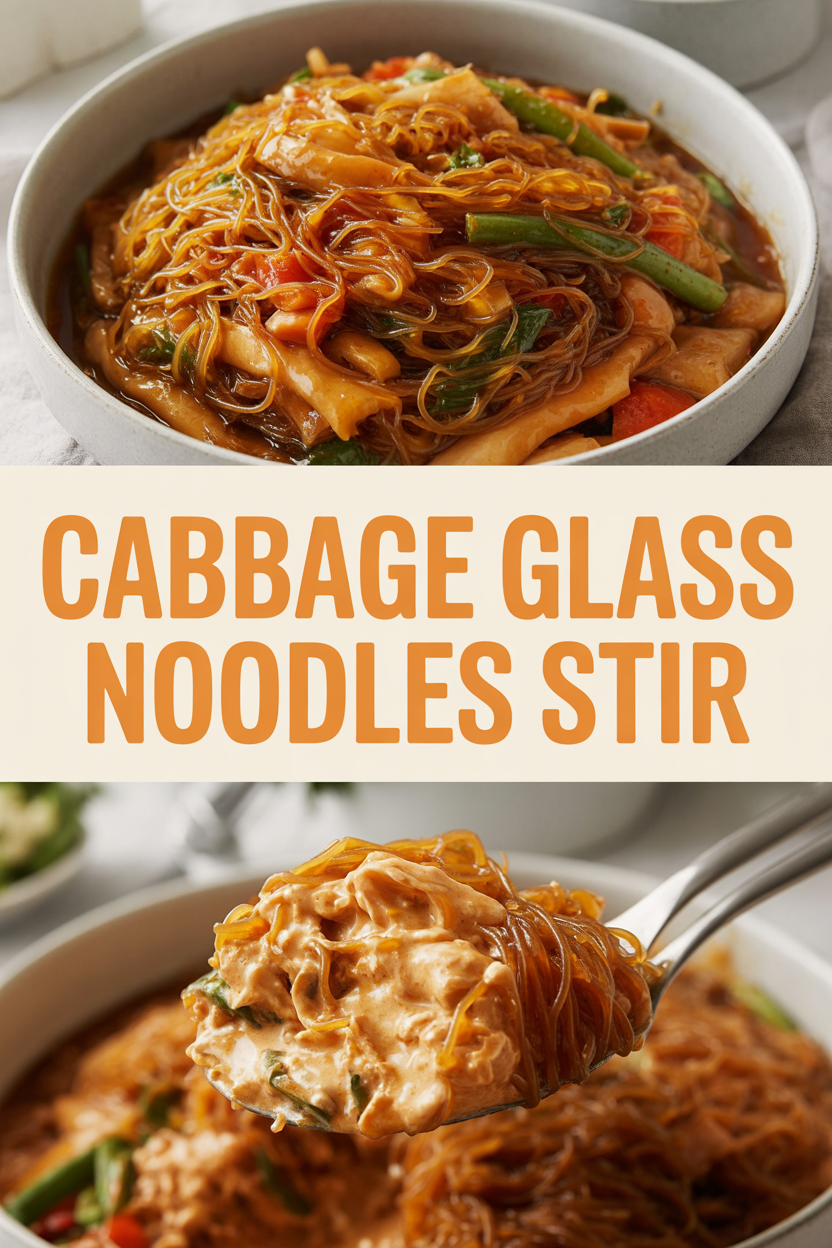
I’ll let you in on a chef’s secret: the kind of weeknight trick that makes you look like you spent hours in the kitchen when you actually cheated a little. I learned this cabbage + glass noodles stir from a mentor who swore by quick soaking and blistering heat — he called it “fast, loud, and forgiving.” I love how the cabbage stays bright and crisp, while the glass noodles soak up a glossy, slightly sweet-savory sauce that clings to every strand. When I make this, the kitchen fills with garlicky, toasty aromas and the pan sings a happy sizzle. Follow my simple hacks and you’ll get restaurant vibes without the drama.
Quick Facts
- Yield: Serves 4
- Prep Time: 15 minutes
- Cook Time: 10 minutes
- Total Time: 25 minutes
Why This Recipe is Awesome
This dish comes together fast, tastes layered, and keeps textures interesting — crunchy cabbage, silky glass noodles, and bits of caramelized edges. It’s so easy even your oven can’t mess it up. The sauce balances salty, sweet, and tangy notes, and the whole stir-fry picks up smoky char where the pan kisses the vegetables. It makes a perfect weeknight hero or a shareable potluck plate.
Ingredients
For the Main Dish:
- 8 oz glass noodles (also called cellophane or mung bean noodles)
- 1 small head green cabbage (about 1 lb), thinly sliced
- 2 tbsp vegetable oil (or peanut oil)
- 1/2 lb boneless chicken thighs, thinly sliced (optional) — or substitute tofu
- 4 cloves garlic, thinly sliced
- 1 tbsp fresh ginger, grated
- 1 medium carrot, julienned (about 1 cup)
- 3 scallions, sliced on the diagonal (white and green parts separated)
- 1/4 cup low-sodium soy sauce (or tamari for gluten-free)
- 2 tbsp rice vinegar
- 1 tbsp sesame oil
- 1 tbsp brown sugar or honey
- 1/2 tsp crushed red pepper flakes (optional)
- 1 tbsp toasted sesame seeds (for garnish)
- Fresh lime wedges (for serving)
For the Sauce / Garnish (if applicable):
- Mix the soy sauce, rice vinegar, brown sugar, and sesame oil in a small bowl before you start cooking.
How I Make It
Step 1:
Start by soaking the glass noodles in hot water (about 212°F) for 5–7 minutes, or until they loosen and bend but stay slightly firm — they’ll finish cooking in the pan. Drain and cut once or twice with kitchen shears so they’re easier to toss. Prep the cabbage, carrot, garlic, ginger, and scallions while the noodles soak. I like the chopping to feel rhythmic — it keeps me focused and the kitchen smells amazing.
Step 2:
Heat a large wok or skillet over high heat for about 1–2 minutes until it gets smoky-hot. Add 2 tbsp vegetable oil. If you use chicken or tofu, toss it in now and sear in an even layer until it picks up golden-brown edges, about 3–4 minutes
Add a little more oil if needed and toss in the garlic and ginger. Let them bloom for about 20–30 seconds — you’ll smell that toasty perfume. Add the carrot and the white parts of the scallions, stir-fry for 1 minute, then add the cabbage. Keep the pan loud: a good sizzle says you’ll get those sweet, caramelized edges. Return the protein (if using) to the pan. Toss in the soaked noodles and pour the sauce over everything. Stir and fold gently for about 2–3 minutes until the noodles absorb the sauce and look glossy. Taste and adjust: add a splash more rice vinegar if you want brightness, or a pinch more brown sugar to tame salt. Look for slightly wilted cabbage with crispy edges and tender, translucent noodles. Turn off the heat and finish with sesame oil. Scatter the green parts of the scallions and toasted sesame seeds over the top. Serve with lime wedges so everyone can squeeze on a hit of brightness. I like to plate it family-style right from the pan — the steam and aroma make everyone gather fast. I serve this straight from the pan with lime wedges and extra scallions, plus a bowl of steamed jasmine rice if we want something to soak up the sauce. It works for quick weeknight dinners, casual potlucks, or as part of a bigger spread with dumplings and cucumber salad. In summer, I toss in extra raw herbs and chill slightly for a lighter feel; in winter, I pile on the hot sauce and warm rice for comfort. Closing: Go make this — it’ll smell incredible, come together fast, and probably disappear before you finish pouring drinks. Now go impress someone — or just yourself — with your homemade masterpiece!Step 3:
Step 4:
Step 5:
Pro Tips
Common Mistakes to Avoid
Alternatives & Substitutions
Variations & Tips
FAQ (Frequently Asked Questions)
How I Like to Serve It
Notes
Final Thoughts