
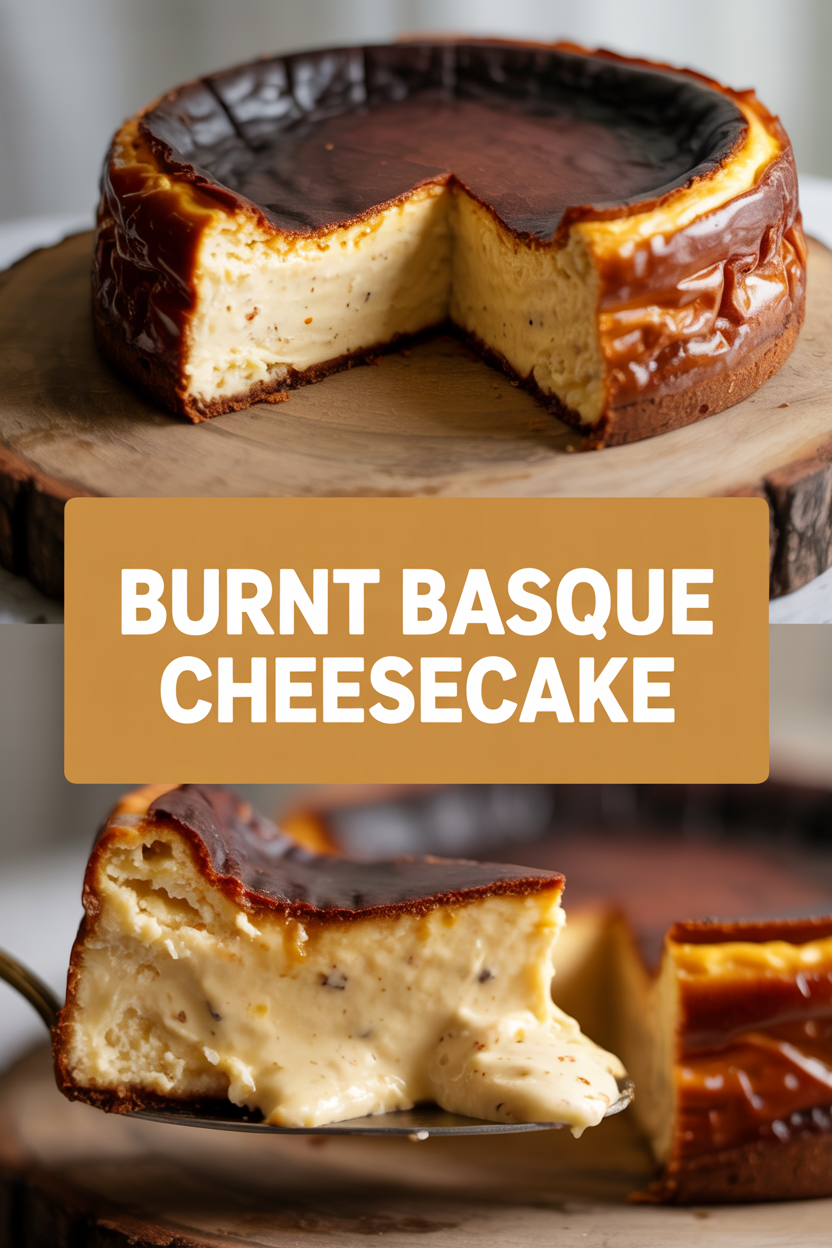
Okay, confession time: I burned my first Basque cheesecake on purpose. Not because I’m a reckless baker, but because someone told me the top needed to be “charred.” I shrugged, cranked the oven, and watched that caramelized crust bloom into a deep mahogany that smelled like toasted sugar and buttered toast. That first bite—creamy, tangy, with smoky edges—made me giggle. This cake feels like dessert with a tiny, rebellious personality. It looks dramatic, tastes like comfort, and requires surprisingly little fuss. If you love silky centers, crackly tops, and a recipe that forgives a few wobbles, let’s make a Burnt Basque Cheesecake together.
Quick Facts
- Yield: Serves 8–10
- Prep Time: 15 minutes
- Cook Time: 50–60 minutes
- Total Time: 2 hours (including 2 hours rest)
Why This Recipe is Awesome
This cheesecake delivers that silky, custardy interior and a dramatic, deeply browned top without complicated water baths or fancy equipment. It tastes tangy from the cream cheese, creamy from the heavy cream, and a little toasty thanks to the scorched top. It’s almost impossible to overthink—who doesn’t love a dessert that looks gourmet while being totally forgiving? Plus, it smells like caramel and comfort the minute it hits the oven.
Ingredients
For the Main Dish:
- Cream cheese, 32 oz (4 packages), room temperature
- Granulated sugar, 1 1/4 cups
- Large eggs, 4, room temperature
- Heavy cream, 1 1/2 cups (12 fl oz)
- All-purpose flour, 2 tbsp
- Pure vanilla extract, 1 tsp
- Fine sea salt, 1/2 tsp
- Parchment paper, for lining an 8–9 inch springform pan
For the Sauce / Garnish (optional):
- Fresh berries or berry compote, for brightness
- Light dusting of powdered sugar (optional)
- Drizzle of honey or olive oil for a grown-up finish
How I Make It
Step 1:
I preheat the oven to 400°F. While the oven heats, I line an 8–9 inch springform pan with a generous piece of parchment paper—let it wrinkle and rise above the rim like a crown. I cut the paper to fit so it forms tall, rustic edges that gather the batter and create that iconic slope.
Step 2:
I beat the cream cheese and granulated sugar in a big bowl until smooth and glossy, about 2–3 minutes. I add the eggs one at a time, beating just until incorporated. Don’t rush here—overbeating air into the batter makes it crack more. Tip: scrape the bowl with a spatula so no lumps hide in the corners.
Step 3:
I drizzle in the heavy cream, stir in the flour, vanilla, and salt, and whisk until silky. The batter smells rich and slightly tangy—like a grown-up custard. I pour the batter into the parchment-lined pan, smoothing the top with a spatula. The batter looks runny and perfect; it will level out as it bakes.
Step 4:
I bake at 400°F for 50–60 minutes. The edges puff and darken to a deep caramel color while the center stays slightly jiggly—think very soft pudding. Listen for a soft crackle as the top browns; the kitchen starts to smell like caramel and butter. If the top browns too quickly in your oven, drop the temp to 375°F after 25–30 minutes and keep watching.
Step 5:
I remove the cake and let it cool on the counter for about 1 hour, then chill in the fridge for at least 2 hours—I often let it rest overnight. The top firms up and develops those beautiful fissures and dark color. I slice with a hot knife (I run it under hot water, wipe dry) for clean edges. Garnish with berries or a light drizzle; the contrast of sweet fruit against the smoky top tastes irresistible.
Pro Tips
- Use room-temperature cream cheese and eggs so the batter blends smoothly—no lumps, no extra mixing.
- Line the pan with tall, wrinkled parchment to get that rustic, crinkled edge that catches caramelization.
- Trust the visual cues: deep mahogany top + slightly jiggly center = done. Don’t chase a thermometer; this is texture-led baking.
- If your oven runs hot, rotate the pan halfway through and lower to 375°F after 25 minutes to prevent burning.
Common Mistakes to Avoid
- Skipping preheating: Classic rookie move. It changes texture and bake time.
- Overmixing: Leads to dense or chewy results. Mix until just combined.
- Guessing cook time: Always use visual cues or a timer, not just vibes.
- Overcrowding pans: Give your food some breathing room to crisp properly.
Alternatives & Substitutions
- Swap regular cream cheese for Neufchâtel for a slightly lighter texture and less fat.
- Use full-fat coconut cream or dairy-free cream cheese and coconut milk for a dairy-free version; expect a faint coconut flavor and softer texture.
- For gluten-free: the recipe contains minimal flour (2 tbsp). Use a 1:1 gluten-free flour blend and no other changes.
- Reduce sugar by up to 1/4 cup if you prefer less sweetness; the charred top adds balanced bitterness.
Variations & Tips
- Add 1 tbsp lemon zest for a bright, citrusy lift—great in spring.
- Stir in 2 tbsp good olive oil for a silky mouthfeel and a savory twist (surprising and delicious).
- Fold in 1/2 cup melted dark chocolate for a burnt Basque chocolate version—decadent for celebrations.
- Top with salted caramel or espresso caramel for extra depth and drama.
- Swirl in fruit purée (like strawberry) before baking for a marbled effect—keep an eye on color.
- For a party, make mini versions in a muffin tin lined with parchment cups; reduce bake time by 10–15 minutes.
FAQ (Frequently Asked Questions)
- Can I make this ahead of time?
- Yes! I often bake it the night before. Chill covered in the fridge up to 3 days or freeze slices wrapped tightly for a month. Thaw in the fridge overnight and bring to room temp before serving for best texture.
- Can I double the recipe?
- Sure thing. Use two pans rather than one oversized pan so the bake time stays similar. Rotate pans between racks halfway through the bake if needed.
- Can I substitute butter with oil?
- Technically yes, but you’ll miss that buttery magic. Use ¾ the amount of oil and expect a slightly different mouthfeel and less caramel flavor.
- How do I know it’s done?
- Look for a deeply browned, almost burnt top and a center that still jiggles like thick pudding. The edges should look set and pull slightly away from the parchment.
- What if I don’t have ingredient X?
- If you lack heavy cream, use whole milk mixed with 2 tbsp melted butter per cup to mimic fat. If you lack flour, 1 tbsp cornstarch helps stabilize the batter.
How I Like to Serve It
I serve this warm-ish or chilled with bright berries, a spoonful of jam, or a drizzle of honey. For brunch, pair it with strong coffee; for dinner, offer dessert wine or a citrusy cocktail. It works for a cozy weeknight splurge or a show-off holiday dessert—people always ask for seconds.
Notes
- Store covered in the fridge up to 3 days; reheat gently in a warm oven if you like it warm.
- This recipe contains no meat; no special internal temperature needed. Focus on visual cues to finish baking.
Final Thoughts
Closing: Go on—make this slightly rebellious, wildly comforting cheesecake and impress someone (or just yourself) with your caramelized, creamy masterpiece!