
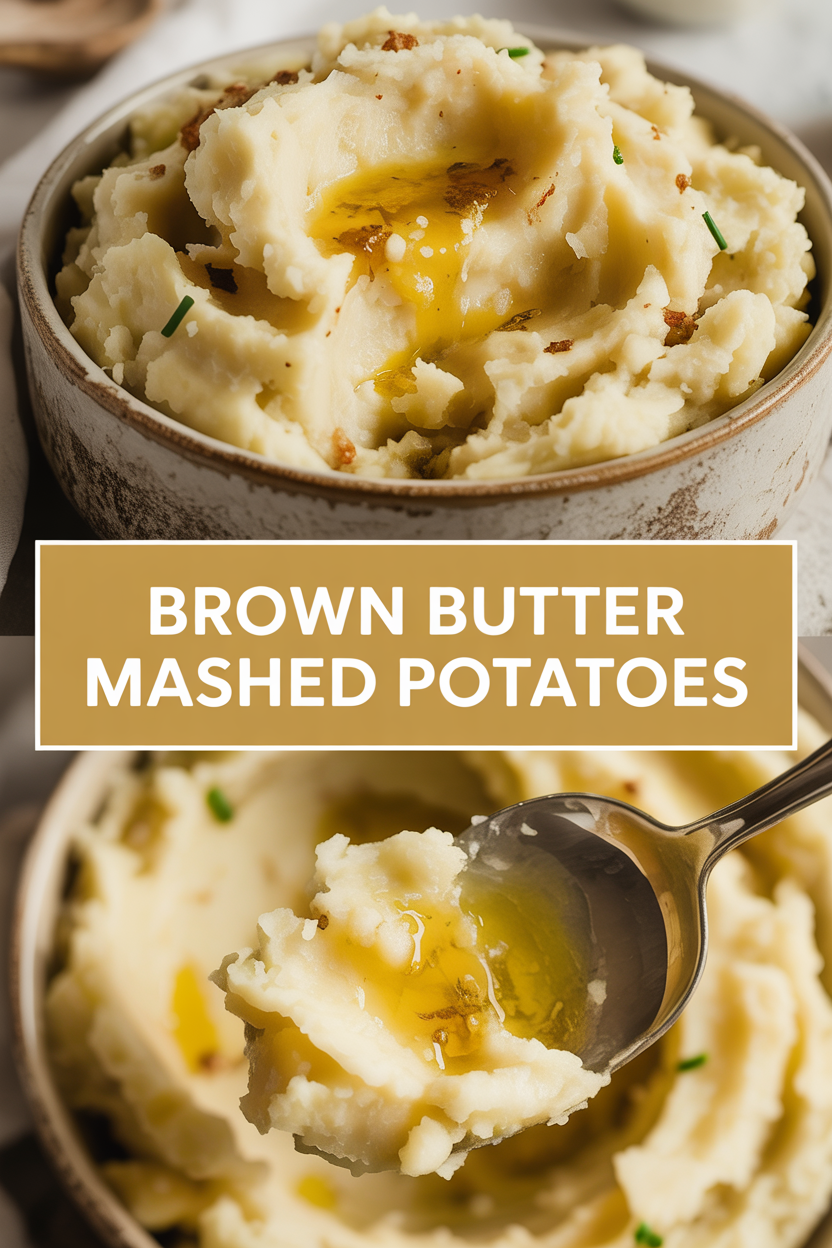
Okay, don’t tell anyone, but I learned this trick from a tired holiday cook who needed a way to make plain mashed potatoes taste like they’d worked on them for hours. I’ll spare you the drama: brown the butter until it smells like toasted hazelnuts, then fold it into the potatoes and you’ve got instant culinary swagger. That nutty, caramelized aroma grabs everyone the second you open the pot, and the potatoes turn glossy, rich, and impossibly cozy. Consider this my little kitchen whisper—no fancy equipment, just a skillet, a potato ricer or masher, and a tiny bit of patience.
Quick Facts
- Yield: Serves 4–6
- Prep Time: 15 minutes
- Cook Time: 30 minutes
- Total Time: 45 minutes
Why This Recipe is Awesome
This recipe turns humble potatoes into something buttery, nutty, and velvet-smooth without any fancy tricks. The secret? browned butter adds a toasted, caramel note that makes plain mash taste like a holiday side. You’ll get creamy texture, little flecks of golden butter, and a mouthfeel that says “comfort” in every bite. It’s easy, forgiving, and so satisfying even weeknight dinners feel special. Plus, it’s so simple your stovetop practically applauds.
Ingredients
For the Main Dish:
- 2½ pounds **Yukon Gold potatoes** (peel or leave skins on for texture)
- 1 teaspoon **salt** for the cooking water
- 6 tablespoons **unsalted butter** (for browning), plus extra to finish if you like
- ½ cup **whole milk** (warmed) — or ½ cup **heavy cream** for extra decadence
- 3 tablespoons **sour cream** or **Greek yogurt** (optional, for tang and silkiness)
- ½ teaspoon **freshly ground black pepper** (or to taste)
- 2 teaspoons **chopped chives** or parsley for garnish
- Optional: 1–2 cloves **garlic**, smashed into the pot while potatoes boil for subtle garlic flavor
For the Sauce / Garnish (if applicable):
- Optional brown butter sage: 2 tablespoons butter browned with 6–8 fresh sage leaves until crisp — pour over finished mash.
How I Make It
Step 1:
Cut the Yukon Gold potatoes into even chunks so they cook uniformly. Toss them into a pot, cover with cold water, add 1 teaspoon salt, and bring to a boil over high heat. Listen for the happy rolling boil, then reduce to a simmer and cook until the potatoes give easily to a fork—about 15–20 minutes.
Step 2:
While the potatoes simmer, brown the butter. Melt 6 tablespoons unsalted butter in a stainless steel or light-colored skillet over medium heat. Swirl the pan; the butter will foam, then turn golden and smell fragrant—think toasted hazelnuts. Watch closely and remove from heat the moment brown bits form and the aroma blooms, about 3–5 minutes. Pour the butter into a heatproof bowl so it stops cooking.
Step 3:
Drain the potatoes well and return them to the hot pot for a minute to let steam escape—this helps keep the mash from getting watery. Mash with a potato ricer or hand masher until mostly smooth. Add warm ½ cup milk (or cream) and 3 tablespoons sour cream if using, then toss in about two-thirds of the brown butter. Stir gently with a wooden spoon or rubber spatula until the potatoes look glossy and coat the back of the spoon. Taste and season with salt and black pepper.
Step 4:
If you like a pillowy texture, don’t overwork the potatoes—stop when they reach that fluffy, slightly elastic feel. If you prefer ultra-silky mash, pass the potatoes through a ricer or food mill before adding butter and milk. For browned butter sage, crisp the sage in the leftover browned butter for 30–45 seconds; you’ll hear it sizzle and smell deep, woody notes.
Step 5:
Spoon the mash into a warm serving bowl, drizzle the remaining browned butter over the top so you get those golden flecks, and sprinkle with chopped chives or crisped sage leaves. Serve hot—the aroma will fill the room and folks will start hovering near the kitchen.
Pro Tips
- Use Yukon Golds for a naturally creamy texture; use Russets if you want fluffier, lighter mash.
- Warm your milk or cream before adding—cold dairy cools the potatoes and makes them gluey.
- Brown butter fast and watch it closely; it goes from nutty to burnt in seconds. Remove it from heat at the first brown flecks and aromatic pop.
- If your mash turns gluey, stir in a spoonful of sour cream or an extra tablespoon of warm butter to loosen it up.
Common Mistakes to Avoid
- Skipping preheating: Classic rookie move. It changes texture and bake time.
- Overmixing: Leads to dense or chewy results. Mix until just combined.
- Guessing cook time: Always use visual cues or a timer, not just vibes.
- Overcrowding pans: Give your food some breathing room to crisp properly.
Alternatives & Substitutions
- Swap whole milk for half-and-half or heavy cream for a richer mash; each ups the fat and silkiness.
- Use olive oil instead of butter for a dairy-free option — texture changes and you’ll miss some of that brown butter depth.
- For tang without dairy, use a dollop of plain yogurt or mashed white beans to add body and protein.
- Make it vegan: brown 2–3 tablespoons of vegan butter or olive oil with a pinch of smoked paprika, use plant milk, and add a tablespoon of nutritional yeast for savory depth.
Variations & Tips
- Garlic-Infused: Add 1–2 smashed garlic cloves to the boiling water and remove before mashing for subtle garlic warmth.
- Cheesy Upgrade: Fold in ½ cup grated Parmesan or sharp cheddar for kids-friendly, gooey goodness.
- Herb-Laced: Stir in chopped rosemary, thyme, or dill for a garden-fresh twist.
- Spicy Kick: Add ¼–½ teaspoon cayenne or a pinch of red pepper flakes to the butter while browning for a smoky heat.
- Truffled Twist: Drizzle a few drops of truffle oil over the finished mash for a luxe, party-ready version.
- Creative Twist: Fold in roasted cauliflower puree (half and half) for lighter texture and hidden veg for picky eaters.
FAQ (Frequently Asked Questions)
- Can I make this ahead of time?
- Yes! Make the mash up to 24 hours ahead, store in an airtight container, and reheat in a low oven (about 325°F) covered with foil. Stir in a splash of warm milk or a tablespoon of butter while reheating to refresh the texture.
- Can I double the recipe?
- Sure thing. Double all ingredients and use a larger pot; cooking time for potatoes stays about the same, but allow extra time to mash and incorporate butter evenly.
- Can I substitute butter with oil?
- Technically yes, but you’ll miss that buttery magic. Use ¾ the amount of oil and consider adding a pinch of smoked salt or nutritional yeast for depth.
- How do I know it’s done?
- Potatoes cook until a fork slides in without resistance; finished mash looks smooth, glossy, and spreadable—not gluey or lumpy. Browned butter will show tiny golden flecks and smell nutty.
- What if I don’t have ingredient X?
- No panic: swap milk with half-and-half or chicken stock for a lighter mash, replace sour cream with plain yogurt, or use parsley if you don’t have chives.
How I Like to Serve It
I serve these mashed potatoes with roasted chicken, a simple pan gravy, or alongside glazed carrots for a cozy weeknight. They shine at holiday dinners beside turkey or prime rib and fit right into potlucks because everyone loves them. For a casual dinner, pour warm brown butter and crisp sage on top and pair with a chilled glass of Sauvignon Blanc.
Notes
- Store leftovers in an airtight container in the fridge for up to 3 days; reheat gently with a splash of milk.
- If serving with poultry, aim for safe cooking temps like 165°F for chicken when checking doneness.
Final Thoughts
Closing: Browned butter turns ordinary mashed potatoes into something memorable—so go ahead, make a batch and watch everyone melt a little with each spoonful.