
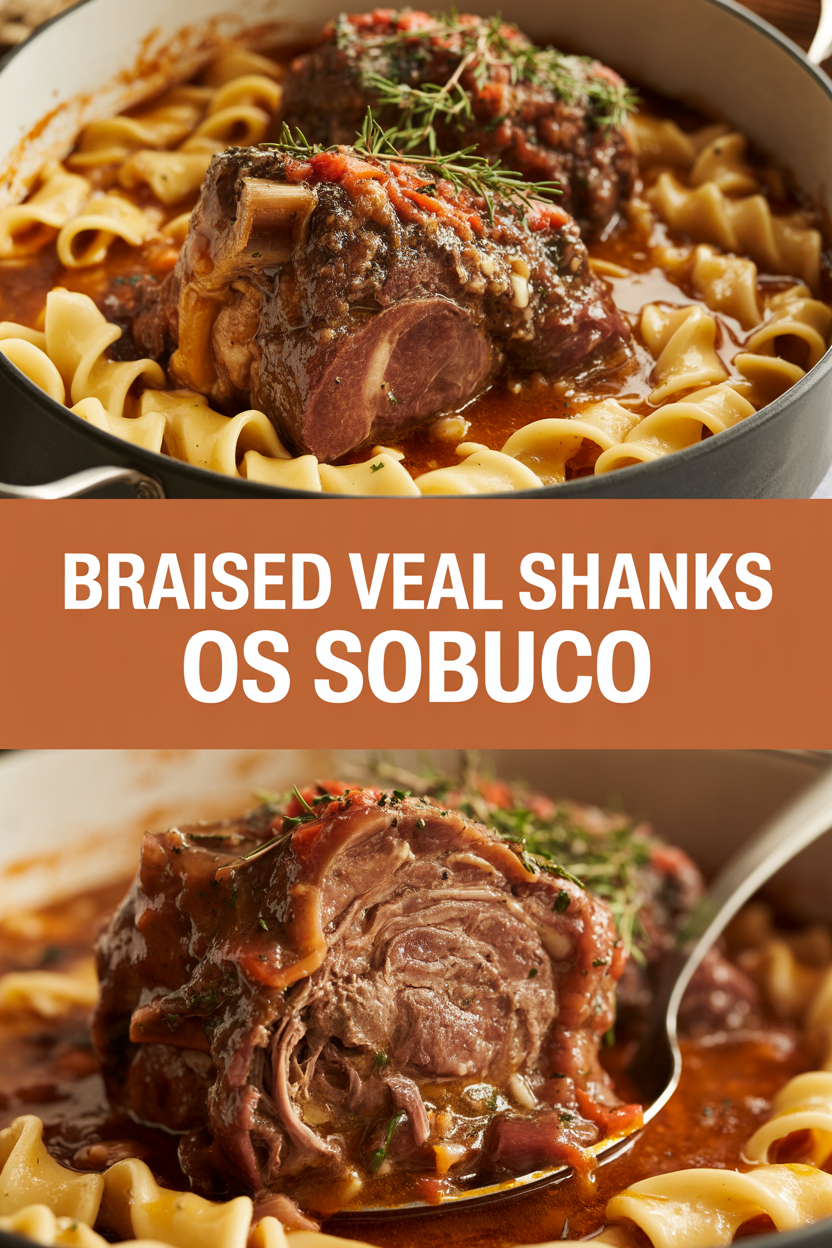
Chef’s Secret: if you want a dinner that makes people shut up and stare, ossobuco does the trick. I learned this trick from a stern sous-chef who whispered, “Brown the edges like you mean it,” and suddenly my kitchen had theater. This braised veal shank recipe keeps that little secret front and center: a fierce sear to build flavor, then a long, slow cuddle in braising liquid until the meat practically announces surrender. You’ll get a glossy, tomato-scented sauce, velvet meat that falls away from the bone, and a hit of bright gremolata to wake everything up. Ready to make your oven your new best friend?
Quick Facts
- Yield: Serves 4
- Prep Time: 30 minutes
- Cook Time: 2 hours 30 minutes
- Total Time: 3 hours
Why This Recipe is Awesome
This ossobuco brings big, comforting flavors without fancy fuss. You get a caramelized crust, a silky tomato-wine sauce, and marrow that adds a lush, buttery whisper to every bite. It smells like Sunday at grandma’s and tastes like you actually worked for it — without complicated steps. It’s braising at its friendliest: hands-on at the start, totally hands-off while the oven does the heavy lifting. Who doesn’t love a dish that rewards patience with pure deliciousness?
Ingredients
For the Main Dish:
- 4 veal shanks (about 3–4 oz each bone-in, roughly 3–4 inches thick)
- 1 cup all-purpose flour (for dredging)
- Salt and black pepper to taste
- 3 tbsp olive oil
- 4 tbsp butter (optional, adds richness)
- 1 medium yellow onion, finely chopped (about 1 cup)
- 2 carrots, diced (about 1 cup)
- 2 celery stalks, diced (about 1 cup)
- 4 cloves garlic, smashed and minced
- 2 tbsp tomato paste
- 1 cup dry white wine or dry vermouth
- 2 cups beef or chicken stock
- 1 (14 oz) can crushed tomatoes
- 1 bay leaf and 2–3 sprigs fresh thyme (or 1 tsp dried)
- Fresh parsley for finishing
- Lemon zest for gremolata (see below)
For the Sauce / Garnish (Gremolata):
- 1/4 cup fresh parsley, finely chopped
- 1 clove garlic, minced
- Zest of 1 lemon
- Pinch of salt
How I Make It
Step 1:
Pat the veal shanks dry and season generously with salt and pepper. Dredge them in flour, shake off the excess. Heat a heavy Dutch oven over medium-high heat and add 3 tbsp olive oil plus 2 tbsp butter. When the fat shimmers and smells nutty, add the shanks and sear until each side develops a deep, golden-brown crust — about 4–5 minutes per side. That loud sizzle means serious flavor building. Transfer the shanks to a plate.
Step 2:
Lower the heat to medium and add the chopped onion, carrot, and celery. Cook, stirring, until they soften and the onion turns translucent — about 6–8 minutes. Add the minced garlic and tomato paste, and stir until the paste darkens a shade and smells sweet and caramelized, about 2 minutes. That smell? You’re winning.
Step 3:
Pour in the 1 cup white wine and scrape up all the browned bits from the bottom with a wooden spoon. Let the liquid reduce by about half — you’ll see the sauce thicken and the aroma shift from sharp to mellow. Add the crushed tomatoes, stock, bay leaf, and thyme. Nestle the shanks back into the pot, bone side down so the marrow stays cozy in the sauce.
Step 4:
Cover the Dutch oven and place it in a 325°F oven. Braise for 2 to 2½ hours, checking at the 1½-hour mark. You want the meat to become fork-tender and start to pull away from the bone. The sauce should reduce and glossy-coat the back of a spoon. If the liquid looks low, add a splash of stock; don’t let it dry out.
Step 5:
Make the gremolata by mixing the parsley, garlic, and lemon zest. Spoon the shanks onto warm plates, spoon over the sauce, and sprinkle with gremolata for a bright, herbaceous pop. Serve with polenta, mashed potatoes, or buttered egg pasta to soak up every saucy drop.
Pro Tips
- Brown in batches to avoid crowding; a crowded pan steals that precious caramelization.
- Use a heavy Dutch oven or ovenproof skillet to keep heat steady—thin pans change temperature too quickly.
- If you can, prepare the dish a day ahead; flavors deepen overnight and the sauce gets silkier.
- Swap veal for beef shanks if veal feels hard to find; braising time stays similar but flavor becomes slightly heartier.
Common Mistakes to Avoid
- Skipping preheating: Classic rookie move. It changes texture and bake time.
- Overmixing: Leads to dense or chewy results. Mix until just combined.
- Guessing cook time: Always use visual cues or a timer, not just vibes.
- Overcrowding pans: Give your food some breathing room to crisp properly.
Alternatives & Substitutions
- Out of veal? Use beef shanks for a richer, more intense flavor. Increase braise time by 15–30 minutes if needed.
- No wine? Replace with an extra cup of stock plus 1 tbsp red or white wine vinegar for acidity.
- Want dairy-free? Skip the butter and use olive oil only; the dish stays deeply flavorful.
- Gluten-free? Use GF flour for dredging or skip flour and dust with cornstarch right before browning.
Variations & Tips
- Make it spicy: add a pinch of red pepper flakes with the garlic.
- Kid-friendly: keep the sauce simple and omit the gremolata for a milder plate.
- Herby twist: swap parsley gremolata for a basil-lemon gremolata for an Italian summer vibe.
- Slow-cooker version: brown meat and veggies, then transfer to slow cooker and cook on low 6–8 hours.
- Creative twist: stir in a tablespoon of anchovy paste with the tomato paste for an umami boost (no fishy flavor, promise).
FAQ (Frequently Asked Questions)
- Can I make this ahead of time?
- Yes! Braised meat tastes even better the next day. Cool, refrigerate in an airtight container, and reheat gently on the stovetop over low heat. The sauce will thicken in the fridge — thin with a splash of stock when reheating.
- Can I double the recipe?
- Sure thing. Use a larger pot or two pots to avoid overcrowding. You may need an extra 15–30 minutes of braise time if your pot gets packed.
- Can I substitute butter with oil?
- Technically yes, but you’ll miss that buttery magic. Use ¾ the amount of oil.
- How do I know it’s done?
- You’ll know: the meat becomes fork-tender and slides off the bone, the sauce reduces to a glossy coating, and the marrow softens so you can scoop it right out.
- What if I don’t have ingredient X?
- Short on fresh herbs? Use 1 tsp dried thyme and 1 tsp dried rosemary. No crushed tomatoes? Substitute a 14 oz can diced tomatoes and blitz them slightly with a spoon while cooking.
How I Like to Serve It
I love serving ossobuco over creamy polenta or buttered mashed potatoes so the sauce can mingle on the plate. A crisp green salad and a glass of the wine you cooked with balance the richness. This dish suits a cozy Sunday supper or a date-night dinner where you want to show off without fussing.
Notes
- Storage: Refrigerate leftovers up to 3 days. Freeze up to 3 months.
- Reheating: Gently reheat on low heat with a splash of stock. Safe temp reminder: cook beef/veal to a finishing hot temp that reaches 145°F for whole cuts if you check with a thermometer, but rely on tenderness for braised dishes.
Final Thoughts
Closing: Make this ossobuco when you want to impress with minimal stress — and then enjoy the applause as the room fills with that incredible braised-meat aroma. Now go impress someone — or just yourself — with your homemade masterpiece!