
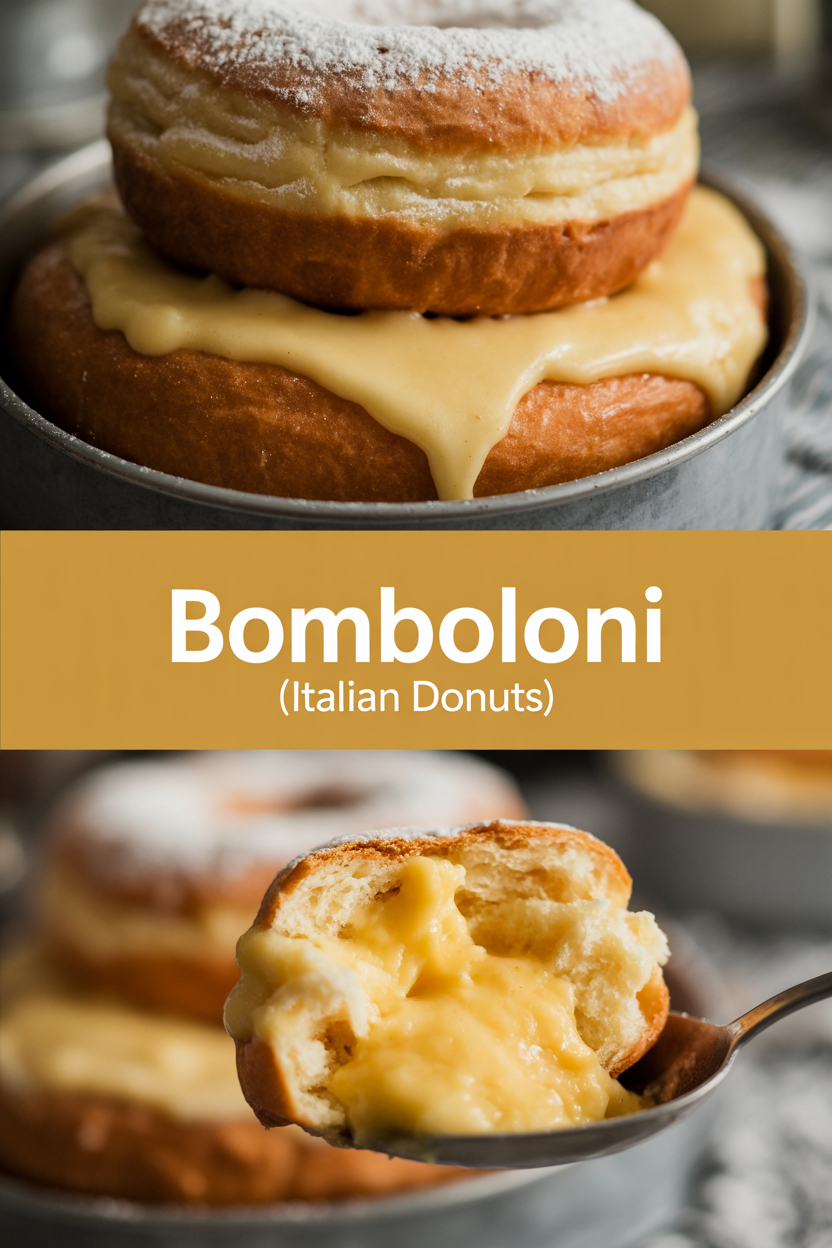
When I was little, my Nonna used to call them “little clouds” and I believed her—because nothing smelled as heavenly as her kitchen when she fried bomboloni: warm sugar in the air, lemon peel from the custard, and the gentle sizzle of dough hitting hot oil. I learned to stand on a stool, sticky-fingered and mesmerized, while she rolled dough between her palms and winked when I dared to steal a hot one. Those afternoons taught me that simple ingredients—flour, yeast, butter—turn into pure comfort when you treat them with patience. Making bomboloni at home brings back that exact cozy chaos: hands full of dough, laughter, and a small, delicious mess.
Quick Facts
- Yield: Serves 8 (makes ~12 bomboloni)
- Prep Time: 35 minutes (plus rising)
- Cook Time: 20 minutes frying
- Total Time: 2 hours 25 minutes
Why This Recipe is Awesome
These bomboloni deliver a pillowy interior, a slightly crisp golden exterior, and that little sugar-dusted kiss on top. They taste like a warm hug and a lazy Sunday rolled into one. They feel fancy enough for guests but simple enough for a weeknight baking mood—plus, who doesn’t love piping sweet custard into a donut while trying not to eat it all with a spoon?
Ingredients
For the Main Dish:
- 4 cups all-purpose flour, plus extra for dusting
- 2 1/4 tsp active dry yeast (1 packet)
- 1/3 cup granulated sugar
- 3/4 cup whole milk, warmed to 100–110°F
- 2 large eggs, at room temperature
- 4 tbsp unsalted butter, softened
- 1/2 tsp fine salt
- 1 tsp vanilla extract
- Vegetable oil for frying (about 4 cups)
- Powdered sugar or cinnamon sugar for tossing (1/2 cup sugar + 2 tsp cinnamon)
- Jam or pastry cream for filling (about 1 cup)
For the Sauce / Garnish (if applicable):
- Optional simple pastry cream: 2 cups whole milk, 1/2 cup sugar, 3 tbsp cornstarch, 3 egg yolks, 2 tbsp butter, 1 tsp vanilla — makes ~1 1/2 cups.
How I Make It
Step 1:
I sprinkle the yeast into the warmed milk with a pinch of sugar and let it bloom for 5 minutes until it looks foamy and alive. Then I whisk eggs, vanilla, and the rest of the sugar together. I add the wet mix to the bowl with flour and salt, then start kneading—either by hand or with a stand mixer and dough hook—adding the butter a little at a time until the dough becomes smooth and springy. Texture check: the dough should feel soft and slightly tacky, not sticky like glue.
Step 2:
I oil a bowl lightly, tuck the dough inside, cover with a clean towel, and let it rise in a warm spot for about 1 hour or until it doubles. If your kitchen chills easily, I set the oven to 100°F for a minute, turn it off, and sit the bowl inside—gentle warmth speeds things up without cooking the dough. Common mistake? Rushing this step makes dense bomboloni, so give the dough time to breathe.
Step 3:
Once the dough doubles, I roll it out on a floured surface to about 1/2-inch thickness and cut rounds (about 2 1/2–3 inches). I place them on a floured tray, cover, and let them puff for another 45 minutes. The dough should look puffy and soft to the touch. I heat oil in a heavy pot to 350°F—use a thermometer. The kitchen fills with a lively sizzle when a test scrap hits the oil; that sound means you’re ready.
Step 4:
I fry the bomboloni in small batches so the oil temperature stays steady. I drop them in gently and turn after about 2–3 minutes per side, aiming for an even golden color. Watch the color, not the clock; golden edges and a hollow sound when you tap them with a slotted spoon tell me they’re done. Transfer to a rack over paper towels to drain briefly.
Step 5:
Warm the pastry cream slightly so it flows, fill a piping bag fitted with a long narrow tip, and pierce each bombolone on the side to inject about 1–2 tablespoons of filling. Toss them in powdered or cinnamon sugar while still slightly warm so the sugar sticks. Eat one hot and sticky; I won’t judge if you skip dinner.
Pro Tips
- Keep a candy thermometer handy and maintain oil at 350°F for even frying—too hot browns the outside before the center cooks.
- If yeast struggles, check milk temp: 100–110°F wakes yeast, but hotter kills it. Always test with a fingertip.
- Prevent soggy bottoms by giving each bombolone room in the oil—fry 3–4 at a time depending on pot size.
- Make the dough a day ahead: refrigerate overnight for more flavor, then shape and fry after a gentle warm-up and second rise.
Common Mistakes to Avoid
- Skipping preheating: Classic rookie move. It changes texture and bake time.
- Overmixing: Leads to dense or chewy results. Mix until just combined.
- Guessing cook time: Always use visual cues or a timer, not just vibes.
- Overcrowding pans: Give your food some breathing room to crisp properly.
Alternatives & Substitutions
- Swap whole milk for almond or oat milk for a dairy-free version; use vegan butter and a neutral oil—expect a slightly different, less rich flavor.
- Use a cup-for-cup gluten-free flour blend with 1/2 tsp xanthan gum for structure; texture becomes a touch crumbly but tasty.
- Replace butter with coconut oil for a tropical hint—your bomboloni will taste subtly coconuty and lighter.
Variations & Tips
- Fill with lemon curd for a bright, zesty twist.
- Make them Nutella-filled for an instant kid favorite.
- Try a chocolate glaze instead of sugar for a bakery-style finish.
- Turn them savory: omit sugar, fill with ricotta and herbs for a brunch worthy bite.
- Baked version: brush with oil, bake at 375°F for 12–15 minutes—faster and lighter, but not quite as pillowy.
- Creative twist: fold a teaspoon of citrus zest into the dough for fragrant surprise.
FAQ (Frequently Asked Questions)
- Can I make this ahead of time?
- Yes! Make the dough the day before, refrigerate wrapped, then shape and allow a slow second rise before frying. Store finished bomboloni in an airtight container for 1 day; reheat in a 350°F oven for 5–7 minutes to refresh.
- Can I double the recipe?
- Sure thing. Use a larger bowl and give the dough plenty of room to rise; you may need two frying batches or a bigger pot to keep oil temperature steady.
- Can I substitute butter with oil?
- Technically yes, but you’ll miss that buttery magic. Use ¾ the amount of oil.
- How do I know it’s done?
- Look for a deep golden color, a slight spring when you press, and a hollow sound when you tap. Internal texture should feel tender, not doughy; a thermometer won’t help here—use sight and touch.
- What if I don’t have ingredient X?
- If you lack eggs, try a commercial egg replacer or 1/4 cup applesauce per egg for a softer crumb; if no pastry cream, use good-quality jam or Nutella for easy filling.
How I Like to Serve It
I love these bomboloni for weekend mornings with espresso or late-night dessert with a glass of milk. They make a cheerful addition to brunches and potlucks—stack them on a platter and watch them disappear. In colder months, the warm custard feels like cozy comfort; in summer, swap for bright lemon curd and sip something cold alongside.
Notes
- Store cooled bomboloni in an airtight container at room temperature for up to 24 hours; warm them in a 350°F oven for 5–7 minutes to freshen.
- Frying involves hot oil—handle with care and keep a lid nearby in case of splatter.
Final Thoughts
Closing: Go make these little clouds—share them or hoard them; either way, you’ll end up with smiles and a kitchen that smells like nostalgia.