
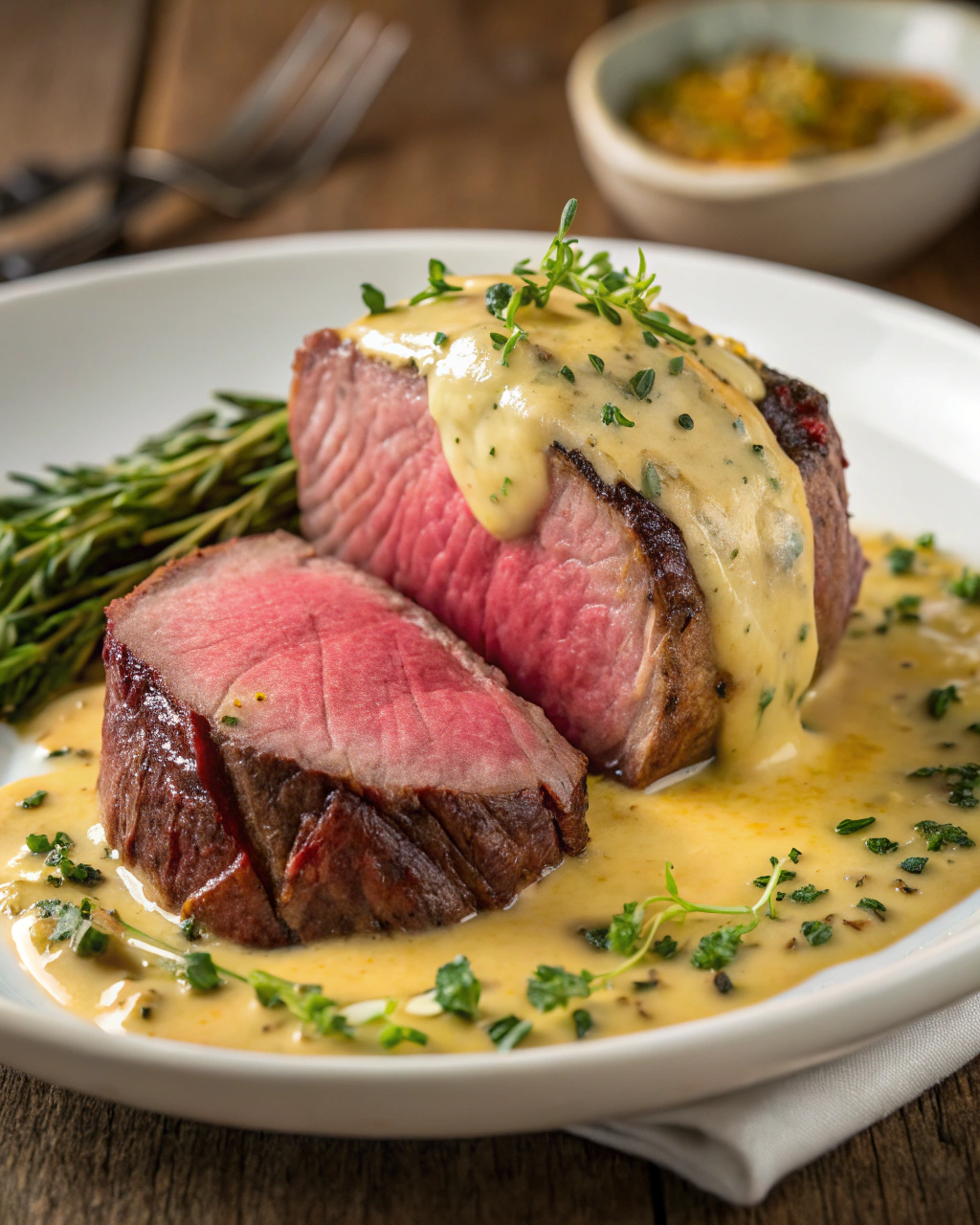
Bistro-Style Beef Tenderloin with Velvet Béarnaise
Alright, picture this: the soft sizzling sound of a perfectly seared beef tenderloin hitting a hot pan, filling your kitchen with that irresistible, savory aroma. Now, top that exquisite cut of beef with a luxuriously smooth, tangy Béarnaise sauce that’s so velvety it practically melts on your tongue. This recipe isn’t just dinner—it’s an experience. I can’t wait to share with you how to bring a little bistro magic right to your own table, especially since the sauce is the kind of golden touch that instantly elevates any meal. Trust me, you’re going to want to get cozy in the kitchen for this one.
Quick Facts
- Yield: Serves 4
- Prep Time: 20 minutes
- Cook Time: 25 minutes
- Total Time: 45 minutes
Ingredients
For the Main Dish:
- 1 ½ to 2 pounds beef tenderloin, trimmed
- 2 tbsp olive oil
- 2 tbsp unsalted butter
- Salt and freshly ground black pepper, to taste
- 2 garlic cloves, smashed
- 2 sprigs fresh thyme or rosemary
For the Velvet Béarnaise Sauce:
- 3 large egg yolks
- 1 tbsp white wine vinegar
- 1 tbsp dry white wine
- 2 tbsp finely chopped shallots
- 1 tbsp chopped fresh tarragon (plus extra for garnish)
- ½ cup unsalted butter, melted and kept warm
- Salt and white pepper, to taste
How I Make It
Step 1:
Start by patting the beef tenderloin dry with paper towels—this helps get that beautiful, brown crust. Season it generously with salt and pepper. Heat a heavy skillet over medium-high heat with the olive oil and butter. When the butter is melted and foaming, add the garlic and fresh herbs, letting their fragrance infuse the fat.
Step 2:
Carefully place the tenderloin in the pan, searing each side for 3-4 minutes until it’s gloriously browned and caramelized. Keep basting it with the melted butter and herb mixture to build flavor and keep the meat juicy.
Step 3:
Transfer the skillet (if oven-safe) or move the tenderloin to a baking dish. Roast in a 400°F oven for about 10-15 minutes for medium-rare, or until an instant-read thermometer hits 130°F. Remove the meat to rest; it’ll continue cooking to a perfect 135°F as it rests—don’t skip this step!
Step 4:
While the beef rests, get started on the Béarnaise. In a small saucepan, combine the vinegar, white wine, shallots, and half of the chopped tarragon. Simmer gently until reduced to about 2 tablespoons. Strain and let it cool slightly.
Step 5:
Whisk the egg yolks with the warm vinegar reduction over low heat, stirring constantly to avoid scrambling. Gradually drizzle in the warm melted butter, whisking until the sauce thickens into a glossy, velvety texture. Stir in the remaining tarragon, then season with salt and white pepper.
Step 6:
Spoon the warm Béarnaise generously over the sliced tenderloin. Garnish with extra fresh tarragon leaves and serve immediately for that true bistro feel!
Variations & Tips
- Use clarified butter in the Béarnaise for a more stable sauce that holds up longer.
- If the sauce starts to split, whisk in a teaspoon of cold water to bring it back together.
- Swap out tarragon for fresh basil or chervil for a slightly different herbaceous twist.
- Let the beef come to room temperature before cooking for even doneness.
- Serve with crispy roasted potatoes or a simple green salad to balance richness.
- For a quicker version, try a simple hollandaise sauce, but trust me—Béarnaise is worth the extra love.
How I Like to Serve It
This dish shines on a special weekend dinner, maybe for a casual anniversary or a treat-yourself Friday night. The richness pairs beautifully with crisp white wine or a light-bodied red. I often add a side of roasted asparagus or green beans for that fresh pop of color and crunch to balance the softness of the tenderloin and the sauce.
Notes
- Leftover beef is best enjoyed cold or gently warmed; avoid reheating in the microwave to keep it tender.
- The Béarnaise is best fresh but can be gently reheated over very low heat, whisking constantly to prevent breaking.
Closing: This recipe always works because it’s all about layering simple, high-quality flavors and treating the beef gently—when you do that, every bite feels like a restaurant-worthy celebration.