
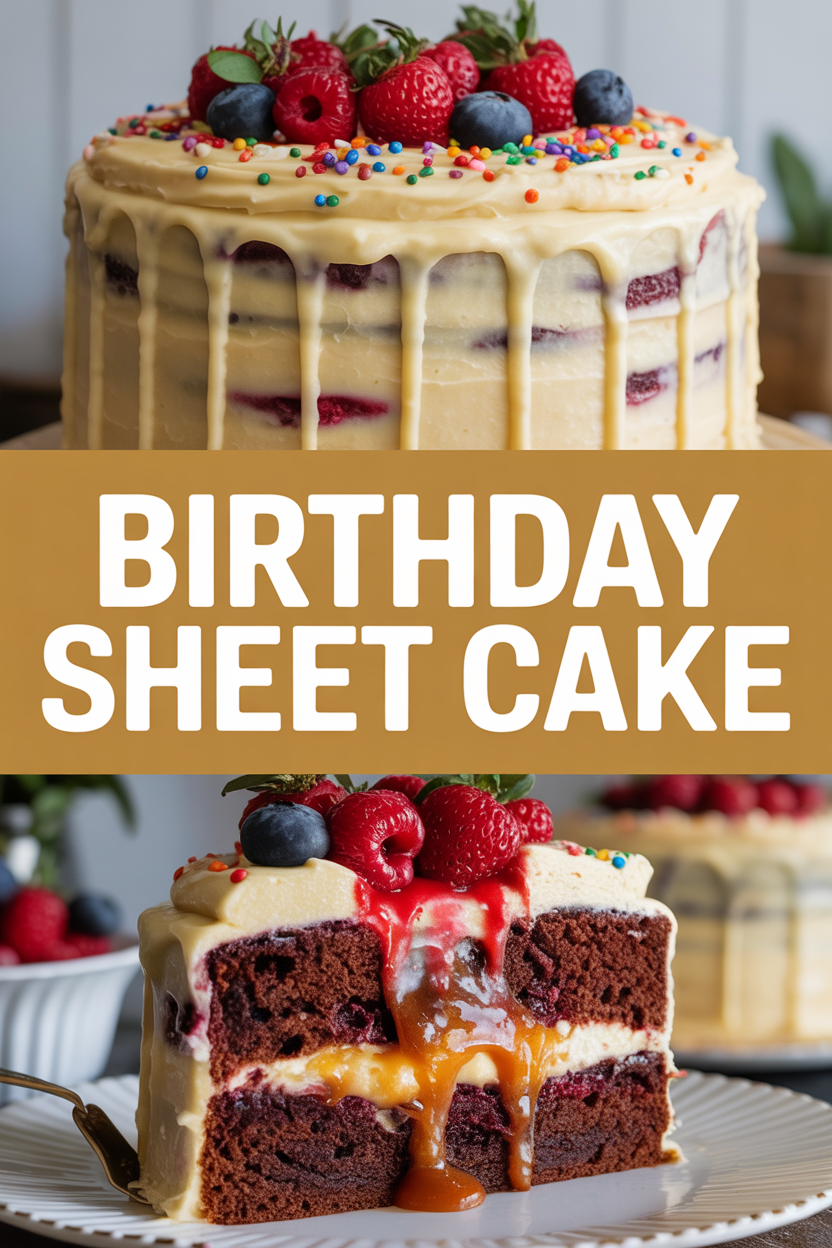
Okay, full disclosure: I once tried to make a “fancy” birthday cake with seven layers and a sugar sculpture. The cake collapsed halfway through picture-taking and my dog got the first slice — he looked far too proud. These days I keep things joyful and reliably delicious with a good old Birthday Sheet Cake. It pans out perfectly, feeds a crowd, and gives you big, buttery edges that crackle when you slice into them. The frosting stays soft and spreadable, the sprinkles sing, and you get applause without needing a cake stand or eight hours of patience. Let’s make something everyone will actually eat (and celebrate with), no drama required.
Quick Facts
- Yield: Serves 12–16
- Prep Time: 20 minutes
- Cook Time: 22–25 minutes
- Total Time: 45 minutes (plus cooling & decorating)
Why This Recipe is Awesome
This cake balances a tender, buttery crumb with slightly crisp edges — the best of both worlds. The batter mixes in one bowl, warms the kitchen with a sweet vanilla smell, and never demands circus-level skills. The frosting stays silky and spreadable, perfect for piping or sloppy-joyful swirls, and the colorful sprinkles make it instantly festive. It’s so forgiving even your oven can’t mess it up. Who doesn’t love a cake that looks party-ready and tastes like a hug?
Ingredients
For the Main Dish:
- 2 cups all-purpose flour
- 1 1/2 cups granulated sugar
- 2 tsp baking powder
- 1/2 tsp baking soda
- 1/2 tsp salt
- 3/4 cup (1 1/2 sticks) unsalted butter, softened
- 2 large eggs, room temperature
- 1 cup buttermilk (or 1 cup milk + 1 tbsp lemon juice, rested 5 minutes)
- 2 tsp vanilla extract
For the Frosting & Garnish:
- 1 cup (2 sticks) unsalted butter, softened
- 4 cups powdered sugar, sifted if lumpy
- 2–3 tbsp milk or heavy cream
- 2 tsp vanilla extract
- Pinch of salt
- Sprinkles (about 1/2 cup) or any fun decor
How I Make It
Step 1:
Preheat the oven to 350°F and line a 9×13-inch pan with parchment or grease it generously. In a large bowl, whisk together the flour, sugar, baking powder, baking soda, and salt. I always give the dry mix a quick aerating whisk — you’ll smell the vanilla jump into action later.
Step 2:
Cut the softened butter into the dry mix with a fork or beat it with a mixer until you have a sandy texture. Add the eggs, buttermilk, and vanilla, then beat on medium until smooth, about 1–2 minutes. Scrape the bowl; you want a glossy, pourable batter, not lumps. If it looks too thick, add a tablespoon of milk.
Step 3:
Pour the batter into the prepared pan and smooth the top with an offset spatula. Slide it into the oven and bake for 22–25 minutes — watch for a golden top and a toothpick that comes out with a few moist crumbs. You’ll smell the kitchen fill with warm vanilla and butter notes; that’s your cue.
Step 4:
Let the cake cool in the pan for about 20 minutes, then transfer to a wire rack to cool completely before frosting. If you frost too soon, the frosting will melt and run; patience pays off here. I sometimes pop the cake in the fridge for 10 minutes to speed things up.
Step 5:
For the frosting, beat the softened butter until smooth, then slowly add the powdered sugar with the mixer on low. Add vanilla, a pinch of salt, and 2–3 tbsp milk until you reach a spreadable consistency. Spread the frosting generously, then press on sprinkles or create a simple piped border. I like to press a few confetti sprinkles into the edges so every slice gets a party.
Pro Tips
- Bring eggs and butter to room temperature for even mixing and a lighter crumb.
- Don’t overmix once you add the wet ingredients — mix until just combined to keep the cake tender.
- If you don’t have buttermilk, mix 1 cup milk with 1 tbsp lemon juice and wait 5 minutes; it curdles slightly and performs like buttermilk.
- Want sharp frosting edges? Chill the frosted cake for 10 minutes, then use a warm offset spatula to smooth.
Common Mistakes to Avoid
- Skipping preheating: Classic rookie move. It changes texture and bake time.
- Overmixing: Leads to dense or chewy results. Mix until just combined.
- Guessing cook time: Always use visual cues or a timer, not just vibes.
- Overcrowding pans: Give your food some breathing room to crisp properly.
Alternatives & Substitutions
- Replace butter with equal coconut oil for a dairy-free cake — expect a slightly denser crumb and mild coconut flavor.
- Use gluten-free 1:1 flour to make it gluten-free; texture might be a bit crumbly but still tasty.
- Swap buttermilk for plain yogurt thinned with milk (same volume) for tang and moisture.
- For a dairy-free frosting, use a vegan stick butter and a splash of almond milk.
Variations & Tips
- Chocolate Birthday Cake: Replace 1/2 cup flour with 1/2 cup cocoa powder and add 2 tbsp hot coffee for depth.
- Funfetti: Fold 1/2 cup sprinkles into the batter for colorful pockets inside the cake.
- Layered Look: Bake in two 9-inch pans for layers and pipe a rosette border for a fancy feel.
- Fruity Twist: Add 1 cup mashed strawberries to batter and reduce milk by 1/4 cup for a strawberry sheet cake.
- Kid-Friendly: Use non-perishable confetti sprinkles on top and write a message with colored frosting.
- Creative Twist: Make a “cookie-dough” frosting by folding in safe-to-eat cookie dough chunks for an over-the-top party cake.
FAQ (Frequently Asked Questions)
- Can I make this ahead of time?
- Yes! Bake the cake and wrap it airtight once completely cool. Frost within 24 hours for best texture. Store in the fridge up to 3 days or freeze unfrosted for up to 2 months.
- Can I double the recipe?
- Sure thing. Use two pans or a larger sheet pan; adjust bake time slightly — a larger, thinner cake may take less time, a thicker cake may take more. Keep an eye on golden color and the toothpick test.
- Can I substitute butter with oil?
- Technically yes, but you’ll miss that buttery magic. Use ¾ the amount of oil (so 9 tbsp oil instead of 3/4 cup butter) for a moist crumb.
- How do I know it’s done?
- Look for a golden top, edges pulling slightly away from the pan, and a toothpick that comes out with a few moist crumbs — not wet batter.
- What if I don’t have ingredient X?
- Swap buttermilk with milk + lemon (1 tbsp). If you lack powdered sugar, make a quick glaze with 1 1/2 cups sugar and 3–4 tbsp milk, though it won’t be as fluffy as buttercream.
How I Like to Serve It
I serve slices on colorful plates with a fork and a big smile. This cake works at backyard parties, school celebrations, or a small Saturday-night dessert binge. Pair it with cold milk, coffee, or a fizzy soda for nostalgia. In summer, add fresh berries on the side; in winter, a scoop of vanilla ice cream tops it off like a hug.
Notes
- Store leftovers covered in the fridge for up to 4 days; bring slices to room temperature before serving for the best texture.
- To freeze, wrap unfrosted cake tightly and freeze up to 2 months. Thaw overnight in the fridge, then frost.
Final Thoughts
Closing: Now go impress someone — or just yourself — with your homemade birthday sheet cake! Celebrate loud, not fussy, and don’t forget to save me a slice.