
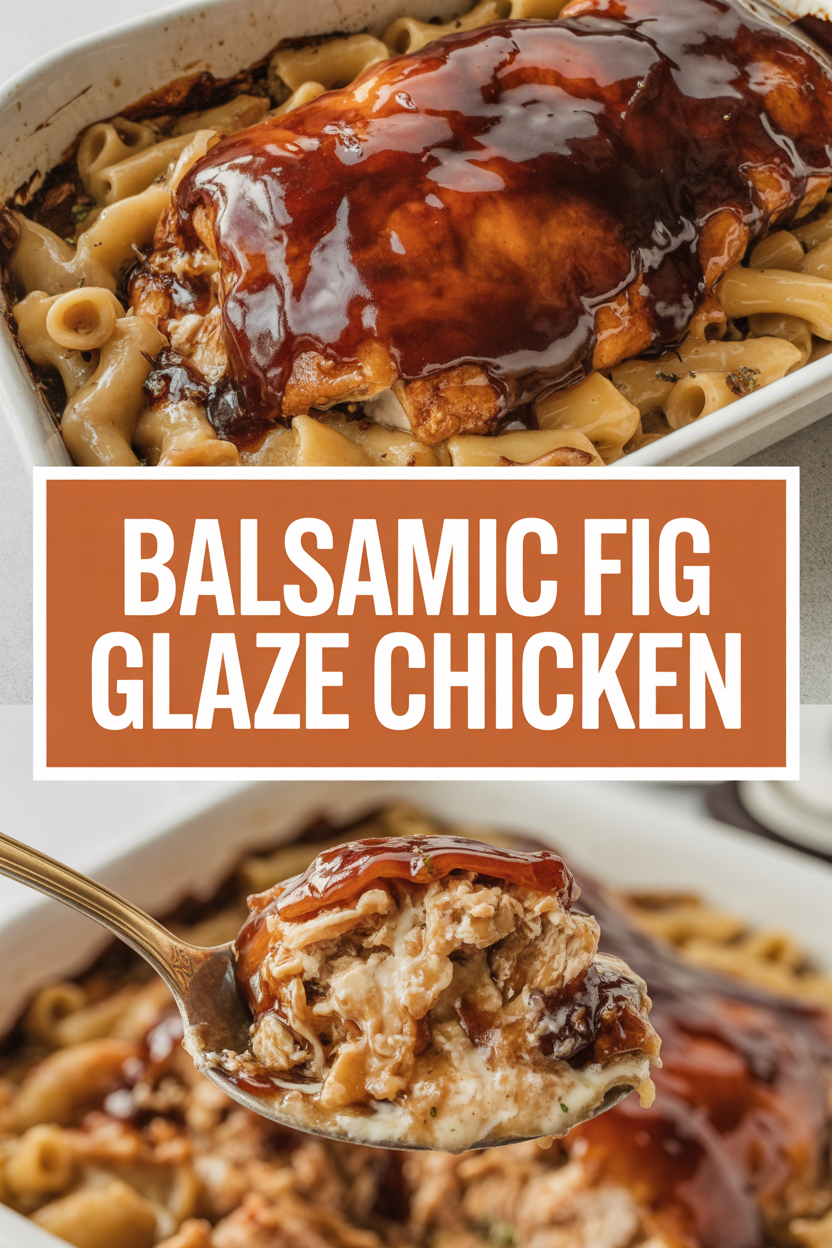
Chef’s Secret: I’ll confess something—I keep a tiny jar of fig jam in my fridge like it’s treasure. One night I accidentally mixed it with balsamic vinegar and a little mustard while pan-searing chicken, and my whole kitchen smelled like a cozy Italian trattoria. That happy accident turned into this Balsamic Fig Glaze Chicken recipe. I’ll walk you through how to get glossy, sticky glaze, golden-browned edges, and tender, juicy chicken every time. No fancy equipment, no long lists of weird ingredients—just big flavor that looks like you labored for hours (but really, you didn’t).
Quick Facts
- Yield: Serves 4
- Prep Time: 15 minutes
- Cook Time: 25 minutes
- Total Time: 40 minutes
Why This Recipe is Awesome
Who doesn’t love a shiny, sticky glaze that snaps when you cut into tender chicken? This recipe balances sweet fig jam, tangy balsamic vinegar, and a little mustard heat for depth. You get caramelized edges, a glossy coating, and juicy meat inside—great textures and flavors. It’s so easy even your oven can’t mess it up: quick sear, quick roast, and a fast pan glaze that sings. Bonus: it smells like a Friday night dinner the moment you start cooking.
Ingredients
For the Main Dish:
- 1 ½ pounds boneless, skinless chicken thighs (about 6 thighs) — thighs stay juicier than breasts
- 1 tsp kosher salt
- ½ tsp black pepper
- 1 tbsp olive oil
- 1 tbsp unsalted butter (optional, for extra glossy finish)
- 2 cloves garlic, minced
- Fresh rosemary or thyme sprigs (optional, 2–3 sprigs)
For the Sauce / Garnish (if applicable):
- ⅓ cup fig jam (readily available or use preserves)
- 3 tbsp good-quality balsamic vinegar
- 1 tbsp Dijon mustard
- 1 tbsp honey (or brown sugar)
- 2 tbsp water (to loosen if needed)
- Pinch of red pepper flakes (optional, for a little kick)
- Chopped fresh parsley or basil for garnish
How I Make It
Step 1:
Pat the chicken dry with paper towels—dry chicken browns better, trust me. Season both sides with salt and pepper. Heat a large ovenproof skillet over medium-high heat and add 1 tbsp olive oil. When the oil shimmers and smells bright, lay the thighs away from you; listen for that satisfying sizzle. Sear for 3–4 minutes without moving until the edges turn a deep golden-brown.
Step 2:
Flip the thighs and add 1 tbsp butter and the minced garlic to the pan. Tilt the pan and spoon the buttery juices over the chicken so the garlic releases a toasty aroma but doesn’t burn. After 2–3 minutes of basting, transfer the skillet to a 400°F oven and roast for 8–10 minutes to finish cooking through. (If you don’t have an ovenproof pan, transfer the chicken to a baking dish.)
Step 3:
While the chicken roasts, make the glaze. In a small saucepan combine ⅓ cup fig jam, 3 tbsp balsamic vinegar, 1 tbsp Dijon mustard, and 1 tbsp honey. Warm over medium heat and whisk until the jam melts and the sauce becomes glossy—about 3–4 minutes. If the glaze looks too thick, add 1–2 tbsp water to loosen it. Taste and adjust: more balsamic for tang, more honey for sweetness.
Step 4:
Pull the chicken from the oven when an instant-read thermometer reads 165°F at the thickest part. Spoon off excess fat if you like, then pour the glaze into the hot skillet and turn the chicken to coat it in the glossy sauce. Return to the burner over medium heat for 1–2 minutes to let the glaze thicken and cling—listen for a gentle simmer and watch the sauce bubble into a lacquered finish.
Step 5:
Turn off the heat and garnish with chopped parsley or basil and an extra drizzle of balsamic if you’re feeling fancy. Let the chicken rest for 5 minutes so juices settle. Slice and serve with the sticky glaze spooned over. That sweet-tart aroma and the sticky sheen? Pure comfort—and you get compliments without breaking a sweat.
Pro Tips
- Use chicken thighs for juiciness; they forgive a little extra heat. If you use breasts, reduce oven time and watch the thermometer closely.
- Don’t overcrowd the pan when searing—leave space so each piece gets a crisp edge.
- If your glaze seizes or gets grainy, add a splash of warm water and whisk vigorously to smooth it out.
- Make the glaze ahead and store it in the fridge for up to a week; rewarm gently before using.
Common Mistakes to Avoid
- Skipping preheating: Classic rookie move. It changes texture and bake time.
- Overmixing: Leads to dense or chewy results. Mix until just combined.
- Guessing cook time: Always use visual cues or a timer, not just vibes.
- Overcrowding pans: Give your food some breathing room to crisp properly.
Alternatives & Substitutions
- Swap chicken thighs for breasts (watch temperature closely) or for thick tofu steaks if you want a vegetarian option—marinate tofu briefly for better flavor.
- Use apricot or peach preserves instead of fig jam for a brighter, fruitier glaze.
- For dairy-free, skip the butter and use an extra 1 tbsp olive oil; the glaze still shines.
- Replace honey with maple syrup for a different sweetness profile and gluten-free assurance.
Variations & Tips
- Spicy: Add ½ tsp smoked paprika and a pinch more red pepper flakes to the glaze.
- Kid-friendly: Omit red pepper flakes and cut the glaze with a little orange juice for a milder, citrusy finish.
- Herb-forward: Stir in chopped fresh rosemary or thyme into the glaze for an earthy touch.
- Make it creamy: Finish with a spoonful of Greek yogurt on the side for dipping—adds tang and creaminess.
- Party hack: Thread seared, glazed chicken onto skewers for easy appetizers—slice into bite-size pieces and brush with extra glaze.
- Breakfast twist: Serve sliced over warm toast with ricotta for a sweet-savory brunch option.
FAQ (Frequently Asked Questions)
- Can I make this ahead of time?
- Yes! Cook the chicken and store it separately from the glaze in airtight containers for up to 3 days. Reheat gently in a low oven (300°F) and brush warmed glaze over the chicken just before serving to revive the shine.
- Can I double the recipe?
- Sure thing. Use two pans or work in batches so you don’t overcrowd the skillet. You might need to increase glaze ingredients by 1.5–2x depending on how saucy you like it.
- Can I substitute butter with oil?
- Technically yes, but you’ll miss that buttery magic. Use ¾ the amount of oil (about ¾ tbsp) if you want to skip butter.
- How do I know it’s done?
- Use an instant-read thermometer: remove chicken at 165°F. Look for golden-brown, caramelized edges and a glossy, clinging glaze. The meat should feel firm but still springy.
- What if I don’t have ingredient X?
- Out of fig jam? Use apricot or peach preserves. No Dijon? Use yellow mustard plus a squeeze of lemon for tang. Little swaps won’t ruin it—just taste and adjust.
How I Like to Serve It
I love this chicken over creamy mashed potatoes or buttery polenta so the glaze pools into delicious bites. It also sings atop a mixed greens salad with toasted walnuts and goat cheese for a lighter meal. Serve with a glass of medium-bodied red or a crisp sparkling rosé—the bubbles cut the sweetness nicely. This dish fits weeknight dinners and low-key dinner parties alike.
Notes
- Store leftover chicken in an airtight container in the fridge for up to 3 days. Reheat gently to keep it juicy.
- Safe internal temperature for cooked chicken: 165°F. Always check at the thickest part.
Final Thoughts
Closing: Now go impress someone—or just yourself—with this glossy, sweet-tangy Balsamic Fig Glaze Chicken. It feels fancy but cooks up fast, and I promise the leftovers taste even better the next day.