
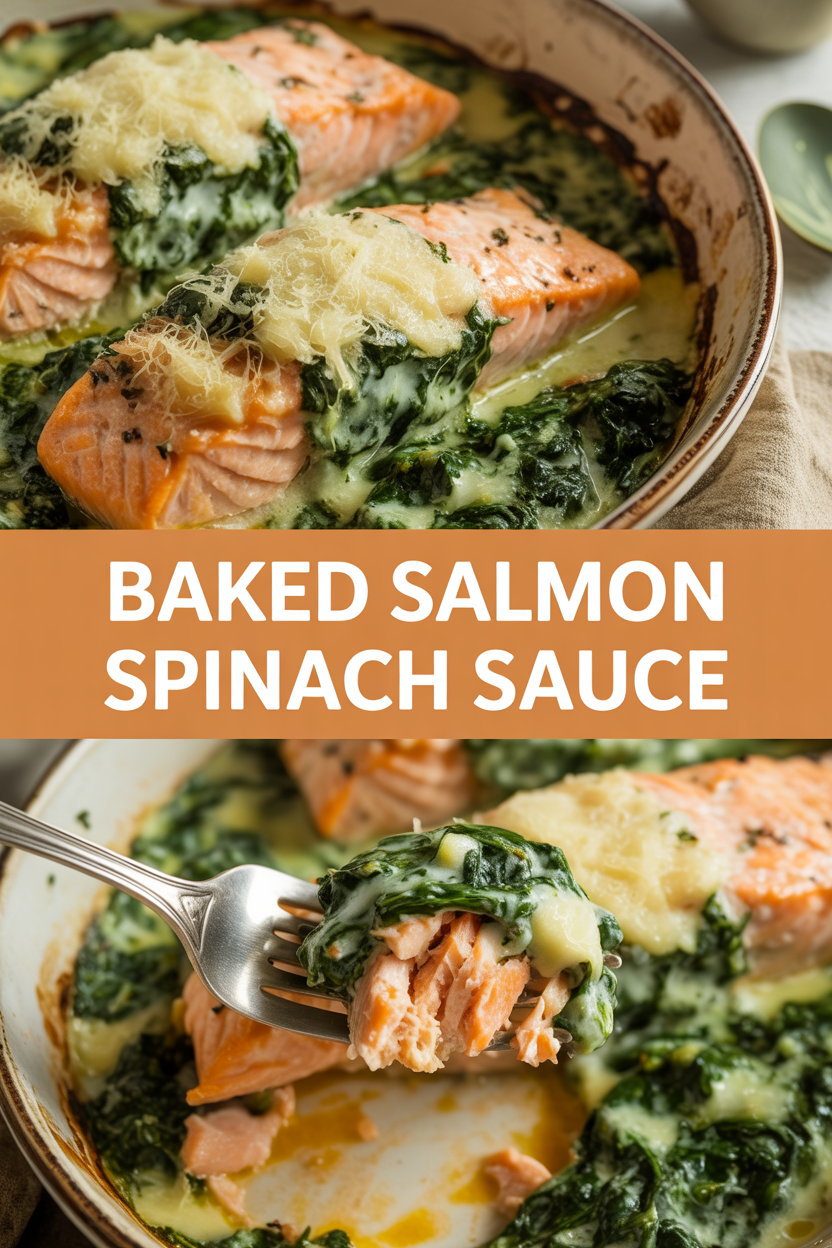
I cannot contain my excitement about this one — this Baked Salmon Spinach Sauce flips weeknight dinner into a tiny celebration. I fell for it the first time I tossed bright green spinach into a warm, garlicky cream sauce and then spooned that glossy goodness over flaky, oven-roasted salmon. The kitchen smells like butter and lemon, the salmon gets those slightly crisp edges, and the sauce hums with garlicky, cheesy comfort. Seriously, this recipe feels fancy but insists it’s easy. If you crave something green, bright, and a little indulgent without a ton of fuss, you’re in the right place. Bring a napkin — things get delightfully saucy.
Quick Facts
- Yield: Serves 4
- Prep Time: 15 minutes
- Cook Time: 20 minutes
- Total Time: 35 minutes
Why This Recipe is Awesome
This recipe marries flaky roasted salmon with a silky, slightly tangy spinach sauce that clings to the fish like it was meant to be there. It’s simple enough for a weeknight but pretty enough for a date night. You get contrast — crisp edges on the salmon, a creamy sauce, and bright lemon notes — and the whole thing comes together with minimal dirty dishes. It’s so easy even your oven can’t mess it up.
Ingredients
For the Main Dish:
- 4 salmon fillets (about 6–7 oz each), skin on or off
- 2 tbsp olive oil
- 1 tsp kosher salt
- 1/2 tsp freshly ground black pepper
- 1 tsp smoked paprika (optional, for color and warmth)
- 1 lemon (zest and 1 tbsp juice, plus wedges for serving)
- 2 cloves garlic, minced
For the Sauce / Garnish (Spinach Sauce):
- 1 tbsp butter + 1 tbsp olive oil
- 1 small shallot or 1/4 cup yellow onion, finely chopped
- 2 cloves garlic, minced
- 6 oz baby spinach (about 4–5 cups loosely packed)
- 1/2 cup heavy cream (or plain Greek yogurt for a lighter sauce)
- 1/3 cup grated Parmesan
- 1/4 tsp freshly grated nutmeg (optional, tiny warm note)
- Salt and pepper to taste
- Chopped parsley for garnish (optional)
How I Make It
Step 1:
Preheat the oven to 400°F. Pat the salmon dry with paper towels so it can get those slightly crisp edges. Rub each fillet with 2 tbsp olive oil, sprinkle on 1 tsp kosher salt, 1/2 tsp pepper, and 1 tsp smoked paprika. Zest the lemon over the fish and tuck a slice or two on the tray if you like an extra citrus aroma. Line a baking sheet with foil or parchment for easy cleanup and place the salmon skin-side down.
Step 2:
Bake the salmon for 12–14 minutes, depending on thickness. Listen for a gentle sizzle and watch the flesh turn from translucent to opaque — the top should look glossy and flake with a fork. If you like it slightly rarer, pull at around 10–11 minutes; for well-done, aim closer to 14 minutes. (Tip: if you own a probe thermometer aim for 125–130°F for medium, or the USDA-recommended 145°F for fully cooked.)
Step 3:
While the salmon bakes, make the sauce. Heat 1 tbsp butter with 1 tbsp olive oil in a skillet over medium heat. Add the shallot and sauté until soft and golden, about 2–3 minutes. Toss in the minced garlic and smell that fragrant pop — cook 30 seconds until aromatic. Add the 6 oz baby spinach in handfuls, stirring until it wilts and turns glossy and bright green.
Step 4:
Pour in 1/2 cup heavy cream and bring to a gentle simmer. Stir in 1/3 cup grated Parmesan and the lemon juice/zest you saved. Let the sauce thicken for 2–3 minutes until it coats the back of a spoon. Season with salt, pepper, and a tiny pinch of nutmeg if using. Taste and adjust — the sauce should taste lush, slightly tangy, and creamy, not too heavy.
Step 5:
Plate the salmon and spoon the warm spinach sauce over each fillet. Sprinkle with chopped parsley and an extra squeeze of lemon if you love bright flavors. Let the dish rest a minute — the sauce will settle into the flaky layers of fish. Hear the fork tap through tender layers? That means dinner’s ready.
Pro Tips
- Pat salmon very dry before seasoning to encourage browning and prevent steaming.
- For even cooking, let salmon sit at room temperature for 10–15 minutes before baking.
- Use heavy cream for a silky sauce; swap to Greek yogurt (same amount) stirred in off-heat for a tangier, lighter version.
- If you like a crisp top, broil the salmon for the last 1–2 minutes — watch it like a hawk.
Common Mistakes to Avoid
- Skipping preheating: Classic rookie move. It changes texture and bake time.
- Overmixing: Leads to dense or chewy results. Mix until just combined.
- Guessing cook time: Always use visual cues or a timer, not just vibes.
- Overcrowding pans: Give your food some breathing room to crisp properly.
Alternatives & Substitutions
- Spinach → Kale: Use 6 cups tender kale stems removed; sauté a little longer to soften. Texture becomes chewier and earthier.
- Heavy cream → Greek yogurt: Use the same volume, but stir in off-heat to avoid curdling. Sauce tastes tangier and lighter.
- Parmesan → Pecorino or nutritional yeast: Pecorino gives saltier, sharper notes; nutritional yeast keeps it dairy-free.
- Dairy-free: Swap butter for olive oil and heavy cream for canned coconut milk (mild flavor) or a cashew cream.
Variations & Tips
- Spicy kick: stir in 1/4 tsp red pepper flakes to the sauce for heat.
- Herby bright: fold in chopped dill or tarragon at the end for a fresh lift.
- Kid-friendly: omit garlic and nutmeg; add a little extra lemon for brightness they’ll like.
- One-pan dinner: roast asparagus or cherry tomatoes on the same sheet as the salmon for an easy side.
- Smoky twist: swap smoked paprika for ground cumin and add a dash of smoked salt.
- Creative twist: stir in 2 tbsp sun-dried tomatoes (chopped) to the sauce for sweet-tart depth.
FAQ (Frequently Asked Questions)
- Can I make this ahead of time?
- Yes! Make the sauce up to 2 days ahead and store it in an airtight container in the fridge. Gently reheat on low and add a splash of milk or cream to loosen it. Cook salmon just before serving for best texture.
- Can I double the recipe?
- Sure thing. Use two baking sheets or roast in batches so the salmon pieces don’t overcrowd. The sauce scales easily in a larger skillet; keep heat moderate to avoid scorching the cream.
- Can I substitute butter with oil?
- Technically yes, but you’ll miss that buttery magic. Use ¾ the amount of oil (about 3/4 tbsp) and consider adding a splash of cream to mimic richness.
- How do I know it’s done?
- Look for opaque, firm flesh that flakes easily with a fork and glossy edges. If you use a thermometer, aim for 125–130°F for medium or 145°F for fully cooked per USDA guidelines.
- What if I don’t have ingredient X?
- If you lack spinach, use kale or Swiss chard (cook longer). No Parmesan? Try Pecorino or a tablespoon of miso for umami. No heavy cream? Use Greek yogurt off-heat.
How I Like to Serve It
I love this over a bed of buttery mashed potatoes or creamy polenta — the sauce soaks right in. For a lighter plate, serve with steamed new potatoes or a lemony quinoa salad and a chilled glass of Sauvignon Blanc. This dish fits cozy fall nights, breezy spring dinners, and even casual dinner parties when you want something that looks cooked with effort but tastes like comfort.
Notes
- Store leftovers in the fridge for up to 2 days. Reheat gently on low so the cream doesn’t separate.
- Safe cooking temp for salmon: USDA recommends 145°F, though many cooks prefer pulling at 125–130°F for moistness.
Final Thoughts
Closing: Now go impress someone — or just yourself — with this flaky, saucy, lemony salmon masterpiece. You’ve got this!