
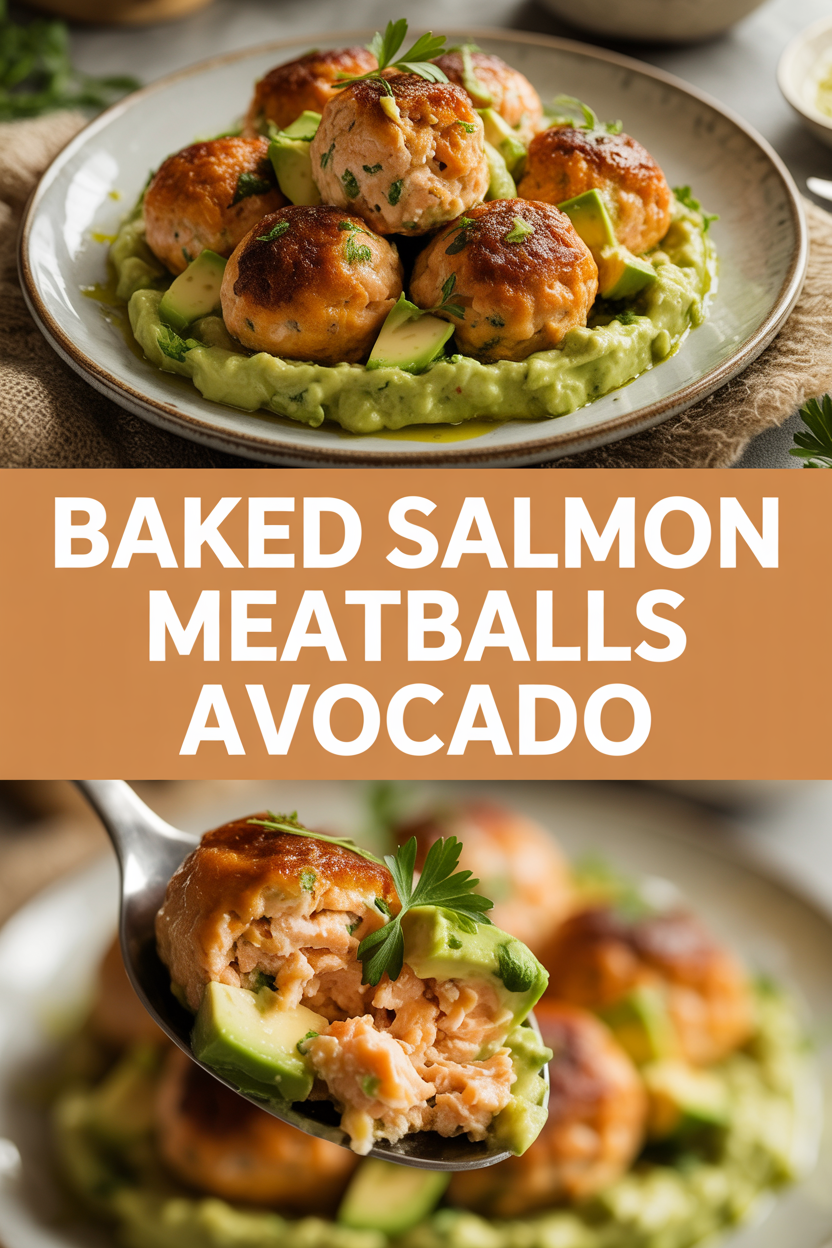
I once tried to woo someone with a fancy salmon dinner and instead served them a plate of oddly shaped fish meatballs — turns out charm works better than presentation, and these little globes became a hit. Honestly, they taste way fancier than they look, and they vanish faster than chips at a party. I love this recipe because it balances flaky, rich salmon with bright citrus and creamy avocado, all baked (yes, baked — no fry-splatter drama). The kitchen smells like lemon and sea whenever I make them, and that soft, slightly crisp edge? Total comfort. If you like quick dinners that feel special without the fuss, grab your mixing bowl — we’re rolling meatballs and making a silky avocado sauce that doubles as dip and dinner.
Quick Facts
- Yield: Serves 4 (about 18–20 meatballs)
- Prep Time: 20 minutes
- Cook Time: 14–16 minutes
- Total Time: 34–36 minutes
Why This Recipe is Awesome
These baked salmon meatballs stay juicy inside with a slightly crispy exterior — think tender flakes that hit your fork and a burst of lemon-cilantro freshness. The avocado sauce brings cooling creaminess and a little tang that makes every bite sing. It’s simple, fast, and forgiving (your oven can’t mess this up). Plus, you get that restaurant-worthy feel with minimal effort and zero deep-frying. Who doesn’t love crispy edges and a silky dip?
Ingredients
For the Main Dish:
- 1 lb fresh salmon, skin removed and chopped into chunks (or 14 oz canned salmon, drained)
- 3/4 cup panko breadcrumbs (use gluten-free panko to make GF)
- 1 large egg, beaten
- 2 green onions, finely sliced
- 1 small shallot or 1 garlic clove, minced
- 1 tsp lemon zest
- 1 tbsp fresh lemon juice
- 1 tsp Dijon mustard
- 1/2 tsp kosher salt (adjust to taste)
- 1/4 tsp black pepper
- 1 tbsp chopped fresh parsley or cilantro
- 1 tbsp olive oil (for drizzling)
For the Sauce / Garnish (if applicable):
- 1 ripe avocado
- 1/4 cup plain Greek yogurt (substitute dairy-free yogurt if needed)
- 1 tbsp lime juice
- 1/4 tsp salt
- Pinch of red pepper flakes or a dash of hot sauce (optional)
- Extra lemon wedges and chopped herbs for serving
How I Make It
Step 1:
Preheat your oven to 400°F. Line a baking sheet with parchment and lightly oil it so meatballs don’t stick. Chop the salmon into small pieces or pulse a few times in a food processor — you want texture, not paste. I like to keep some little flakes so the meatballs stay snappy, not mushy.
Step 2:
In a bowl, combine the chopped salmon, panko, beaten egg, green onions, shallot or garlic, lemon zest, lemon juice, Dijon, salt, pepper, and parsley. Gently fold everything with a wooden spoon until just combined — don’t overwork it or the texture tightens up. If it feels too loose, add another tablespoon of panko; if it feels dry, splash in a teaspoon of water.
Step 3:
Wet your hands slightly (this keeps the mixture from sticking) and shape golf-ball-sized meatballs. Arrange them with space between each on the prepared sheet. Drizzle a little olive oil over the tops so they brown. The kitchen will smell bright and lemony now — irresistible.
Step 4:
Bake at 400°F for 14–16 minutes, rotating the pan halfway through. Look for golden edges and a slightly firm, springy center. I use an instant-read thermometer and pull them at an internal temp of 145°F for perfectly cooked salmon that still feels juicy. If you don’t have a thermometer, check that the meatballs flake easily and the center looks opaque, not raw.
Step 5:
While the meatballs bake, mash the avocado with Greek yogurt, lime juice, and salt until silky — leave it a bit chunky if you like texture. Serve meatballs hot with a dollop of avocado sauce, extra herbs, lemon wedges, and a sprinkle of red pepper flakes for brightness and color.
Pro Tips
- Use cold salmon straight from the fridge; it shapes better than warm fish.
- If your mixture feels too wet, rest it 5 minutes — the panko soaks up moisture and firms up the mixture.
- For a crisper exterior, finish under the broiler for 1–2 minutes, watching closely so they don’t burn.
- Pulse in the food processor for texture control: 3–4 short pulses keeps flakes intact; more pulses give a smoother texture.
Common Mistakes to Avoid
- Skipping preheating: Classic rookie move. It changes texture and bake time.
- Overmixing: Leads to dense or chewy results. Mix until just combined.
- Guessing cook time: Always use visual cues or a timer, not just vibes.
- Overcrowding pans: Give your food some breathing room to crisp properly.
Alternatives & Substitutions
- Swap salmon for canned tuna or cooked flaked chicken — flavor shifts but texture stays similar.
- Use gluten-free panko or almond flour to make the meatballs gluten-free; expect a slightly denser texture.
- Substitute Greek yogurt with dairy-free yogurt or mashed silken tofu for a dairy-free sauce.
- For lower fat, skip the yogurt and use a squeeze of extra lime and a tablespoon of water to thin the avocado.
Variations & Tips
- Spicy: Add 1 tsp sriracha or finely chopped jalapeño to the mixture for heat.
- Herb-forward: Double the herbs — dill and chives work beautifully with salmon.
- Kid-friendly: Leave out the chili and serve with a mild lemon-yogurt dip.
- Asian twist: Swap lemon for 1 tbsp soy sauce and 1 tsp sesame oil; top with toasted sesame seeds.
- Party skewers: Thread meatballs onto toothpicks with cucumber rounds for appetizers.
- Creative twist: Fold in 2 tbsp crumbled feta for a salty, creamy surprise inside each meatball.
FAQ (Frequently Asked Questions)
- Can I make this ahead of time?
- Yes! Shape the meatballs and store them in one layer airtight in the fridge for up to 24 hours, then bake just before serving. You can also freeze uncooked meatballs on a tray, then transfer to a bag; bake from frozen adding 4–6 minutes to the time.
- Can I double the recipe?
- Sure thing. Use two baking sheets or bake in batches — overcrowding increases steam and prevents browning.
- Can I substitute butter with oil?
- Technically yes, but you’ll miss that buttery magic. Use ¾ the amount of oil if swapping.
- How do I know it’s done?
- Look for golden edges, an opaque center that flakes easily, and an internal temp of 145°F. The meatball should feel springy, not jiggly.
- What if I don’t have ingredient X?
- No garlic? Use a pinch of garlic powder or more shallot. No panko? Use plain breadcrumbs or crushed crackers; expect a slight texture change.
How I Like to Serve It
I love these with a simple arugula salad tossed in lemon and olive oil, or piled into warm pita with extra avocado sauce. They work for weeknight dinners, picnic boxes, or as a party appetizer with toothpicks and a bowl of sauce. Pair them with a crisp white wine or an iced green tea on hot nights — the lemon and herbs keep everything bright and summery.
Notes
- Store leftover meatballs in an airtight container in the fridge for up to 3 days. Reheat gently in a 350°F oven for 8–10 minutes to avoid drying out.
- Safe internal cooking temp for fish: 145°F. For chicken substitutions, cook to 165°F.
Final Thoughts
Closing: Now go impress someone — or just yourself — with your homemade masterpiece! These meatballs feel fancy, cook fast, and taste like a hug with a lemon twist.