
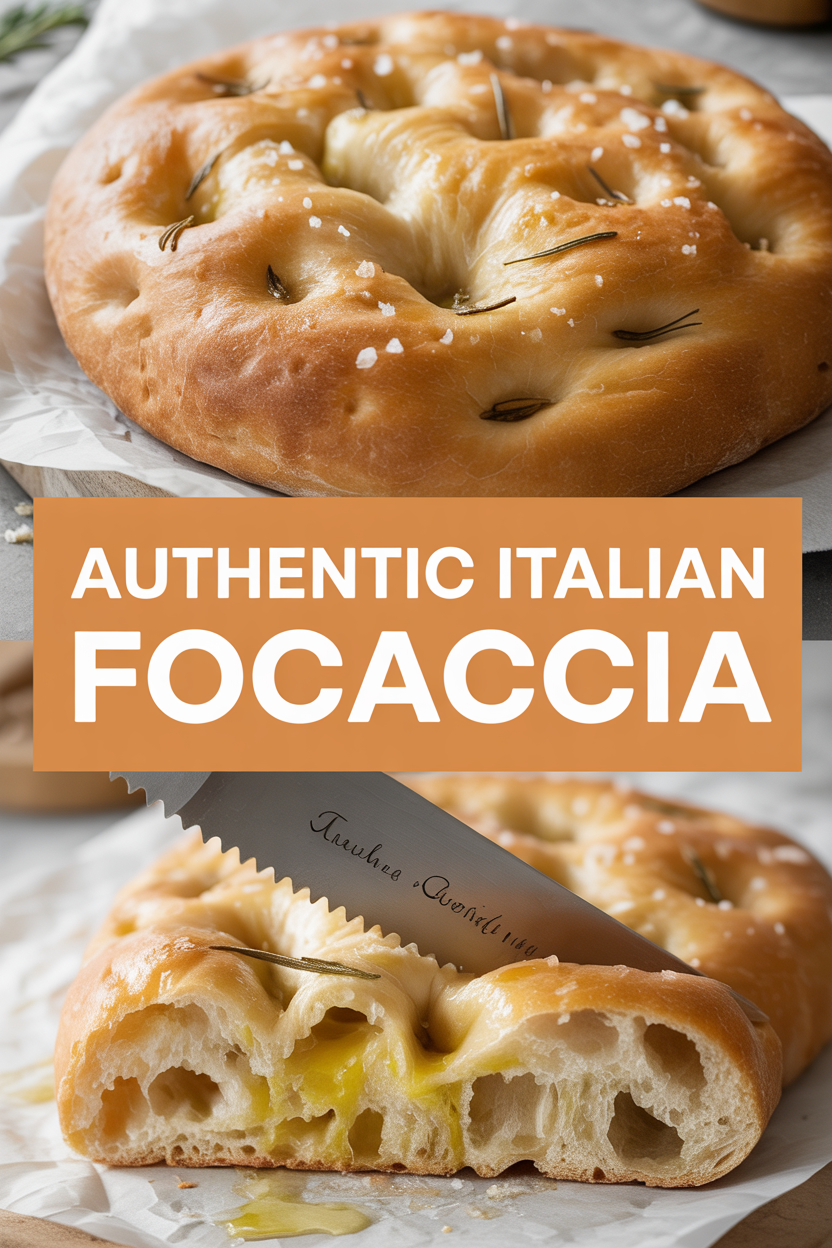
Okay, here’s a little kitchen secret I stole from a friend who stole it from her Nonna: the trick to truly airy, olive-oil perfume-filled focaccia isn’t magic — it’s patience and rhythm. I use a **long, gentle rise** (think chat-with-a-friend time, not instant-gratification) and a generous splash of **extra virgin olive oil** to get those pillowy pockets and crisp, golden edges. Follow my steps and you’ll get a crust that crackles when you pull a piece off and a crumb that sings when you press it with a finger. Trust me, once you taste that warm, salty olive oil on a dimpled slice, you’ll never buy store-bought focaccia again.
Quick Facts
- Yield: Serves 6–8
- Prep Time: 20 minutes (plus 1–1.5 hours rising)
- Cook Time: 20–25 minutes
- Total Time: 135 minutes
Why This Recipe is Awesome
This focaccia feels fancy but behaves like weeknight comfort food. It crisps into golden edges while staying pillowy inside, smells like a Tuscan kitchen (hello rosemary and olive oil), and takes simple pantry ingredients to superstar status. Best part? The dough tolerates a less-than-perfect day — it forgives missed exactness and rewards generous oil and patience. It’s so easy even your oven can’t mess it up.
Ingredients
For the Main Dish:
- 3 cups all-purpose flour (about 360 g)
- 1 1/4 cups warm water (about 105–110°F)
- 2 1/4 tsp active dry yeast (one 0.25-oz packet)
- 1 tsp sugar
- 1 1/2 tsp fine sea salt
- 1/4 cup extra virgin olive oil (plus 2 tbsp for the pan, more for drizzling)
- 1–2 tbsp fresh rosemary, chopped (or 2 tsp dried)
- 1–2 tsp flaky sea salt (for finishing)
- Optional toppings: halved cherry tomatoes, sliced olives, caramelized onions, or thinly sliced garlic
For the Sauce / Garnish (if applicable):
- Simple drizzle of extra virgin olive oil and a sprinkle of flaky sea salt; optional herb-infused oil (mix 2 tbsp warm oil with minced garlic and herbs)
How I Make It
Step 1:
Warm the water to about 105–110°F — warm to the touch but not hot. Stir together the **warm water**, **sugar**, and **yeast** in a measuring cup and wait 5 minutes until it looks slightly foamy (I call this the “happy yeast wiggle”). In a large bowl, mix **flour** and **salt**, then pour in the yeast mixture and **1/4 cup olive oil**. Use a wooden spoon to stir until a shaggy, sticky dough forms. It should feel tacky and soft, not dry.
Step 2:
Coat the bottom of a bowl with a little olive oil and turn the dough to coat it. Cover with plastic wrap or a clean towel and let it rise on the counter for about 1–1.5 hours until it roughly doubles. If your kitchen runs cool, give it a warm spot near the stove and chat with the dough — I literally set a timer and hum a song. Don’t punch it down hard; I gently fold it a couple times to build strength.
Step 3:
Drizzle a 9×13-inch pan with **2 tbsp olive oil** and press the dough into the pan with oiled fingertips. Don’t fight it — let it spread. Once it fills the pan, use your fingers to make deep dimples all over the surface. Those dimples catch oil and toppings and create the classic focaccia texture. Sprinkle with **chopped rosemary**, optional toppings, and a final drizzle of olive oil.
Step 4:
Preheat the oven to 425°F. Let the dimpled dough rest 20–30 minutes while the oven heats; it puffs a bit and smells like promise. Slide it into the oven and bake for 20–25 minutes until the top turns a deep golden color and the edges crisp. You’ll hear a faint crackle as it cools — that’s a good sound.
Step 5:
Right out of the oven, brush any bare spots with more olive oil and sprinkle with flaky sea salt. Let the focaccia rest 5–10 minutes, then cut into squares. Serve warm with tears-of-joy levels of olive oil or use it for sandwiches. I love tearing a piece and hearing that light, crackly crust give way to an airy interior.
Pro Tips
- Use warm water around 105–110°F to wake the yeast without killing it.
- If you want extra chew, swap 1 cup of all-purpose for 1 cup of bread flour.
- For super-bubbly texture, do a cold overnight rise in the fridge after the first mix — let the dough sit covered for up to 24 hours then shape and bake. (Not patient? The quick rise works beautifully too.)
- Don’t skimp on olive oil — it flavors the crumb and crisps the edges. Use good quality extra virgin for finishing.
Common Mistakes to Avoid
- Skipping preheating: Classic rookie move. It changes texture and bake time.
- Overmixing: Leads to dense or chewy results. Mix until just combined.
- Guessing cook time: Always use visual cues or a timer, not just vibes.
- Overcrowding pans: Give your food some breathing room to crisp properly.
Alternatives & Substitutions
- Use bread flour instead of all-purpose for a chewier crumb; it gives more structure and bigger holes.
- Swap olive oil with avocado oil for a milder flavor; the texture stays similar but you lose that classic olive taste.
- For dairy-free: this recipe already stays dairy-free — hooray! For gluten-free: use a 1-to-1 gluten-free all-purpose flour blend with xanthan gum and expect a denser crumb and slightly different rise.
- Want herb-free? Replace rosemary with a light sprinkle of Italian seasoning or garlic powder for a kid-friendly option.
Variations & Tips
- Rosemary & Sea Salt: Classic and simple — the original I always return to.
- Tomato & Oregano: Add halved cherry tomatoes and a sprinkle of oregano for a summery twist.
- Caramelized Onion & Thyme: Sweet onions add depth; cook them low and slow first.
- Garlic Butter Finish: Brush melted garlic butter on top after baking for decadence (not dairy-free).
- Sweet Focaccia: Scatter grapes and a little sugar before baking for a dessert-style version — delicious with ricotta.
- Creative Twist: Sliver in some thinly sliced lemon and rosemary for an aromatic, bright focaccia that pairs beautifully with seafood.
FAQ (Frequently Asked Questions)
- Can I make this ahead of time?
- Yes! Mix the dough and let it rise slowly in the fridge for up to 24 hours, then shape and bake when you’re ready. Store baked focaccia in an airtight container at room temperature for 2 days or freeze slices for up to 1 month. Reheat at 350°F until warm.
- Can I double the recipe?
- Sure thing. Use two pans or a larger sheet pan and watch rise times — a larger mass can need an extra 10–20 minutes to bake through. Keep the oven temp the same.
- Can I substitute butter with oil?
- Technically yes, but you’ll miss that buttery magic. Use ¾ the amount of oil.
- How do I know it’s done?
- Look for a deep golden top, crisp edges, and a hollow sound when you tap the bottom. The interior should feel airy and spring back slightly when pressed.
- What if I don’t have ingredient X?
- No panic: swap fresh rosemary for dried (use less), use regular sea salt if you don’t have flaky salt, or swap cherry tomatoes for sun-dried tomatoes rehydrated briefly in warm water.
How I Like to Serve It
I tear warm focaccia and dip it into extra virgin olive oil with a splash of balsamic for a quick snack, or slice it for sandwiches with roasted vegetables and provolone. It shines alongside soups and salads on weeknights and makes a beautiful centerpiece at a casual dinner — pair with a crisp white wine or an icy lemonade in summer.
Notes
- Store cooled focaccia in a zipper bag at room temperature for up to 2 days; reheat at 350°F for 8–10 minutes to refresh the crust.
- This recipe contains no meat; if you serve with chicken, ensure the chicken reaches 165°F.
Final Thoughts
Closing: Go oil your fingers, make some dimples, and fill your kitchen with that wonderful rosemary-and-olive-oil aroma — you deserve it. Now go impress someone — or just yourself — with your homemade masterpiece!