
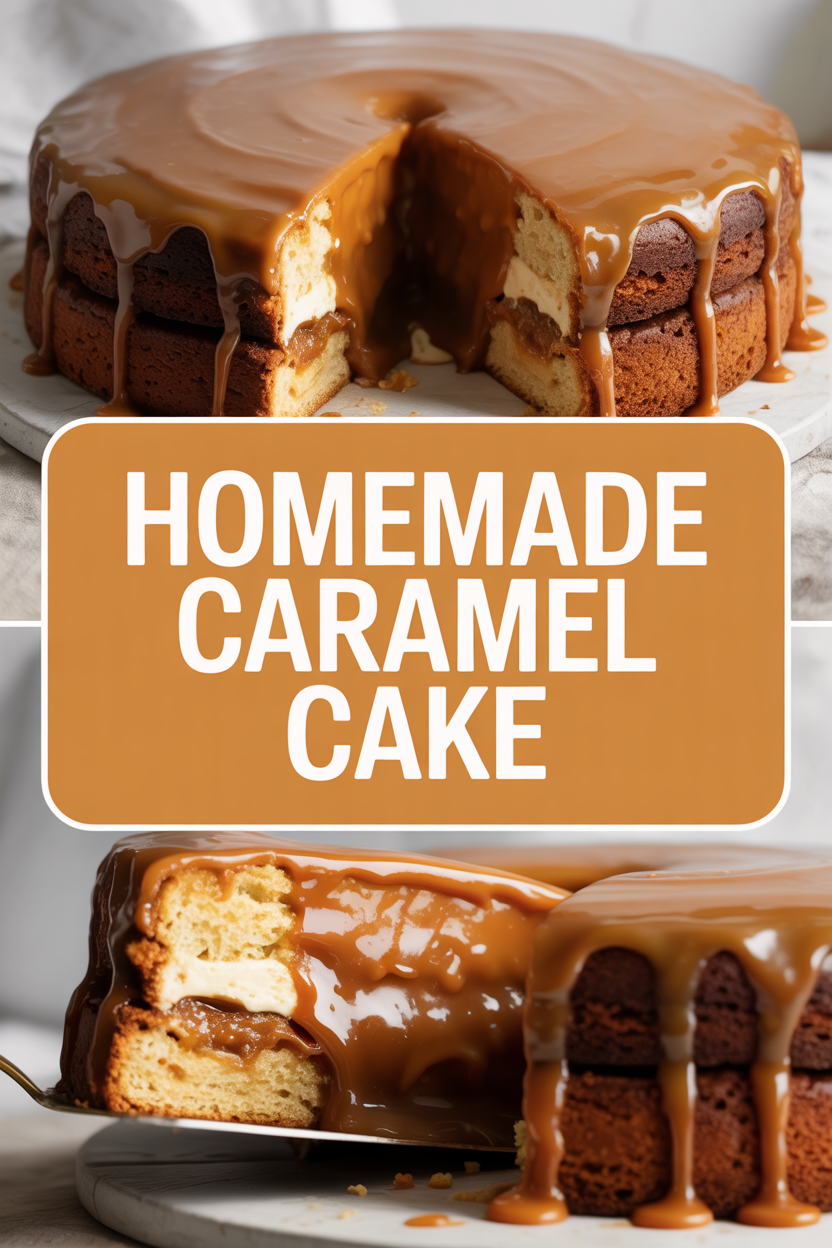
My grandmother kept a dented, flour-dusted recipe card tucked behind her sugar jar that simply read “Caramel Cake — for company.” Every time I bake this, the kitchen smells like her house on Sundays: warm vanilla, bubbling sugar, and the soft crackle of caramel as it hits the pan. I learned to stir the caramel by the light of a single lamp while she told me which spoon not to use (“the wooden one’s been blessed by years of gravy”). This cake feels like a hug you can slice—rich but not heavy, glossy caramel that sinks into the crumb, and a little nostalgic magic in every bite.
Quick Facts
- Yield: Serves 10–12
- Prep Time: 25 minutes
- Cook Time: 30–35 minutes
- Total Time: 1 hour 15 minutes (including cooling)
Why This Recipe is Awesome
This homemade caramel cake balances tender, buttery cake with a glossy, slightly salty **caramel sauce** that soaks in just enough to keep every forkful moist. It’s simple enough for a weeknight dessert and special enough for company. The crumb stays tender, edges get a little caramelized, and the kitchen fills with a warm, toasty smell that makes people gather around. Trust me, it’s so comforting even your oven will want a slice.
Ingredients
For the Main Dish:
- 2 ½ cups all-purpose flour
- 2 ½ tsp baking powder
- ¼ tsp fine sea salt
- 1 cup (2 sticks) unsalted butter, room temperature
- 1 ¾ cups granulated sugar
- 3 large eggs, room temperature
- 2 tsp pure vanilla extract
- 1 cup buttermilk (or 1 cup milk + 1 tbsp lemon juice, let sit 5 min)
For the Caramel Sauce / Garnish:
- 1 cup granulated sugar
- 6 tbsp unsalted butter, cut into pieces
- ½ cup heavy cream, warmed
- ½ tsp fine sea salt (or to taste)
- Optional: ½ cup toasted chopped pecans or walnuts
How I Make It
Step 1:
Preheat the oven to 350°F. Grease and flour two 9-inch round pans and line bottoms with parchment. In a bowl, whisk together the **flour**, **baking powder**, and **salt**. In your mixer, cream the **butter** and **sugar** until light and fluffy — you’ll smell a sweet, buttery scent and see the mixture lighten to a pale yellow, about 3–4 minutes.
Step 2:
Add the **eggs** one at a time, beating briefly after each addition, then stir in the **vanilla**. Alternate adding the dry ingredients and the **buttermilk** in three parts, beginning and ending with the dry mix. Mix just until combined — stop when you still see tiny streaks of flour. Overmixing tightens the crumb and makes the cake tough; I always whisper to mine, “no overdoing it.”
Step 3:
Divide batter between the pans and smooth the tops with a spatula. Bake at 350°F for about 30–35 minutes or until a toothpick comes out with a few moist crumbs and the edges turn golden. You’ll hear the oven settle and catch a faint caramel smell as the sugars brown. Cool cakes in pans for 10 minutes, then turn them out onto a rack to finish cooling.
Step 4:
While the cakes cool, make the caramel. In a dry, medium saucepan, heat the **1 cup sugar** over medium heat, swirling the pan gently (don’t stir) until it melts and turns a deep amber — watch closely; it goes fast. Remove from heat and whisk in the **6 tbsp butter** until glossy, then slowly whisk in the warm **heavy cream**. Add the **salt** and taste. The sauce should smell nutty and look shiny. If it thickens too much, warm it gently.
Step 5:
Trim the cake tops if they dome. Place one layer on a plate and brush or spoon about half the caramel over it so it soaks into the crumb. Set the second layer on top and pour the remaining caramel over the cake, letting it drip down the sides. Scatter toasted **pecans** if you like a crunchy counterpoint. Let the caramel set for 15–20 minutes before slicing so the sauce mellows and the slices hold together.
Pro Tips
- Use room-temperature **eggs** and **butter** so the batter emulsifies quickly and evenly.
- When making caramel, keep a small bowl of cold water nearby — if the caramel smokes or crystallizes, a splash of cold water on the pan’s handle helps you regain control (careful of splatter).
- Warm your **heavy cream** before adding to hot sugar; this prevents the caramel from seizing and splattering.
- If you prefer a spreadable topping, let the caramel cool for 10–15 minutes so it thickens a bit before pouring.
Common Mistakes to Avoid
- Skipping preheating: Classic rookie move. It changes texture and bake time.
- Overmixing: Leads to dense or chewy results. Mix until just combined.
- Guessing cook time: Always use visual cues or a timer, not just vibes.
- Overcrowding pans: Give your food some breathing room to crisp properly.
Alternatives & Substitutions
- Make it dairy-free: use dairy-free butter and full-fat coconut milk for the caramel; the flavor shifts to coconut-forward and still rich.
- Gluten-free: swap in a 1:1 gluten-free flour blend — texture stays tender if you don’t overmix.
- Swap **buttermilk** for plain yogurt thinned with milk (equal parts) for the same tang and moisture.
- Use light brown sugar in the batter for a deeper caramel note; expect a slightly moister crumb.
Variations & Tips
- Add a smear of cream cheese frosting between layers for tangy contrast — spoon caramel on top.
- Stir a pinch of flaky sea salt into the caramel before pouring for a salted-caramel cake.
- Fold ½ cup finely chopped apples into the batter for an autumn twist.
- Make cupcakes: bake at 350°F for 18–22 minutes and drizzle warm caramel over cooled cupcakes.
- For a boozy adult version, stir 1–2 tbsp bourbon into the caramel after it cools slightly.
FAQ (Frequently Asked Questions)
- Can I make this ahead of time?
- Yes! Bake the cake layers a day ahead, wrap them tightly, and refrigerate. Make the caramel the day of and pour just before serving for the best glossy finish. Reheat caramel gently if it thickens.
- Can I double the recipe?
- Sure thing. Use two sets of pans or a larger sheet pan; watch bake times — larger pans need a few extra minutes and check doneness with a toothpick.
- Can I substitute butter with oil?
- Technically yes, but you’ll miss that buttery magic. Use ¾ the amount of oil (so ¾ cup for 1 cup butter replacement) and expect a slightly looser crumb.
- How do I know it’s done?
- You’ll see golden edges, a springy center, and a toothpick that comes out with a few moist crumbs. Don’t wait until it’s bone-dry; that means overbaked.
- What if I don’t have ingredient X?
- Short on buttermilk? Mix 1 cup milk with 1 tbsp white vinegar or lemon juice and wait 5 minutes. No heavy cream? Use full-fat coconut milk for an interesting twist.
How I Like to Serve It
I slice this cake slightly warm and pair it with a scoop of vanilla ice cream or a dollop of lightly sweetened whipped cream. A strong cup of coffee cuts the sweetness perfectly, and it also shines at holiday dinners and birthday gatherings. For summer, I serve smaller slices with fresh berries to brighten the plate.
Notes
- Store leftover cake covered in the fridge for up to 4 days; bring to room temperature before serving for best texture.
- If reheating slices, warm in a 325°F oven for 6–8 minutes or microwave for 10–15 seconds to revive soft crumb and gooey caramel.
Final Thoughts
Closing: This caramel cake feels like a little tradition you can make tonight — comforting, forgiving, and deliciously nostalgic. Now go impress someone — or just yourself — with your homemade masterpiece!