
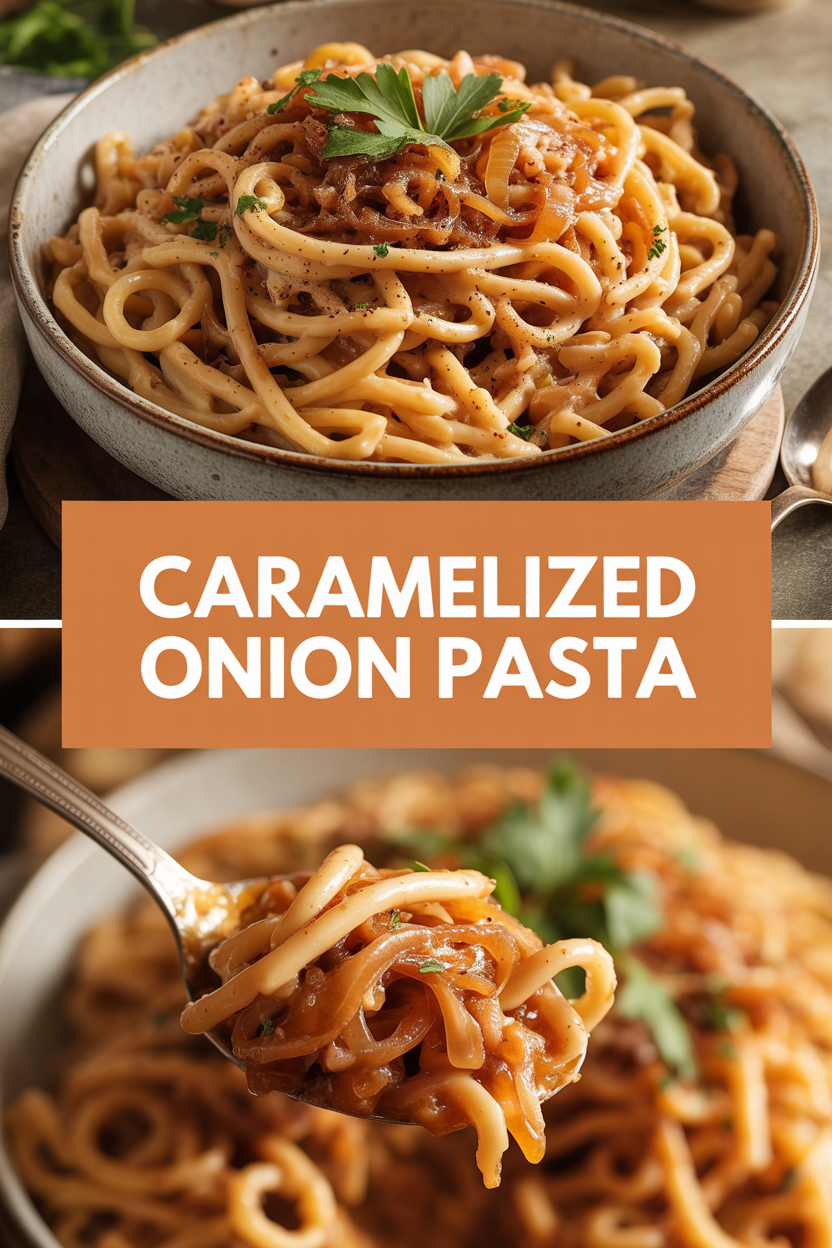
Here’s a little kitchen secret: a tiny pinch of baking soda helps onions hit that deep, jammy caramelization without turning your afternoon into a stove vigil. I guard that trick like a chef’s whisper, because it means you get sweet, savory, melt-in-your-mouth onions in about 35–45 minutes instead of an hour and a half. This pasta feels fancy but behaves like a weeknight hero — strands of pasta cloaked in glossy, golden-brown onions, kissed with lemon and a shower of Parmesan. If you love things a little sweet, a little savory, and outrageously comforting, you’ll love this one. Come closer—the aroma alone will convince you.
Quick Facts
- Yield: Serves 4
- Prep Time: 10 minutes
- Cook Time: 45 minutes
- Total Time: 55 minutes
Why This Recipe is Awesome
This recipe turns humble ingredients into a silky, savory sauce that clings to pasta like a warm hug. The texture plays between soft, jammy onions and the occasional crisped edge, while the flavor balances sweet caramel notes with bright lemon and salty Parmesan. It’s so easy even your oven can’t mess it up — and that deep, nutty aroma will make your whole kitchen smell like a restaurant. Bonus: you get a show of sizzling, bubbling, and browning that feels downright theatrical.
Ingredients
For the Main Dish:
- 12 oz pasta (spaghetti, bucatini, or your favorite)
- 3 large yellow onions, thinly sliced (about 6 cups)
- 2 tbsp unsalted butter
- 2 tbsp olive oil
- 1/8 tsp baking soda (a pinch)
- 1/2 tsp salt, plus more to taste
- 1/2 tsp sugar (optional, helps caramelize)
- 3 cloves garlic, minced
- 1/2 cup dry white wine or chicken/vegetable broth
- 1 cup reserved pasta water (start with 1/2 cup)
- 1/2 cup grated Parmesan, plus more for serving
- 1 tbsp fresh lemon juice
- 2 tbsp chopped fresh parsley or thyme leaves
- Freshly ground black pepper, to taste
For the Sauce / Garnish (if applicable):
- Optional: 4 oz diced pancetta or bacon, crisped
- Optional: 1/4 cup toasted breadcrumbs for crunch
- Optional: red pepper flakes for heat
How I Make It
Step 1:
Start by boiling salted water for the pasta and cook the pasta to al dente according to package directions. While the water heats, thinly slice the onions so they cook evenly. I like a mandoline for speed, but a sharp knife works just fine — the thin slices should sound delicate as you toss them into the pan.
Step 2:
Heat a large skillet over medium-low heat and add the 2 tbsp olive oil and 2 tbsp butter. When the butter foams and the oil shimmers, add the sliced onions, 1/2 tsp salt, 1/2 tsp sugar (if using), and that tiny pinch of baking soda. The onions will sizzle gently. Stir to coat them; the baking soda raises pH and nudges the Maillard reaction, so you’ll see them flank into a honeyed brown more reliably. Tip: don’t crank the heat — low and slow builds depth without burning.
Step 3:
Cook the onions, stirring every few minutes, for about 35–45 minutes. You want deep golden-brown color and jammy texture. If any bits stick or threaten to scorch, splash in a tablespoon or two of water or broth and scrape the fond—those sticky brown bits carry a ton of flavor. When the onions smell richly sweet and look glossy, add the minced garlic and stir for 30–45 seconds until fragrant. I love that fragrant pop — it tells me we’re nearly there.
Step 4:
Deglaze the pan with 1/2 cup white wine or broth, scraping up those caramelized bits. Let the liquid reduce by half, then add 1/2 cup reserved pasta water and a handful of Parmesan. Toss in the cooked pasta directly into the skillet and **toss** over medium heat so the starch helps create a silky coating. Add lemon juice and more pasta water, tablespoon by tablespoon, until the sauce clings beautifully to each strand.
Step 5:
Finish with the remaining Parmesan, chopped parsley, and a drizzle of olive oil. Taste and season with salt and pepper. If using, sprinkle crisp pancetta or toasted breadcrumbs for texture and a pinch of red pepper flakes for a little kick. Serve hot and watch the faces around your table light up.
Pro Tips
- Use the pinch of baking soda to speed caramelization, but don’t overdo it — too much gives a soapy flavor. Stick to about 1/8 tsp.
- Keep the heat medium-low and give the onions time. Rushing yields bitter, burnt edges instead of sweet, jammy ones.
- Reserve pasta water when draining — the starchy water helps emulsify the sauce and gives it that restaurant-level silkiness.
- If the onions start to brown too fast, add a splash of water and lower the heat. Think simmer, not sear.
Common Mistakes to Avoid
- Skipping preheating: Classic rookie move. It changes texture and bake time.
- Overmixing: Leads to dense or chewy results. Mix until just combined.
- Guessing cook time: Always use visual cues or a timer, not just vibes.
- Overcrowding pans: Give your food some breathing room to crisp properly.
Alternatives & Substitutions
- Swap pasta for gluten-free pasta — the texture changes slightly but the flavor stays rich.
- Skip butter for a dairy-free version: use extra olive oil and a splash of non-dairy cream for silkiness.
- Replace Parmesan with nutritional yeast for a vegan-savory note (it changes texture and saltiness).
- Use vegetable broth instead of wine if you prefer non-alcoholic cooking. It adds savory depth without the acidity.
Variations & Tips
- Spicy: add red pepper flakes while sautéing garlic for a steady heat.
- Meaty: fold in crisped pancetta or shredded rotisserie chicken for protein.
- Cheesy indulgence: stir in 1/4 cup mascarpone or cream for a lush, creamy finish.
- Green boost: toss in a handful of baby spinach or arugula at the end for freshness and color.
- Kid-friendly: omit pepper and lemon zest, and top with extra Parmesan — simple comfort wins every time.
- Creative twist: add a teaspoon of toasted sesame oil and a splash of soy for a sweet-umami spin.
FAQ (Frequently Asked Questions)
- Can I make this ahead of time?
- Yes! Caramelized onions keep beautifully in the fridge for up to 4 days. Store them in an airtight container and reheat gently in a skillet with a splash of water or broth before tossing with freshly cooked pasta. The sauce may thicken in the fridge; loosen with hot pasta water when reheating.
- Can I double the recipe?
- Sure thing. Use a wider skillet or two pans so the onions have room to brown evenly; doubling in a small pan increases steaming and slows caramelization.
- Can I substitute butter with oil?
- Technically yes, but you’ll miss that buttery magic. Use ¾ the amount of oil.
- How do I know it’s done?
- The onions turn deep golden to mahogany, smell sweet and nutty, and the texture becomes soft and jammy with a few crispy edges. Taste a piece — you want sweetness without bitterness.
- What if I don’t have ingredient X?
- No problem. No wine? Use broth plus a splash of vinegar for acidity. No Parmesan? Try Pecorino or a spoonful of miso dissolved in the pasta water for umami.
How I Like to Serve It
I serve this pasta warm with extra Parmesan and a simple green salad dressed with lemon and olive oil. It shines for cozy weeknights, but it also holds up at casual dinner parties — you can make the onions ahead and finish the pasta just before guests arrive. Pair with a crisp white wine or a light-bodied red; it tastes like fall in a bowl anytime you need comfort.
Notes
- Store leftover caramelized onion pasta in an airtight container in the fridge for up to 3 days. Reheat gently with a splash of water to revive the sauce.
- If adding cooked chicken, bring to an internal temp of 165°F before serving.
Final Thoughts
Closing: Go on — make a batch, breathe in that caramelized onion perfume, and impress someone (or just yourself) with this simple, soulful pasta.