
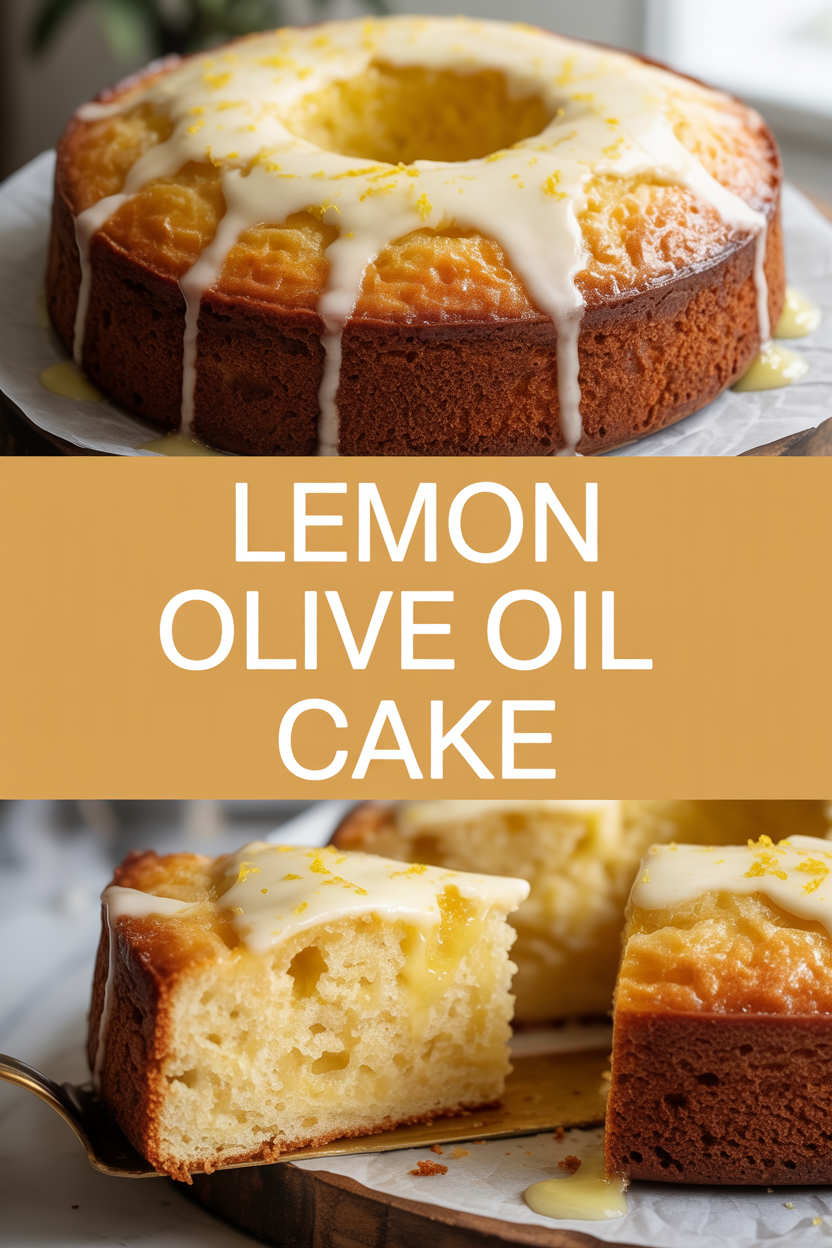
Okay, here’s a little chef’s secret I stole from a cousin who refuses to use butter in cakes: when you treat olive oil like butter—measuring, warming, and trusting it—the cake becomes silkier, brighter, and somehow grown-up in the best way possible. I kept fiddling with ratios until the crumb stayed tender and the lemon zip didn’t get lost. This Lemon Olive Oil Cake bakes into a golden loaf that smells like citrus candy and summer porches; the crumb stays moist for days and the olive oil gives a subtle, fruity note that plays beautifully against sharp lemon zest. Stick a fork in it — you’ll see what I mean.
Quick Facts
- Yield: Serves 8–10
- Prep Time: 15 minutes
- Cook Time: 45 minutes
- Total Time: 60 minutes
Why This Recipe is Awesome
This cake feels fancy but behaves like a weeknight hero. It stays moist, slices clean, and has a bright lemon tang balanced by the depth of extra-virgin olive oil. It’s so easy even your oven can’t mess it up—just whisk, pour, and bake. Expect a tender crumb, glossy lemon glaze optional for brightness, and that irresistible smell of warm citrus filling your kitchen. Who doesn’t love slightly crisp edges with a soft, nearly custardy center?
Ingredients
For the Main Dish:
- 1 1/2 cups all-purpose flour
- 1 cup granulated sugar
- 2 tsp baking powder
- 1/2 tsp fine salt
- 3 large eggs, room temperature
- 1/2 cup whole milk (or 1/2 cup unsweetened almond milk)
- 1/2 cup freshly squeezed lemon juice (about 2–3 lemons)
- 2 tbsp lemon zest (from about 2 lemons)
- 1/2 cup extra-virgin olive oil + 2 tbsp for the pan
- 1 tsp pure vanilla extract
For the Sauce / Garnish (optional):
- 1 cup powdered sugar
- 2–3 tbsp fresh lemon juice (for glaze)
- Thin lemon slices or candied lemon peel for decoration (optional)
How I Make It
Step 1:
I preheat the oven to 350°F and grease a 9×5-inch loaf pan with 2 tbsp olive oil, then line the bottom with parchment for easy lift-out. In a bowl, I whisk together the 1 1/2 cups flour, 2 tsp baking powder, and 1/2 tsp salt so the leavening distributes evenly. I zest two lemons first—there’s this pop of citrus aroma that instantly perks me up. Give it a good sniff; happy bakers smell good things early.
Step 2:
In a large mixing bowl, I whisk 3 eggs and 1 cup sugar until pale and slightly thickened, about 1–2 minutes by hand or 30 seconds with a hand mixer. Then I add 1/2 cup olive oil, 1/2 cup milk, 1/2 cup lemon juice, 2 tbsp lemon zest, and 1 tsp vanilla. Whisk until smooth. Taste the batter—if you want it brighter, add a squeeze more lemon juice. Don’t worry; it tastes a little like raw lemon now; it bakes into magic.
Step 3:
Fold the dry ingredients into the wet ingredients gently with a spatula. I use a folding motion: cut through the batter, scoop under, and turn. Stop when the flour streaks disappear—overmixing makes the crumb tough. The batter should be glossy and pourable, like thick custard. Pour the batter into the prepared pan and tap it on the counter once to level and release air bubbles. You’ll hear faint plinks as air escapes.
Step 4:
Bake at 350°F for about 40–45 minutes. Start checking at 35 minutes. Look for golden edges and a top that springs back when you gently press it. A toothpick inserted into the center should come out with a few moist crumbs—not gummy batter. If the top browns too quickly, tent lightly with foil for the last 10 minutes.
Step 5:
Cool the loaf in the pan for 10 minutes, then run a knife around the edges and lift it out using the parchment. For glaze, whisk 1 cup powdered sugar with 2–3 tbsp lemon juice until smooth and drizzle over the warm cake. Scatter candied peel or thin lemon slices on top for drama. Let it rest at least 30 minutes before slicing so the crumb settles and the flavors marry.
Pro Tips
- Use room-temperature eggs so they emulsify better with the oil; cold eggs make the batter lumpy.
- If your olive oil tastes peppery or very grassy, use a mild extra-virgin or mix half olive oil, half vegetable oil for a subtler note.
- Don’t skip the lemon zest—zest gives essential oils that amplify the lemon flavor without extra acidity.
- For even baking, place the pan in the center rack and rotate once halfway through if your oven runs hot.
Common Mistakes to Avoid
- Skipping preheating: Classic rookie move. It changes texture and bake time.
- Overmixing: Leads to dense or chewy results. Mix until just combined.
- Guessing cook time: Always use visual cues or a timer, not just vibes.
- Overcrowding pans: Give your food some breathing room to crisp properly.
Alternatives & Substitutions
- Use 2 tbsp milk less and swap in 1/2 cup Greek yogurt for a tangier, denser crumb.
- Gluten-free: replace the flour with a 1:1 gluten-free flour blend and add 1/4 tsp xanthan gum if your blend lacks it; bake time may increase 5–10 minutes.
- Dairy-free: use unsweetened almond or oat milk in place of whole milk—cake stays moist.
- If you don’t have lemons, swap for 3–4 tbsp orange juice and 1 tbsp orange zest for a mellow twist.
Variations & Tips
- Add 1/2 cup poppy seeds to the batter for a classic lemon-poppy texture.
- Fold in 1 cup fresh berries (blueberries or raspberries) for a burst of color and tartness—coat berries in a little flour to prevent sinking.
- Make mini loaves or muffins—bake 18–22 minutes for muffins at 350°F.
- Herby twist: stir in 1 tbsp finely chopped rosemary for an aromatic savory note (try with a light glaze and flaky sea salt).
- Glaze trick: swap half the lemon juice for 1 tbsp olive oil in the glaze for shine and extra olive flavor.
FAQ (Frequently Asked Questions)
- Can I make this ahead of time?
- Yes! Bake the cake, cool completely, then wrap tightly in plastic wrap and store at room temperature for up to 3 days or refrigerate for up to 5 days. For best texture, bring to room temp before serving or warm slices briefly in a 300°F oven for 5–7 minutes.
- Can I double the recipe?
- Sure thing. Use two loaf pans or a 9×13 pan and expect about 5–10 extra minutes of bake time; check doneness with the toothpick test and look for golden edges.
- Can I substitute butter with oil?
- Technically yes, but you’ll miss that buttery magic. Use ¾ the amount of oil if converting a butter-based recipe to oil to keep the fat balanced and the crumb tender.
- How do I know it’s done?
- Look for golden edges, a top that springs back when pressed, and a toothpick with a few moist crumbs (not wet batter). If the center jiggles, give it another 5–10 minutes.
- What if I don’t have ingredient X?
- If you lack fresh lemons, use bottled lemon juice but reduce to 1/3 cup and add extra zest substitute: 1 tsp citric acid (sparingly). No eggs? Use 3/4 cup applesauce as an emergency binder, though the texture will change a bit.
How I Like to Serve It
I serve this cake with a dollop of whipped cream or a scoop of vanilla ice cream for dessert, or alongside strong coffee for breakfast. It shines at spring brunches, lazy weekend breakfasts, and when friends drop by unexpectedly. The citrus keeps it feeling light in summer, yet the olive oil’s richness makes it cozy in cooler months.
Notes
- Store wrapped at room temperature for up to 3 days or refrigerate up to 5 days. Refresh slices in a warm oven if they firm up.
- Safe cooking temps for meat aren’t relevant here, but if you bake other dishes alongside, remember poultry should reach 165°F.
Final Thoughts
Closing: Now go impress someone — or just yourself — with this bright, buttery-feeling (but olive oil-based) Lemon Olive Oil Cake. Slice, sip, and savor every zesty, silky bite.