
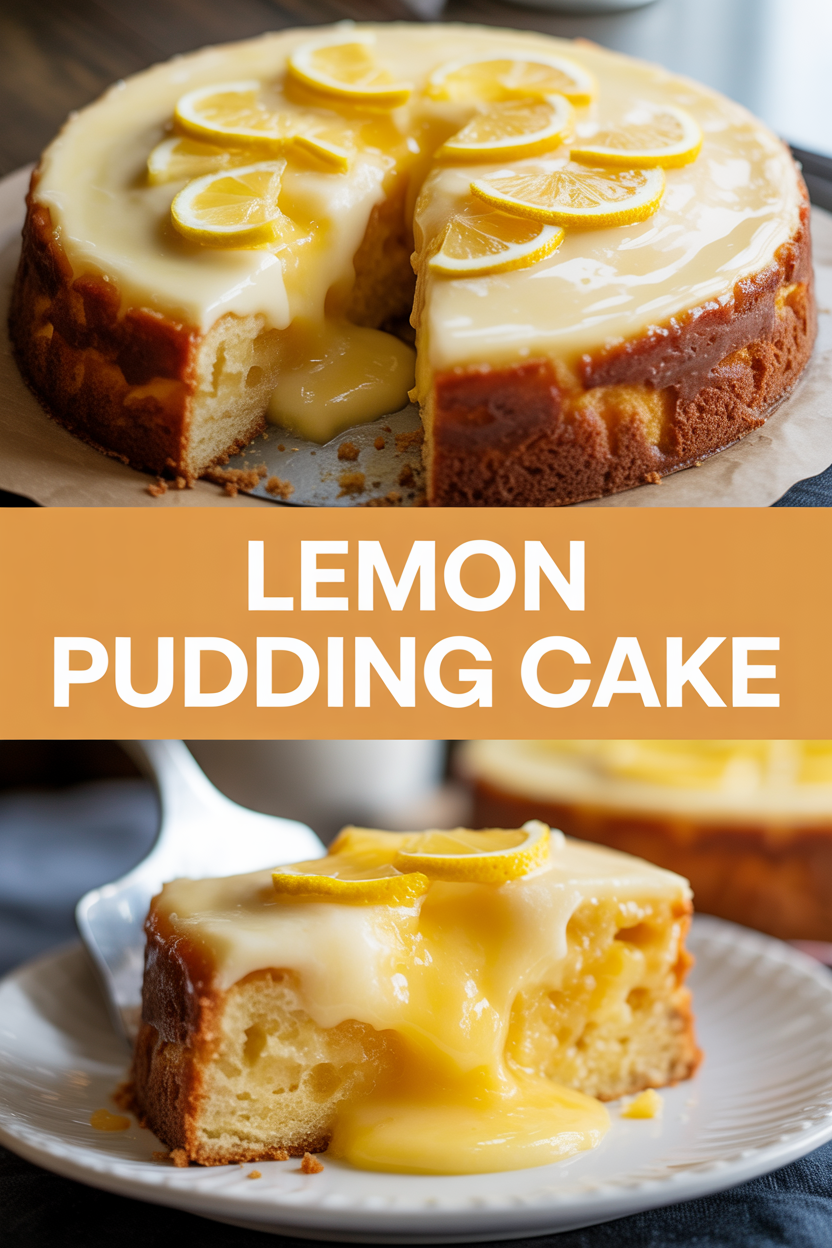
I’m going to let you in on a little kitchen cheat that feels like magic every single time: the lemon pudding cake. Think of it as a cake that secretly turns into a silky lemon pudding while it bakes — I only learned the trick from a sous-chef friend who winked and called it “cheater’s custard.” It tastes like the sunny part of a lemon bar and the comfort of a warm sponge cake, all in one spoon. The top bakes into a golden, slightly crackly crust while the bottom settles into a tangy, saucy pool. If you love tangy lemon, cozy textures, and a dessert that makes friends coo, you’ll want this in your regular rotation.
Quick Facts
- Yield: Serves 6–8
- Prep Time: 15 minutes
- Cook Time: 35–40 minutes
- Total Time: 50–55 minutes
Why This Recipe is Awesome
This lemon pudding cake gives you two desserts in one: a light, springy cake on top and a lemony puddle underneath that tastes like sunshine. It’s ridiculously forgiving — my oven has tried to sabotage me, and this still comes out dreamy. The texture plays between airy crumbs and a silky custard; the aroma of lemon zest and butter fills the kitchen and makes everyone gather. Who doesn’t love crispy edges and a saucy center? Bonus: it looks fancy but comes together in one pan.
Ingredients
For the Main Dish:
- 1 cup all-purpose flour
- 3/4 cup granulated sugar (plus 3/4 cup for the sauce)
- 2 tsp baking powder
- 1/4 tsp fine salt
- 2 large eggs, room temperature
- 1/2 cup whole milk
- 1/4 cup (4 tbsp) unsalted butter, melted and slightly cooled
- 2 tbsp lemon zest (about 2 medium lemons)
- 2 tbsp fresh lemon juice (about 1 lemon)
- 1 tsp pure vanilla extract (optional, but I like it)
- Butter or nonstick spray for the pan
For the Sauce / Garnish (optional):
- 3/4 cup hot (nearly boiling) water
- 2 tbsp extra lemon juice (for a brighter sauce)
- Powdered sugar, whipped cream, or fresh berries for serving
How I Make It
Step 1:
Preheat your oven to 350°F. Butter an 8×8-inch square baking dish or grease a 2-quart shallow baking dish. In a large bowl I whisk together 1 cup flour, 3/4 cup sugar, 2 tsp baking powder, and 1/4 tsp salt until the mixture smells slightly sweet and looks even. The dry mix should feel light and powdery — no lumps, please.
Step 2:
In a separate bowl, beat the 2 eggs with 1/2 cup milk, the cooled melted 1/4 cup butter, 2 tbsp lemon zest, 2 tbsp lemon juice, and 1 tsp vanilla until glossy. Pour the wet mix into the dry ingredients and stir with a spatula until the batter looks smooth and thick, but don’t overwork it. Overmixing steals the cloudiness from the cake.
Step 3:
Scrape the batter into your prepared dish and smooth the top with the back of a spoon. I always tap the pan once on the counter; you’ll hear a soft thunk and see the batter settle. Sprinkle the top lightly with a few extra lemon zest bits if you’re feeling flirty.
Step 4:
Combine 3/4 cup hot water, 3/4 cup sugar, and the extra 2 tbsp lemon juice in a measuring cup and stir until the sugar dissolves. Pour that hot liquid evenly over the batter — yes, it looks weird, but trust me: it will sink during baking and create the pudding below. Slide the dish into the oven and bake at 350°F for 35–40 minutes until the top turns golden and slightly cracked and a skewer into the cake section comes out mostly clean (the pudding layer will remain silky).
Step 5:
Let the pudding cake rest for 10–15 minutes so the layers settle and you don’t burn your tongue. Serve warm with a dusting of powdered sugar, a spoonful of whipped cream, or a handful of fresh berries. When you spoon it out, you should see a beautiful contrast: fluffy cake on top and a glossy, lemony sauce below that laps the spoon like sunshine.
Pro Tips
- Use room-temperature eggs and milk so the batter comes together quickly and bakes evenly.
- Don’t skip the hot water step — that’s the trick that creates the pudding layer. Pour slowly and evenly.
- If your lemons look dry, add a splash more lemon juice; I sometimes add an extra teaspoon for a brighter finish.
- For a deeper lemon flavor, substitute half the milk with buttermilk; it adds tang and tenderness.
Common Mistakes to Avoid
- Skipping preheating: Classic rookie move. It changes texture and bake time.
- Overmixing: Leads to dense or chewy results. Mix until just combined.
- Guessing cook time: Always use visual cues or a timer, not just vibes.
- Overcrowding pans: Give your food some breathing room to crisp properly.
Alternatives & Substitutions
- Swap whole milk for almond or oat milk for a dairy-free version; the texture will be slightly less rich but still lovely.
- Use coconut oil instead of butter for a dairy-free option; the cake gains a hint of coconut flavor.
- Substitute half the all-purpose flour with a gluten-free 1:1 flour blend to make it gluten-free; expect a slightly denser top.
- For less sugar, reduce the sauce sugar by 1/4 cup — you’ll keep the lemon brightness but lose some sweetness.
Variations & Tips
- Add a tablespoon of poppy seeds to the batter for a classic lemon-poppy twist.
- Stir in 1/2 cup fresh blueberries for a summer-fruit version; the berries sink into the pudding gorgeously.
- Make mini portions in ramekins for elegant single-serve desserts — reduce bake time by about 5–8 minutes.
- Top with a drizzle of lemon glaze (powdered sugar + lemon juice) for extra shine and tang.
- For a boozy adult version, add 1–2 tbsp limoncello to the hot sauce before pouring it over the batter.
- Try orange zest and juice instead of lemon for a sweeter, gentler citrus pudding cake.
FAQ (Frequently Asked Questions)
- Can I make this ahead of time?
- Yes! Bake the pudding cake, cool completely, then cover and refrigerate for up to 3 days. Reheat individual portions in the microwave for 20–30 seconds or warm the whole dish at 325°F for 10–15 minutes until warmed through.
- Can I double the recipe?
- Sure thing. Use a larger 9×13-inch pan and add about 5–10 minutes to the bake time; watch for the golden top and slight jiggle in the center.
- Can I substitute butter with oil?
- Technically yes, but you’ll miss that buttery magic. Use ¾ the amount of oil.
- How do I know it’s done?
- You’ll see a golden, slightly crackled top and a jiggle in the center that looks like custard moving under a set cake. A skewer through the cake layer should come out mostly clean; the bottom will remain saucy.
- What if I don’t have ingredient X?
- No lemons? Swap in 2–3 tbsp bottled lemon juice, and add an extra 1 tsp lemon zest if you have it for aroma. No milk? Use any unsweetened plant milk or thin plain yogurt with a bit of water.
How I Like to Serve It
I love scooping warm pudding cake into shallow bowls and topping it with a dollop of whipped cream and a few fresh berries. This dessert works for cozy weeknights, brunches, or as a low-drama showstopper at potlucks. Serve it with strong coffee in the morning or a light dessert wine in the evening — either way, the lemon brightens the mood.
Notes
- Store leftovers covered in the fridge for up to 3 days. Reheat gently to revive the pudding texture.
- If reheating from cold, warm slowly to avoid drying the cake; microwave in short bursts or use a low oven.
Final Thoughts
Closing: Go bake this — it makes your kitchen smell like citrus and comfort, and it practically guarantees compliments. Now go impress someone — or just yourself — with your homemade masterpiece!