
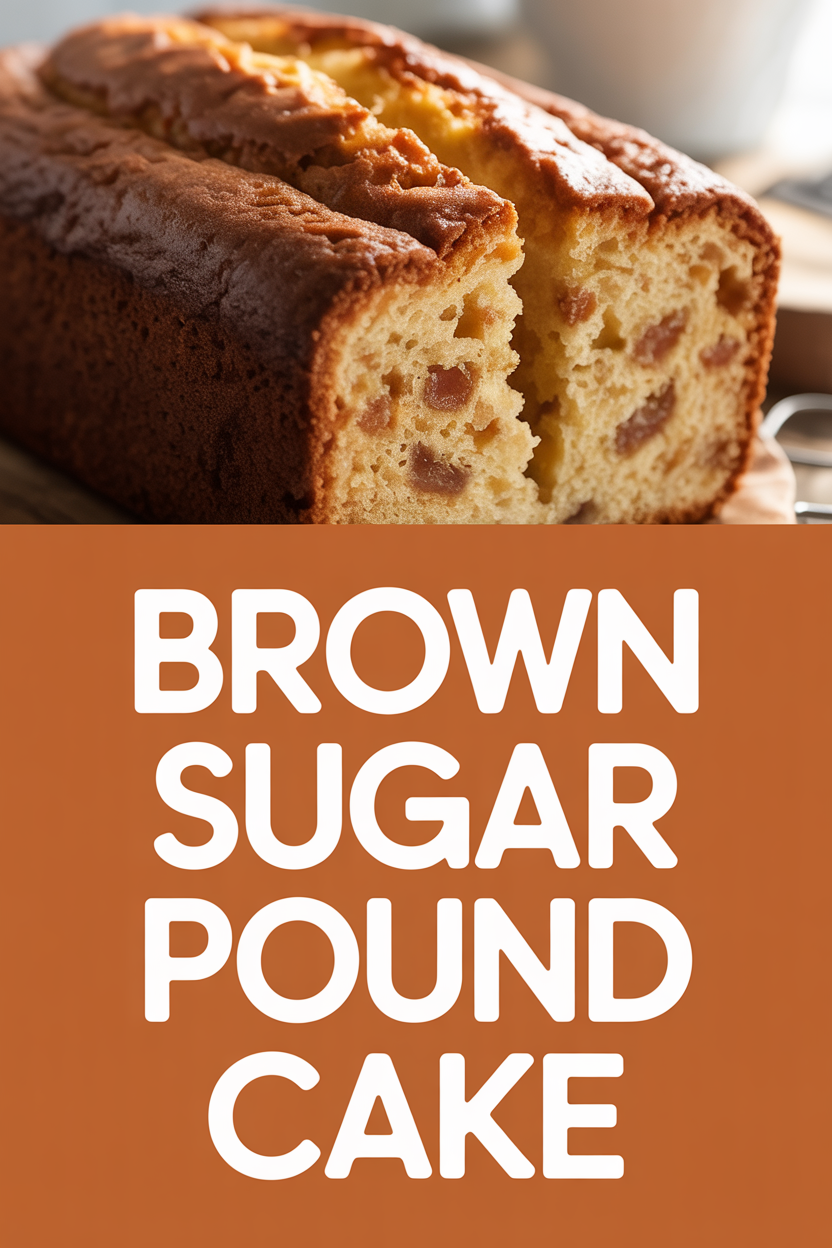
This brown sugar pound cake never fails to take me straight back to my grandmother’s tiny kitchen, where the air smelled like caramel and butter and the radio hummed old songs. I remember sneaking a warm slice, the crust crackling under my teeth while the interior stayed dense and tender — like a cake version of a hug. I make this cake whenever I want something that feels like home: golden, cozy, and a little smoky from the brown sugar. It bakes up with a crunchy edge and a soft, almost caramel-y crumb that tastes like Sunday afternoons. If you want a cake that smells like comfort and carries you through a rainy afternoon, this one does the trick every single time.
Quick Facts
- Yield: Serves 8–10
- Prep Time: 20 minutes
- Cook Time: 55–65 minutes
- Total Time: 1 hour 15 minutes (including cooling)
Why This Recipe is Awesome
This cake feels fancy but behaves like an everyday dessert — dense, buttery, and seriously flavorful thanks to the nutty, molasses-y notes from the **brown sugar**. You get crisp, caramelized edges and a soft, tender center that practically melts in your mouth. It’s sturdy enough for slicing and sharing, but delicate enough to pair with a scoop of ice cream or a mug of coffee. It’s so easy even your oven can’t mess it up — and the whole kitchen smells like a bakery while it bakes. Who doesn’t love that?
Ingredients
For the Main Dish:
- 1 cup (2 sticks) unsalted butter, softened
- 1 1/2 cups packed light brown sugar
- 3 large eggs, at room temperature
- 1 tsp vanilla extract
- 2 cups all-purpose flour
- 1 tsp baking powder
- 1/2 tsp baking soda
- 1/2 tsp fine salt
- 1/2 cup sour cream or plain Greek yogurt
- 1/4 cup whole milk
- Optional: 1 tsp lemon or orange zest for brightness
For the Sauce / Garnish (optional):
- Brown-sugar glaze: 1/2 cup packed brown sugar, 2 tbsp butter, 1/4 cup heavy cream, pinch of salt, 1/2 tsp vanilla — simmered until glossy and poured warm over the cake.
- Optional sprinkle: chopped toasted pecans or flaky sea salt
How I Make It
Step 1:
Preheat the oven to 350°F and grease a 9×5 loaf pan (or a bundt pan) with butter; dust with flour or line with parchment. In the mixer, beat the 1 cup unsalted butter and 1 1/2 cups brown sugar on medium-high until the mixture looks pale and fluffy, about 4–5 minutes. You’ll notice the sugar melting slightly and the bowl smelling like caramel — that’s the good part. Scrape the bowl down so everything mixes evenly.
Step 2:
Add the eggs one at a time, beating briefly after each addition so the batter stays smooth and glossy. Stir in 1 tsp vanilla and any zest if you’re using it. Keep the mixer speed moderate; you want incorporation, not aeration. Overwhipping makes a drier crumb — trust me, less fuss equals better texture.
Step 3:
Whisk together 2 cups flour, 1 tsp baking powder, 1/2 tsp baking soda, and 1/2 tsp salt. Add the dry ingredients to the batter in two additions, alternating with the 1/2 cup sour cream and finishing with the flour. Mix until just combined; you should still see a ribbon-like thickness and a few streaks of flour disappearing. The batter should look shiny and thick, smelling rich and toasty from the brown sugar.
Step 4:
Spoon the batter into the prepared pan and smooth the top. Bake at 350°F for 55–65 minutes, rotating the pan halfway through if your oven runs hot. Watch for golden edges and a firm top that springs back when you press lightly. Insert a toothpick into the center — it should come out with a few moist crumbs, not batter. If the top browns too quickly, tent with foil for the last 10–15 minutes.
Step 5:
Let the cake cool in the pan for 15 minutes, then turn it out onto a wire rack to cool another 30 minutes before glazing. If you pour the optional warm brown-sugar glaze over the cake while it still feels a touch warm, the glaze sinks into the crumb and gives those irresistible sticky edges. Slice with a serrated knife and enjoy slightly warm or at room temperature.
Pro Tips
- Bring eggs, butter, and dairy to room temperature so the batter emulsifies smoothly and you avoid grainy texture.
- Measure flour by spooning it into the cup and leveling off; packing flour makes a dense cake.
- If the top browns too fast, tent foil over the pan — a simple fix that saves your crust.
- Swap 1/2 cup sour cream for Greek yogurt for a tangy lift and extra moisture.
Common Mistakes to Avoid
- Skipping preheating: Classic rookie move. It changes texture and bake time.
- Overmixing: Leads to dense or chewy results. Mix until just combined.
- Guessing cook time: Always use visual cues or a timer, not just vibes.
- Overcrowding pans: Give your food some breathing room to crisp properly.
Alternatives & Substitutions
- Butter ↔ dairy-free margarine or vegan butter: flavor changes slightly; use equal measure for margarine, but expect a milder buttery note.
- All-purpose flour ↔ 1:1 gluten-free flour blend (with xanthan gum): the texture will differ slightly — a touch more crumbly but still delicious.
- Sour cream ↔ plain Greek yogurt: keeps moisture and adds tang; flavor stays balanced.
- Dairy-free option: use vegan butter + dairy-free yogurt and a plant-based milk (whole texture works best).
Variations & Tips
- Add 1/2 cup toasted chopped pecans or walnuts for crunch.
- Stir in 1/2 cup mini chocolate chips for a kid-friendly twist.
- Swap brown sugar for dark brown sugar for a deeper molasses flavor.
- Add 1 tsp ground cinnamon or a pinch of nutmeg for warming spice.
- Drizzle bourbon-maple glaze (swap half the cream for 2 tbsp bourbon) for a grown-up touch.
- Make mini loaves for gifts — reduce bake time to 30–35 minutes.
FAQ (Frequently Asked Questions)
- Can I make this ahead of time?
- Yes! Bake the cake, cool completely, and wrap tightly in plastic wrap. Store at room temperature for up to 3 days or freeze in slices for up to 2 months. To reheat, warm a slice in the microwave for 12–15 seconds or in a 300°F oven for 8–10 minutes.
- Can I double the recipe?
- Sure thing. Use two loaf pans or a large bundt pan and watch the bake time — two loaves will still take about the same per pan, but a large bundt may need 10–20 extra minutes. Check doneness with the toothpick test.
- Can I substitute butter with oil?
- Technically yes, but you’ll miss that buttery magic. Use ¾ the amount of oil (so 3/4 cup oil for 1 cup butter). Expect a slightly lighter, less rich crumb.
- How do I know it’s done?
- The top should be golden with slightly crisp edges and spring back when you press it gently. A toothpick inserted into the center should come out with a few moist crumbs — not wet batter. If it looks very gooey, give it another 5–10 minutes and check again.
- What if I don’t have ingredient X?
- No panic: swap sour cream for Greek yogurt, use light brown sugar if you don’t have dark, or stir in a splash of milk if the batter feels too thick. Small swaps won’t ruin the cake.
How I Like to Serve It
I love slicing this cake slightly warm and topping each piece with a scoop of vanilla ice cream or a smear of whipped cream — the contrast of textures hits every time. It dresses up nicely for potlucks and makes an elegant after-dinner treat with coffee or an afternoon tea. In colder months, I pair it with cozy spiced tea; in summer, a dollop of chilled mascarpone keeps things fresh.
Notes
- Store wrapped at room temperature for up to 3 days or refrigerate for up to a week. Freeze slices in airtight bags for up to 2 months.
- This recipe doesn’t include meat, so no internal meat temperatures apply.
Final Thoughts
Closing: Go ahead — bake a loaf, breathe in that caramel-y smell, and share it with someone you love (or keep it all to yourself). You’ve earned it.