
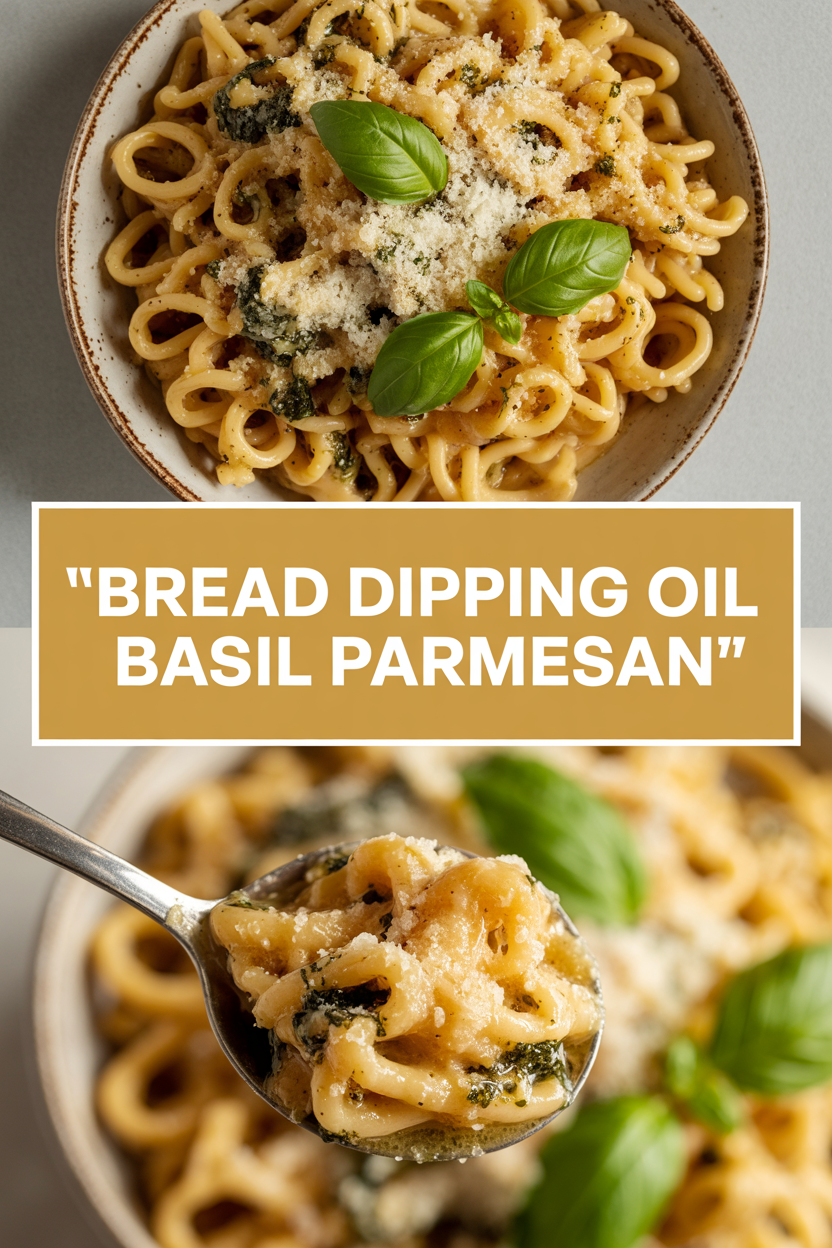
Here’s a little kitchen secret I stole from a restaurant sous chef on a busy Friday night: a great bread-dipping oil doesn’t hide behind fancy techniques — it shows up with a few bold flavors and a tiny bit of patience. I’ll walk you through a basil-Parmesan version that tastes like summer and smells like a garden after rain. Keep your olive oil good, don’t let the garlic burn, and finish with a shower of flaky salt. Follow my tip to warm the oil just enough to coax the aromatics out (not fry them), and your guests will ask for the recipe before the bread basket empties. Trust me — this one makes plain bread sing.
Quick Facts
- Yield: Serves 4–6
- Prep Time: 10 minutes
- Cook Time: 10 minutes (including toasting)
- Total Time: 20 minutes
Why This Recipe is Awesome
This dipping oil hits all the right notes: bright herbaceous basil, salty umami from Parmesan, a little heat from red pepper flakes, and rich, fruity extra-virgin olive oil. It smells herbaceous and garlicky, looks glossy and golden, and gives bread a silky, flavorful coating that contrasts wonderfully with crunchy, toasted edges. It’s so simple even your oven won’t complain — and it turns a simple loaf into a party-starter.
Ingredients
For the Main Dish:
- 1 cup extra-virgin olive oil
- 3 garlic cloves, minced (about 1 1/2 tbsp)
- 1/4 cup fresh basil, finely chopped
- 1/3 cup grated Parmesan (or Pecorino)
- 1/2 tsp red pepper flakes (adjust to taste)
- 1 tsp lemon zest (from 1 small lemon)
- 1 tsp flaky sea salt, plus more for sprinkling
- 1/2 tsp freshly ground black pepper
- 1 loaf crusty bread (ciabatta or baguette), sliced
- 1 tbsp balsamic reduction or aged balsamic (optional, for drizzling)
For the Sauce / Garnish (if applicable):
- Extra torn basil leaves for garnish
- Additional grated Parmesan for sprinkling
- Drizzle of good balsamic or chili honey for a sweet-tangy finish
How I Make It
Step 1:
I pour 1 cup of extra-virgin olive oil into a small saucepan and heat it over medium-low heat. When the oil shimmers slightly (about 2 minutes), I add the minced garlic. I stir gently and listen for a soft sizzle — that sound tells me the garlic releases fragrance without browning. If the garlic starts to brown, I pull the pan off the heat immediately. Burnt garlic tastes bitter; don’t let that happen.
Step 2:
After about 2–3 minutes of gentle infusing, I remove the pan from the heat and stir in the grated Parmesan, chopped basil, lemon zest, red pepper flakes, salt, and black pepper. The cheese melts slightly into the warm oil and creates a silky texture. I let the mixture rest for 5 minutes so the flavors marry. Taste and adjust salt or heat now.
Step 3:
While the oil rests, I slice the bread on a slight diagonal and lay the pieces on a baking sheet. I drizzle each slice with a whisper of olive oil and pop them into a preheated oven at 400°F. I toast until the edges turn golden and the centers sound hollow when tapped — about 8–10 minutes. The kitchen fills with a toasty, bready aroma that makes me impatient in the best way.
Step 4:
When the crostini come out with golden edges and crunchy texture, I arrange them on a board. If you prefer softer bread, skip the oven and serve slices at room temperature. For a warm dipping experience, gently rewarm the infused oil over low heat for 30–60 seconds — I don’t let it smoke, just warm enough to release aromas.
Step 5:
I spoon the basil-Parmesan oil into a shallow bowl, drizzle a little balsamic reduction over the top for color and sweet tang, and scatter extra basil and Parmesan. I set the crostini around the bowl and tell my friends to dunk, tear, and mop up every last glossy drop. That crunchy, oily, cheesy bite? Perfection.
Pro Tips
- Use a flavorful but balanced extra-virgin olive oil. A good oil changes everything — cheap oil masks the basil and garlic.
- Don’t let the garlic brown. If you smell bitterness or see brown flecks, start again with fresh garlic; burnt garlic ruins the oil fast.
- Grate the Parmesan fresh or use finely grated aged Pecorino for a sharper, saltier bite.
- For dairy-free: swap Parmesan for 2 tbsp nutritional yeast and add a pinch more salt for that umami punch.
Common Mistakes to Avoid
- Skipping preheating: Classic rookie move. It changes texture and bake time.
- Overmixing: Leads to dense or chewy results. Mix until just combined.
- Guessing cook time: Always use visual cues or a timer, not just vibes.
- Overcrowding pans: Give your food some breathing room to crisp properly.
Alternatives & Substitutions
- Parmesan → Pecorino Romano: Gives a saltier, tangier finish. Use a touch less salt.
- Basil → Parsley or Cilantro: Parsley keeps it bright; cilantro gives a citrusy lift. Flavor shifts accordingly.
- Olive oil → Infused oils: Garlic- or chili-infused oils add depth, but use sparingly to avoid overpowering basil.
- Dairy-free: Nutritional yeast or vegan Parmesan works well; texture changes slightly but the umami stays.
- Gluten-free: Use gluten-free baguette or serve with roasted veggies for dipping.
Variations & Tips
- Make it spicy: add 1 tsp smoked paprika and an extra pinch of red pepper flakes.
- Tomato-roasted: toss halved cherry tomatoes in the oil before serving for a sweet, roasted twist.
- Anchovy boost: mash 2 anchovy fillets into the oil for a savory umami punch (my secret for shock-and-awe flavor).
- Sweet-salty: drizzle 1 tsp chili honey or aged balsamic over the oil for a playful finish.
- Make it smoky: add a pinch of smoked salt or use smoked sea salt as the finishing sprinkle.
- Serve hot: briefly warm the bowl of oil just before guests arrive for an aromatic, comforting dip.
FAQ (Frequently Asked Questions)
- Can I make this ahead of time?
- Yes! Mix the oil and aromatics and store in an airtight jar in the fridge for up to 3 days. Bring it to room temperature before serving or gently warm for a minute to revive aromas.
- Can I double the recipe?
- Sure thing. If you double, use a wider bowl and toast bread in batches so each piece crisps evenly. No other timing changes necessary.
- Can I substitute butter with oil?
- Technically yes, but you’ll miss that buttery magic. Use ¾ the amount of oil if a recipe calls for butter; here, olive oil gives the best herb-forward profile.
- How do I know it’s done?
- Look for fragrant, glossy oil with melted Parmesan and bright green flecks of basil. For crostini, watch for golden edges and a crisp, hollow sound when tapped.
- What if I don’t have ingredient X?
- Swap Parmesan with Pecorino or nutritional yeast; lemon zest with a splash (1 tsp) of white wine vinegar; basil with parsley. These swaps change the flavor but keep great texture.
How I Like to Serve It
I serve this oil on a wooden board with warm crostini, a bowl of mixed olives, and thin slices of prosciutto for a laid-back appetizer. It also pairs beautifully with grilled shrimp or chicken — if you go that route, cook poultry to 165°F. I reach for chilled Sauvignon Blanc or a cold lager; both cut through the oil and refresh the palate.
Notes
- Store leftover oil in the fridge up to 3 days. Warm gently before serving; don’t microwave (it heats unevenly).
- If serving with meat, remember safe internal temps — chicken 165°F, pork 145°F with a 3-minute rest.
Final Thoughts
Closing: This Basil-Parmesan bread dipping oil feels fancy but takes minutes — now go impress someone, or just treat yourself, with this glossy, garlicky goodness!