
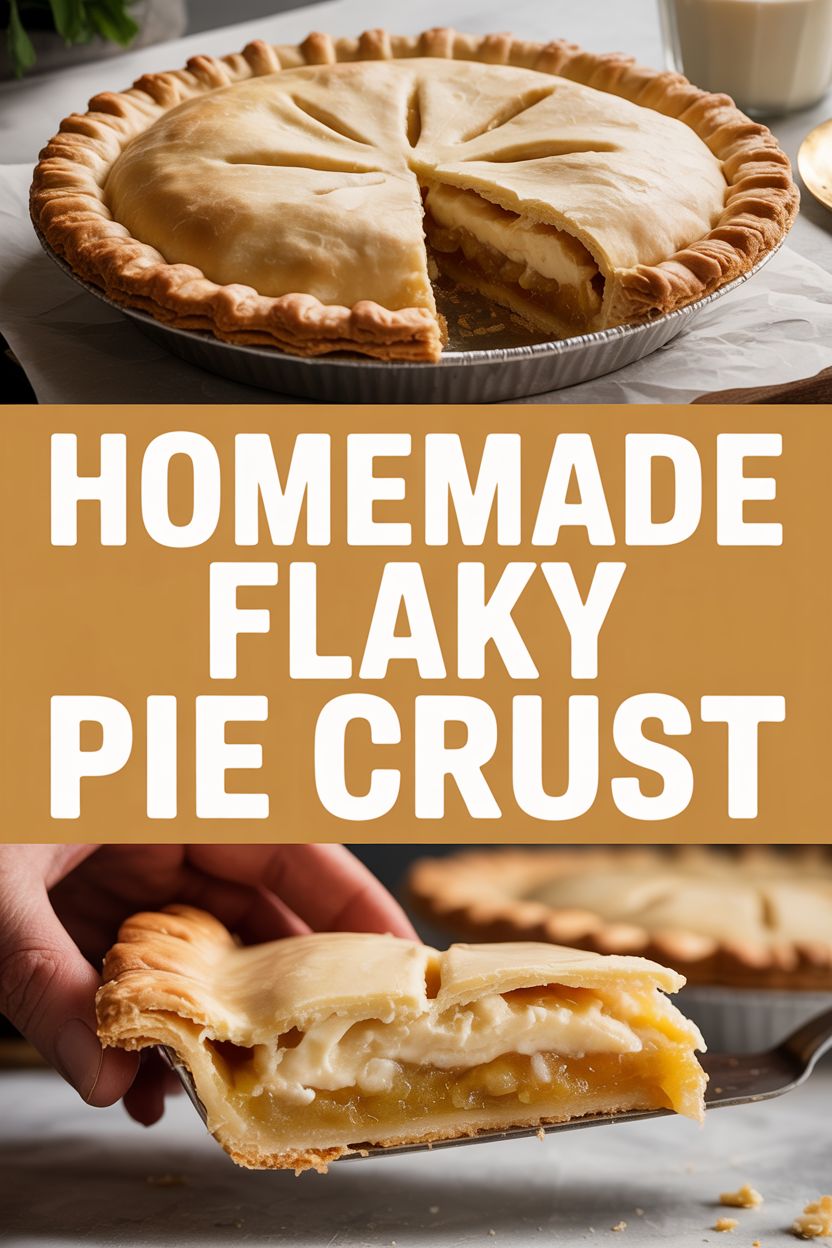
Okay, confessional time: I once tried to impress a date with a store-bought crust and lived to regret it. The flat, cardboard-y snap when I sliced into that pie haunted me until I learned to make my own. Now I bake crusts that shatter into buttery ribbons and smell like a warm, flaky hug. This recipe keeps things simple — just flour, cold butter, a pinch of salt, and a little cold water — but pays off in golden, crisp layers that practically sing when you cut them. Follow my tips and you’ll never buy a ready-made crust again (sorry, grocery aisle).
Quick Facts
- Yield: Serves 8 (one 9-inch double crust or two single crusts)
- Prep Time: 20 minutes active + 1 hour chill
- Cook Time: 45–60 minutes depending on filling and bake method
- Total Time: About 1 hour 20 minutes (plus any filling time)
Why This Recipe is Awesome
This crust tastes like butter, not like a chemistry lab. It gives you flaky layers that shatter delightfully and a tender bottom that holds juicy fillings without turning soggy. It’s forgiving, fast, and uses pantry-friendly staples — trust me, once you hear that first crisp bite, you’ll strut a little. And really, who doesn’t love a crust that smells like caramelized butter while it bakes?
Ingredients
For the Main Dish:
- 2 1/2 cups all-purpose flour (plus extra for rolling)
- 1 tsp fine salt
- 1 tbsp granulated sugar (optional — nice for sweet pies)
- 1 cup (8 tbsp / 4 oz) unsalted butter, very cold, cut into small cubes
- 1/4 cup vegetable shortening or lard (optional — helps flakiness and keeps layers)
- 6–8 tbsp ice water (keep extra on hand)
- 1 tsp apple cider vinegar or vodka (optional — helps keep crust tender)
- 1 egg + 1 tbsp water for egg wash (optional, for golden top)
For the Sauce / Garnish (if applicable):
- None — this crust sings on its own. See serving suggestions below.
How I Make It
Step 1:
Measure 2 1/2 cups of **flour** into a large bowl. Add 1 tsp **salt** and 1 tbsp **sugar** if you’re making sweet pie. Toss with your fingers so the seasoning smells bright. Drop in the cold, cubed butter and shortening if using. Use a pastry cutter, two knives, or pulse in a food processor until the mixture looks like coarse cornmeal with pea-sized butter bits. Those little butter pockets turn into flaky layers — don’t overdo it; keep some pea-sized pieces visible.
Step 2:
Mix 1 tsp **vinegar** or vodka into your ice water (I usually do 6–8 tbsp). Drizzle the liquid over the flour mixture a tablespoon at a time and stir with a fork. Stop when the dough just holds together if you squeeze a handful. The dough should feel cool and slightly shaggy. If it seems dry, add a splash more water. Don’t overwork or knead; you want to preserve the cold butter chunks.
Step 3:
Turn the dough onto a lightly floured surface, gather it together with a bench scraper, and divide into two discs for a double-crust pie (or keep whole for a single). Press gently — avoid kneading. Wrap each disc tightly in plastic and chill for at least 1 hour (or up to 2 days). Chilling firms the butter, relaxes gluten, and helps the dough roll without shrinking.
Step 4:
When ready to bake, preheat your oven to 375°F. Lightly flour your surface and roll each disc from the center out, turning frequently, until it reaches about 12 inches across for a 9-inch pie plate. Fold into quarters and transfer to the plate, then unfold and ease into the edges without stretching. Trim a half-inch overhang, tuck under, and flute or crimp. Brush with egg wash for a glowing finish. For prebaked crusts, prick the bottom and bake blind with pie weights for 15 minutes, then remove weights and bake another 5–8 minutes until pale golden.
Step 5:
Fill with your favorite filling and bake according to the filling recipe — usually 45–60 minutes. Look for a deep golden edge and a fragrant, buttery smell; the top should sing with flake and the bottom should feel firm when you tap the plate. Let the pie rest at least 2 hours before slicing to set the filling — patience rewards you with cleaner slices and juicier bites.
Pro Tips
- Keep everything cold: butter, water, and even your bowl. Cold butter makes flaky layers.
- Freeze your dough for 15 minutes after rolling before baking if it softens too much — it firms up and prevents shrinkage.
- Use a mix of butter and shortening for extra flake and buttery flavor; use all butter for the best taste.
- If your dough cracks while rolling, press it gently and a few drops of ice water will patch it without toughening.
Common Mistakes to Avoid
- Skipping preheating: Classic rookie move. It changes texture and bake time.
- Overmixing: Leads to dense or chewy results. Mix until just combined.
- Guessing cook time: Always use visual cues or a timer, not just vibes.
- Overcrowding pans: Give your food some breathing room to crisp properly.
Alternatives & Substitutions
- Use half butter and half vegetable shortening for flakiest texture; pure butter gives the best flavor but browns faster.
- Swap all-purpose flour with a 1:1 gluten-free baking blend (some brands work better); expect a slightly more crumbly texture.
- For dairy-free: use vegan butter sticks that stay cold and solid — the crust won’t taste identical but will still flake nicely.
- Replace vinegar with lemon juice if you don’t have any — it helps relax gluten and keeps the crust tender.
Variations & Tips
- Herbed savory crust: add 1–2 tsp chopped fresh herbs like rosemary or thyme to the flour for pot pies or quiches.
- Cheese crust: fold in 1/2 cup finely grated sharp cheddar for a savory twist (great with tomato pies).
- Whole wheat: substitute up to half the flour with white whole wheat for nuttier flavor — add a couple tablespoons more water.
- Flavored sugar crust: swap the sugar for brown sugar and add a pinch of cinnamon for apple or pear pies.
- Mini galettes: roll into small rounds and fold over the edges for rustic free-form tarts — no pie plate required.
FAQ (Frequently Asked Questions)
- Can I make this ahead of time?
- Yes! Wrap dough discs tightly and refrigerate up to 2 days, or freeze up to 3 months. Thaw in the fridge overnight before rolling.
- Can I double the recipe?
- Sure thing. Divide dough into manageable discs and chill well; larger amounts need more chilling time to stay cold while you work.
- Can I substitute butter with oil?
- Technically yes, but you’ll miss that buttery magic. Use ¾ the amount of oil and expect a denser, less flaky crust.
- How do I know it’s done?
- Look for a deep golden color on the edges, a fragrant buttery smell, and a bottom that sounds slightly hollow when tapped. For fruit pies, bubbling filling around vents signals doneness.
- What if I don’t have ingredient X?
- If you don’t have shortening, use all butter and chill extra. No vinegar? Use a tiny splash of lemon juice. Out of sugar? Skip it for savory pies — the texture stays the same.
How I Like to Serve It
I love this crust with a classic apple pie and a scoop of vanilla ice cream — the butter smell under cold cream makes me do a little happy dance. For savory pies, pair with a crisp salad and a chilled glass of white wine. Bring mini galettes to potlucks; they travel well and impress without fuss. In winter, the warm buttery aroma fills the house and feels like a hug; in summer, use it for berry pies and serve with lemonade.
Notes
- Store baked pies loosely covered at room temperature for up to 2 days, or refrigerate up to 4 days. Reheat slices at 350°F for 10–12 minutes to refresh crispiness.
- If making meat pies, cook fillings to safe temps first — poultry reaches 165°F.
Final Thoughts
Closing: You just learned a simple way to make a flaky, buttery pie crust that actually tastes like something worth bragging about — now go impress someone, or just yourself, with your homemade masterpiece!