
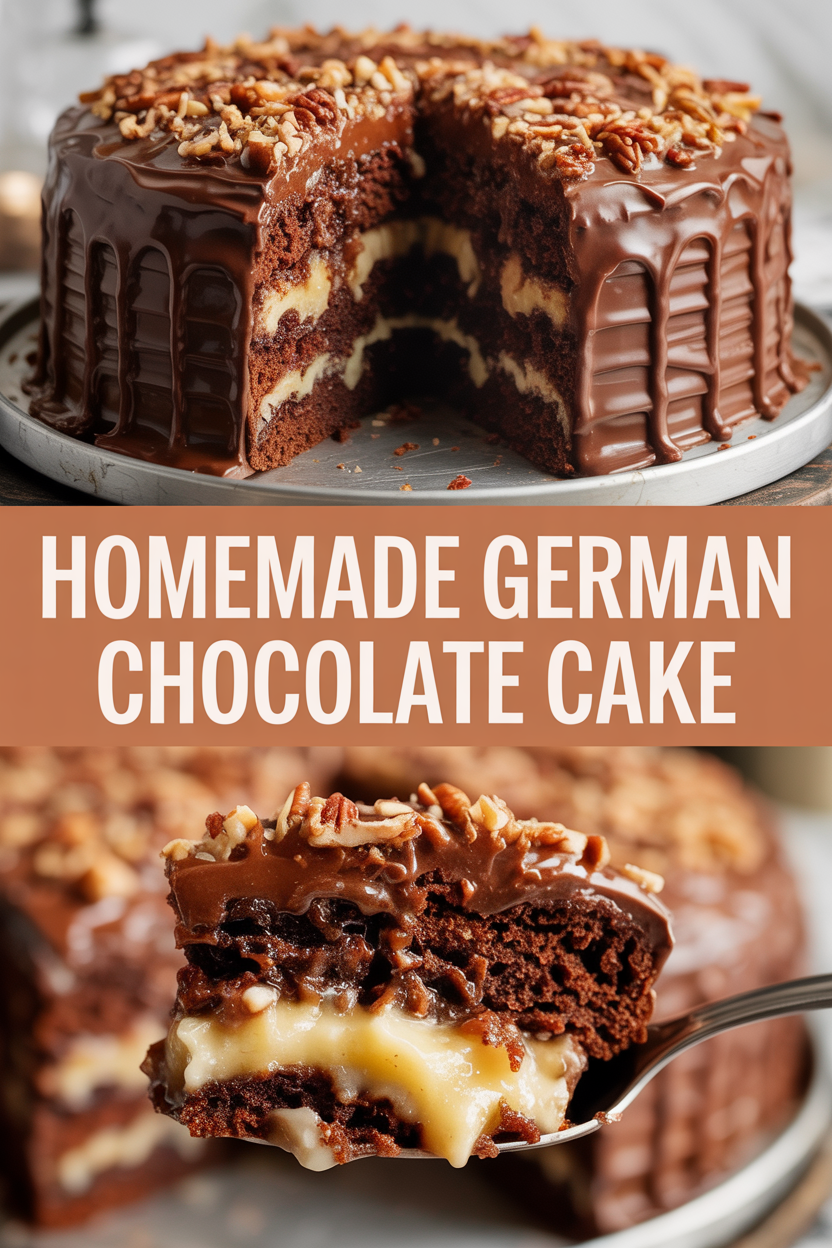
I still taste the sticky coconut-pecan topping from my grandmother’s kitchen every time I fold egg whites into batter. She wore the same flour-dusted apron and hummed while she baked — the whole house smelled like toasted coconut and dark chocolate. I learned to balance sweet and bitter watching her scoop glossy, nut-studded frosting onto warm cake layers; the sound of a wooden spoon scraping the saucepan still makes my mouth water. This Homemade German Chocolate Cake honors that memory but simplifies a few steps so you don’t need a full bakery setup. I’ll walk you through the rich chocolate layers, the caramel-y coconut-pecan filling, and little tricks that save time and keep the cake moist and predictable.
Quick Facts
- Yield: Serves 10–12
- Prep Time: 30 minutes
- Cook Time: 35 minutes
- Total Time: 105 minutes
Why This Recipe is Awesome
This recipe gives you dense, fudgy chocolate layers layered with a gooey, nutty coconut-pecan topping that snaps just slightly when you slice it. The cake smells like cocoa and warm sugar as it bakes, and the frosting adds a sticky, toasty crunch that plays against soft crumb. It’s foolproof enough for a weeknight celebration and pretty enough for a birthday. Plus, it’s so comforting you’ll want to hide a slice in the back of the fridge for later — I won’t tell.
Ingredients
For the Main Dish:
- 1¾ cups all-purpose flour
- 1½ cups granulated sugar
- ¾ cup unsweetened cocoa powder
- 1½ tsp baking powder
- 1½ tsp baking soda
- 1 tsp salt
- 2 large eggs
- 1 cup whole milk
- ½ cup vegetable oil
- 2 tsp vanilla extract
- 1 cup boiling water
For the Coconut–Pecan Frosting:
- 1 cup evaporated milk
- 1 cup granulated sugar
- 3 large egg yolks, lightly beaten
- ½ cup (1 stick) unsalted butter
- 1 tsp vanilla extract
- 1¼ cups sweetened shredded coconut
- 1 cup chopped pecans
How I Make It
Step 1:
Preheat your oven to 350°F. Grease two 9-inch round pans and line the bottoms with parchment. In a large bowl whisk together flour, sugar, cocoa, baking powder, baking soda, and salt. In another bowl beat eggs, milk, oil, and vanilla until smooth. Pour the wet into the dry and stir until mostly combined — the batter will look a bit shaggy. Carefully stir in the boiling water; the batter thins and becomes glossy. That heat unlocks the cocoa flavor. Pour into pans and tap gently to level.
Step 2:
Bake at 350°F for about 25–30 minutes or until a toothpick in the center comes out with moist crumbs. You’ll smell deep chocolate and the edges will start to pull away slightly from the pan. Let the cakes cool in the pans for 10 minutes, then flip onto a rack and cool completely. Tip: if the tops crack a little, don’t stress — the coconut-pecan frosting hides imperfections beautifully.
Step 3:
Make the frosting while the layers cool. In a medium saucepan combine evaporated milk, sugar, egg yolks, and butter. Cook over medium heat, stirring constantly with a wooden spoon, until the mixture thickens and turns a pale caramel, about 8–12 minutes. You’ll hear the sauce start to bubble more vigorously and smell toasted sugar — that’s your cue to watch it closely so it doesn’t scorch. Remove from heat and stir in vanilla, coconut, and pecans. The texture should be glossy and slightly loose; it will set as it cools.
Step 4:
Place one cake layer on your serving plate. Spoon and spread about two-thirds of the coconut-pecan frosting over that layer — you want a thick, uneven spread so every bite has texture. Top with the second layer, then spread the remaining frosting on top. The frosting will sink and set into chewy, nutty pockets. If the frosting seems too runny, chill it 10 minutes before spreading. If it’s too firm, warm it gently in short bursts and stir.
Step 5:
Let the cake rest at room temperature for at least 30 minutes to let the flavors marry and the frosting firm slightly. Slice with a sharp knife, wiping between cuts for neat pieces. Serve slightly warm or at room temperature. Smell the toasted coconut, hear the gentle crack of pecans, and enjoy that first rich, gooey bite.
Pro Tips
- For extra-moist layers, swap 1/4 cup of the boiling water for hot brewed coffee — coffee deepens chocolate flavor without tasting like coffee.
- If your frosting cooks too fast and you see large bubbles, reduce heat and stir constantly to avoid curdling the eggs.
- Toast the pecans briefly in a dry skillet for 3–4 minutes to amplify their aroma before adding them to the frosting.
- Chill the cake for 20 minutes before slicing for cleaner layers and less sticky knives.
Common Mistakes to Avoid
- Skipping preheating: Classic rookie move. It changes texture and bake time.
- Overmixing: Leads to dense or chewy results. Mix until just combined.
- Guessing cook time: Always use visual cues or a timer, not just vibes.
- Overcrowding pans: Give your food some breathing room to crisp properly.
Alternatives & Substitutions
- Use gluten-free 1-to-1 flour for a gluten-free option — texture stays similar but watch for a slightly drier crumb; add 2 tbsp milk if needed.
- Swap whole milk for almond milk for a lighter flavor; reduce frosting cooking time slightly if using plant milk.
- Replace butter with coconut oil in the frosting for a dairy-free version; expect a hint of coconut oil flavor.
- Use walnuts instead of pecans if you prefer a bolder, earthier crunch.
Variations & Tips
- Add a layer of sharp cream cheese frosting under the coconut-pecan topping for a tangy contrast.
- Mix 2 tbsp instant espresso into the batter for a mocha twist that heightens chocolate notes.
- For a kid-friendly version, reduce sugar in the frosting by 1/4 cup and add a pinch of cinnamon.
- Make cupcakes: bake batter in 12 cups for about 18–20 minutes and top each with a dollop of the coconut-pecan mix.
- Chocolate lovers: fold 1/2 cup chopped dark chocolate into the batter for pockets of molten goodness.
- Pioneer a creative twist by folding diced salted caramel pieces into the frosting for a sweet-salty surprise.
FAQ (Frequently Asked Questions)
- Can I make this ahead of time?
- Yes! Bake the layers a day ahead and wrap them tightly. Make the frosting and store it in the fridge; warm it gently before spreading. Assemble on the day you serve for freshest texture. The assembled cake keeps 2 days at room temperature or 4 days refrigerated.
- Can I double the recipe?
- Sure thing. Use three 9-inch pans (or two batches) and increase bake time slightly if your pans run deep. Two stacked layers double easily in a 9×13 pan; bake about 30–35 minutes.
- Can I substitute butter with oil?
- Technically yes, but you’ll miss that buttery magic. Use ¾ the amount of oil in the frosting if you must swap; the flavor will change slightly and the topping will be a touch less rich.
- How do I know it’s done?
- Look for slightly domed tops that spring back when touched gently, and edges that pull away from the pan. A toothpick should come out with moist crumbs, not raw batter.
- What if I don’t have ingredient X?
- No sweat. No coconut? Use extra chopped pecans and a tablespoon of honey for sweetness. Out of evaporated milk? Stir 2 tbsp powdered milk into 1 cup whole milk as a quick substitute.
How I Like to Serve It
I love this cake with a scoop of vanilla ice cream and a cup of black coffee on the side — the hot-cold contrast sings. For parties, cut into smaller squares and set on a pretty platter with extra pecans scattered about. In summer, serve slightly chilled with berries; in winter, warm a slice in the microwave 8–10 seconds to revive that gooey center.
Notes
- Store wrapped at room temperature for 2 days, or refrigerate up to 4 days. Bring to room temp before serving for best flavor.
- If reheating slices, zap for 8–12 seconds to soften the coconut-pecan topping without melting it completely.
Final Thoughts
Closing: Now go impress someone — or just yourself — with your homemade masterpiece!