
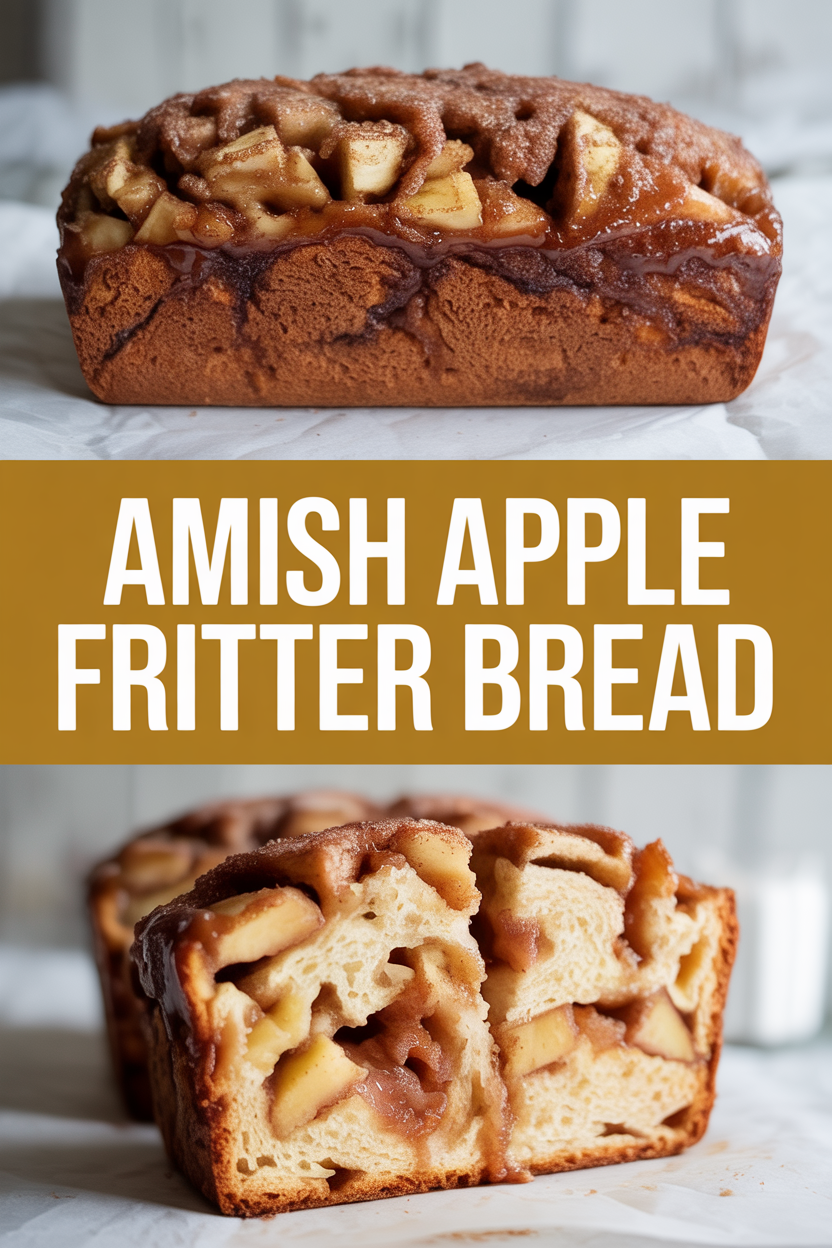
When I was a kid, Saturday mornings smelled like my grandma’s kitchen: cinnamon in the air, a kettle hissing softly on the stove, and a loaf pan sliding into the oven with a gentle clunk. I still remember watching her slice into a steaming loaf of apple fritter bread, the glaze glossy and crackly, the crumb studded with soft apple pockets. That memory lives in my kitchen now — this loaf feels like a warm hug, the kind that sticks to your ribs and your memory. It’s simple, comforting, and just a little bit indulgent, the kind of thing I make when I want my house to smell like fall, even in July.
Quick Facts
- Yield: Serves 8–10
- Prep Time: 15 minutes
- Cook Time: 50 minutes
- Total Time: 65 minutes
Why This Recipe is Awesome
This Amish Apple Fritter Bread tastes like a cross between a classic apple fritter and a tender quick bread — crunchy cinnamon-sugar pockets meet a soft, buttery loaf. It’s easy enough for a weekday breakfast but pretty enough for a brunch crowd. Texture? You get a tender crumb, sticky glaze, and crisp cinnamon swirl edges. Flavor? Warm cinnamon, bright apple, and a hit of vanilla. It’s so easy even your oven can’t mess it up.
Ingredients
For the Main Dish:
- 2 cups all-purpose flour
- 1 cup granulated sugar
- 1 tsp baking powder
- 1/2 tsp baking soda
- 1/2 tsp salt
- 1 tsp ground cinnamon
- 2 large eggs, room temperature
- 1/2 cup unsalted butter, melted and slightly cooled
- 1/2 cup milk (whole or 2%)
- 1 tsp vanilla extract
- 1 1/2 cups peeled and diced apples (about 2 medium apples; Granny Smith, Honeycrisp, or Gala)
- 1/4 cup light brown sugar (for the cinnamon swirl)
- 1 tsp extra ground cinnamon (for the swirl)
For the Glaze:
- 1 cup powdered sugar
- 2 tbsp unsalted butter, melted
- 2–3 tbsp milk or cream (more to thin)
- 1/2 tsp vanilla extract
How I Make It
Step 1:
I preheat the oven to 350°F and grease a 9×5-inch loaf pan, lining it with parchment if I’m feeling fancy. In a large bowl I whisk together the dry ingredients: **2 cups all-purpose flour**, **1 tsp baking powder**, **1/2 tsp baking soda**, **1/2 tsp salt**, and **1 tsp ground cinnamon**. The dry mix smells faintly spicy and cozy already — you’ll want to lick the spoon. I toss the diced **apples** with a teaspoon of flour to keep them from sinking.
Step 2:
In another bowl I beat the **eggs**, then stir in the **melted butter**, **milk**, and **vanilla** until smooth. I fold the wet into the dry until just combined — don’t overmix. The batter should look thick and a little lumpy. I fold in the chopped apples gently so they stay chunky and juicy; that little pop of apple in each bite makes the loaf sing.
Step 3:
Now for the fun part: the cinnamon swirl. I mix **1/4 cup light brown sugar** with **1 tsp cinnamon**. I pour half the batter into the prepared pan, sprinkle the brown sugar mixture evenly, then dollop the remaining batter on top and use a butter knife to swirl once or twice. You want streaks, not a full blend — those pockets caramelize into tiny fritter-like surprises. The kitchen starts smelling like a bakery now — warm sugar and apple — and I get excited.
Step 4:
I bake the loaf at 350°F for about 50 minutes, or until a toothpick inserted near the center comes out with only a few moist crumbs. Expect golden-brown edges and a domed top. If the top browns too quickly, I tent it loosely with foil halfway through. The auditory cue? A soft crackle as it cools — that’s the glaze-ready signal.
Step 5:
While the bread cools for 10 minutes, I whisk the glaze: **1 cup powdered sugar**, **2 tbsp melted butter**, **2–3 tbsp milk**, and **1/2 tsp vanilla** until glossy and pourable. I spoon the glaze over the warm loaf so it sinks into the cracks and hardens slightly into that lovely fritter sheen. Slice thick, serve warm, and watch the glaze set into glossy ribbons across the tender crumb.
Pro Tips
- Use tart-firm apples (Granny Smith or Honeycrisp) for the best texture — they keep their shape and add brightness.
- Don’t overmix the batter; stir until just combined for a tender, cakey crumb.
- If your apples are very juicy, pat them dry to avoid a soggy loaf.
- For extra caramel pockets, sprinkle a few extra tablespoons of brown sugar on top before baking.
Common Mistakes to Avoid
- Skipping preheating: Classic rookie move. It changes texture and bake time.
- Overmixing: Leads to dense or chewy results. Mix until just combined.
- Guessing cook time: Always use visual cues or a timer, not just vibes.
- Overcrowding pans: Give your food some breathing room to crisp properly.
Alternatives & Substitutions
- Swap whole milk for almond milk or oat milk for a dairy-free option — texture stays similar but flavor shifts slightly.
- Use coconut oil in place of butter for a dairy-free loaf; note the subtle coconut flavor.
- Substitute gluten-free 1:1 flour blend for all-purpose to make it gluten-free; expect slightly denser crumb.
- For lower sugar, cut granulated sugar to 3/4 cup and use a sugar substitute suited for baking.
Variations & Tips
- Add 1/2 cup chopped pecans or walnuts to the swirl for crunch and a toasty note.
- Stir in 1/2 cup raisins or dried cranberries for chewy bursts of sweetness.
- Make mini loaves or muffins — reduce bake time to 18–22 minutes for muffins.
- For a caramel twist, drizzle warmed store-bought caramel sauce over the glaze before it sets.
- Lean into spice: add 1/4 tsp nutmeg and a pinch of cloves to the batter for deeper fall vibes.
FAQ (Frequently Asked Questions)
- Can I make this ahead of time?
- Yes! Bake the loaf, let it cool completely, then wrap tightly and store at room temperature for up to 2 days or refrigerate for up to 5 days. Reheat slices gently in the toaster oven or microwave (10–15 seconds) and refresh the glaze if you like.
- Can I double the recipe?
- Sure thing. Use two loaf pans and keep the same bake time per loaf, but bake them on separate racks and rotate pans halfway through to ensure even browning.
- Can I substitute butter with oil?
- Technically yes, but you’ll miss that buttery magic. Use ¾ the amount of oil (so 3/8 cup or about 6 tbsp oil) and expect a slightly different mouthfeel.
- How do I know it’s done?
- Look for a deeply golden top and edges pulling slightly from the pan. A toothpick inserted near the center should come out with just a few moist crumbs — not wet batter. The loaf should feel springy when gently pressed.
- What if I don’t have ingredient X?
- Short on brown sugar? Use extra granulated sugar plus a pinch of molasses or maple syrup. Out of powdered sugar for the glaze? Whisk a spoonful of honey into a little milk and drizzle for a rustic finish.
How I Like to Serve It
I slice this loaf thick and serve it warm with a slab of butter or a scoop of vanilla ice cream for dessert. It pairs beautifully with a strong coffee or a chai latte on a blustery morning. For a crowd, I slice and arrange on a platter with fresh fruit — it’s perfect for brunch, potlucks, or when you want your house to feel like a bakery.
Notes
- Store wrapped at room temperature for up to 2 days, or refrigerate up to 5 days. Reheat slices briefly to restore that fresh-from-the-oven vibe.
- If you plan to freeze, wrap well and freeze up to 2 months; thaw overnight in the fridge and warm before serving.
Final Thoughts
Closing: Go bake this — your kitchen will smell amazing, your neighbors might show up, and you’ll have a loaf that feels like an instant cozy memory. Now go impress someone — or just yourself — with your homemade masterpiece!